
A hospital SOC analyst writes a valid CQL query using CPS normalized network fields to investigate suspicious outbound connections, but gets zero firewall events because the search is scoped only to the endpoint telemetry repository. What should the analyst adjust?
Select an answer to reveal the explanation.
Short Explanation
Searching for firewall records inside an endpoint-only view is like looking for library books in the cafeteria—your search terms are fine, you are just in the wrong room. Once you include the firewall repository, those normalized network fields can return matching events. The trap is rewriting valid CQL syntax when the dataset scope is the real issue.
Full Explanation
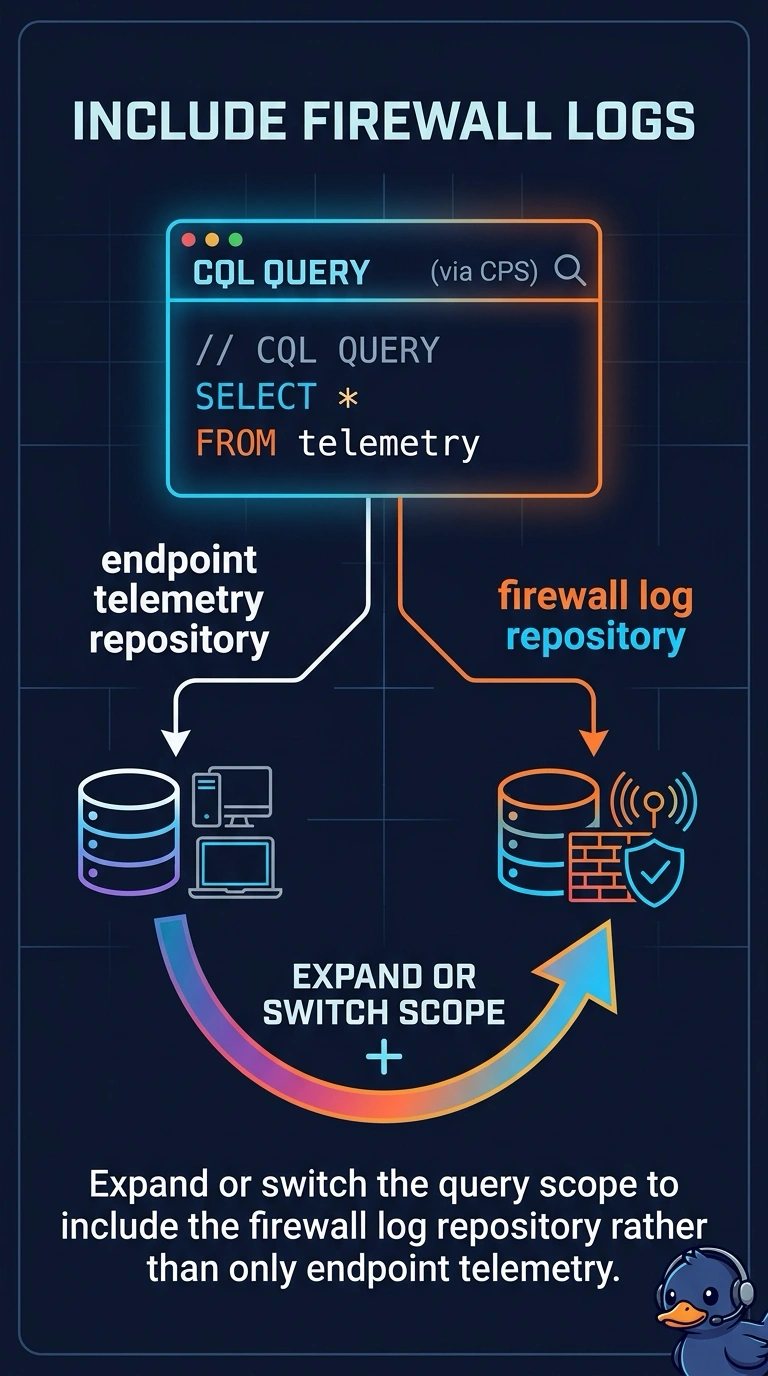
Selecting Expand or switch the query scope to include the firewall log repository rather than only endpoint telemetry ensures the CQL engine evaluates the log source that actually contains firewall events. CPS normalization standardizes field names across sources, but a query still only inspects the repositories or views targeted by the search. Choosing Rewrite the query using vendor-specific firewall field names while keeping the search scoped to endpoint logs still searches a repository that lacks firewall records, yielding zero firewall hits. Choosing Disable CrowdStrike Parsing Standard normalization on the firewall connector before running the query again breaks cross-source field consistency and does not fix an endpoint-only query scope. Choosing Convert the query into a correlation rule so it can read endpoint telemetry instead of firewall records still fails to query firewall logs if the underlying dataset scope excludes them. Caveat: broadening a query across every repository unnecessarily can slow execution, so target only the relevant network and firewall repositories. As an operational check, verify the active repository or view selection and run a quick count by log source before finalizing the search.
Prefer to study offline? Printable PDF study book + test engine ($7.50, unofficial). These questions stay free here.