
A software company SOC analyst searches Falcon Next-Gen SIEM for executions of an administrative tool named net and gets tens of thousands of unrelated events matching words like network and internet. How should the analyst refine the CQL query?
Select an answer to reveal the explanation.
Short Explanation
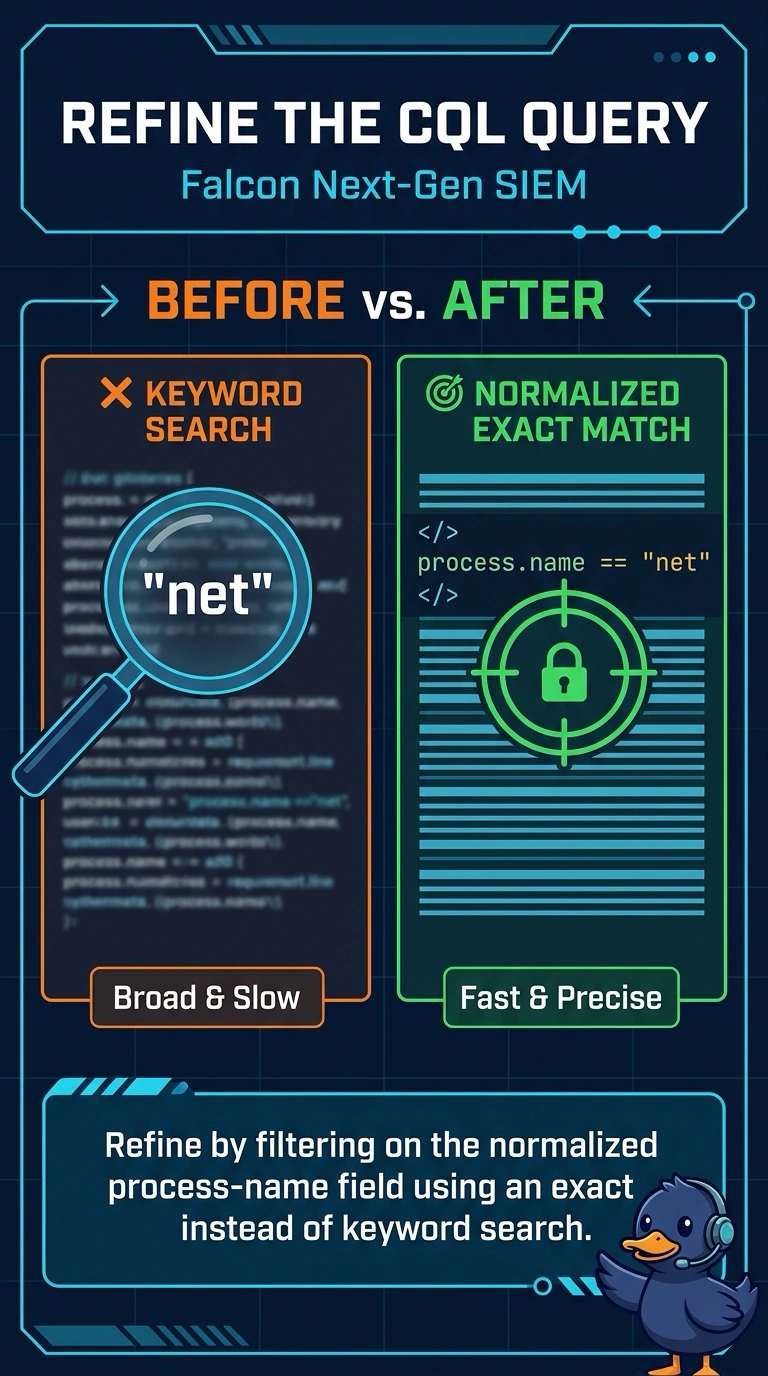
Searching raw logs for a three-letter word is like fishing with a net that catches every tin can in the river. When you target the exact normalized field, the noise disappears immediately. The trap is blaming the dataset or time range instead of tightening your CQL filter.
Full Explanation
To eliminate substring false matches in CQL, you should Filter on the normalized process-name field using an exact match instead of keyword search. CrowdStrike Parsing Standard fields separate structured attributes such as process names from unstructured message text, allowing exact equality checks that match only the intended executable. Choosing to Switch the query time range from twenty-four hours to seven days to smooth out the noisy results pulls in even more unrelated events instead of improving precision. Deciding to Group all matching raw events by destination port to hide unrelated process execution records merely aggregates the noisy matches and still mixes irrelevant records into your counts. Opting to Disable third-party log ingestion temporarily so only endpoint events appear in the search results blinds the organization to other telemetry and still fails to stop substring matches within endpoint logs. As a caveat, exact-match filters require verifying whether the target field is case-sensitive or includes a file extension in your ingested data. As an operational check, inspect a sample of matched records after tightening the field filter to confirm only the intended executable appears.
Prefer to study offline? Printable PDF study book + test engine ($7.50, unofficial). These questions stay free here.