
A media company SOC analyst finds a suspicious external login for a user account in cloud identity logs and wants to trace what that user did next on corporate endpoints. How should the analyst pivot in CQL?
Select an answer to reveal the explanation.
Short Explanation
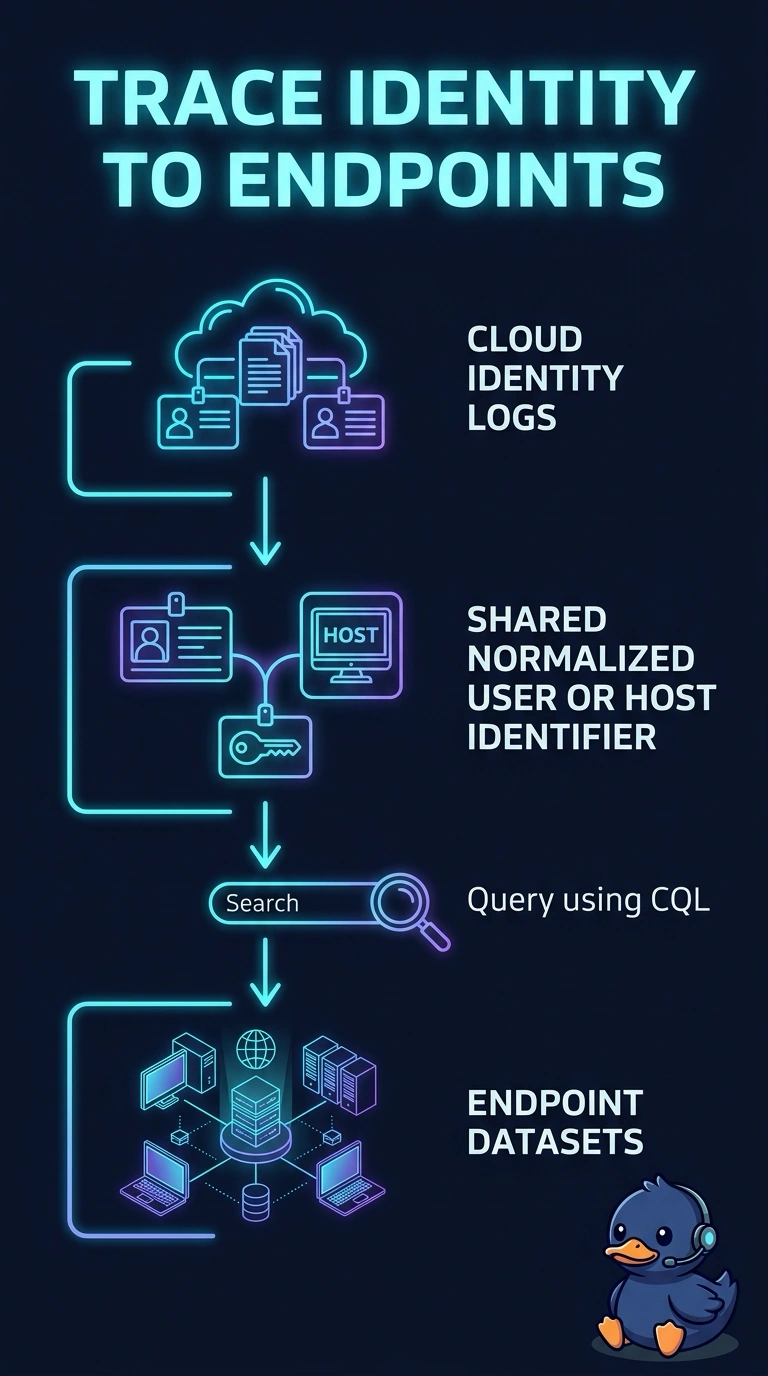
Tracing an attacker across log sources is like following footprints from the front door into the hallway—you carry the same identifier into the next room. Pivot with the shared user or host field across datasets, rather than falling into the trap of re-running the same single-source search.
Full Explanation
To connect a cloud identity anomaly to downstream workstation activity, you should Use the shared normalized user or host identifier to query endpoint datasets so CQL follows the same actor across distinct telemetry sources. Normalized CPS fields make these dataset pivots fast because common attributes like usernames and hostnames align across log types. Choosing to Disable all identity log ingestion so only endpoint events remain in the SIEM destroys upstream authentication context needed for the timeline. Deciding to Create a new correlation rule and wait a week before checking endpoint records delays an active investigation instead of querying existing historical data. Opting to Rerun the exact same cloud identity filter without changing the target dataset simply repeats the original search and never surfaces endpoint process or file events. Caveat: verify that username formats (such as email versus short domain name) match between identity and endpoint schemas before assuming zero endpoint hits. Operational check: run the endpoint dataset query over a time window starting just before the suspicious cloud login and confirm matching user records appear.
Prefer to study offline? Printable PDF study book + test engine ($7.50, unofficial). These questions stay free here.