
A retail SOC analyst writes a CQL query to correlate VPN logins with subsequent file-server access, but events from a newly onboarded VPN appliance fail to align with endpoint timestamps. What should the analyst check first?
Select an answer to reveal the explanation.
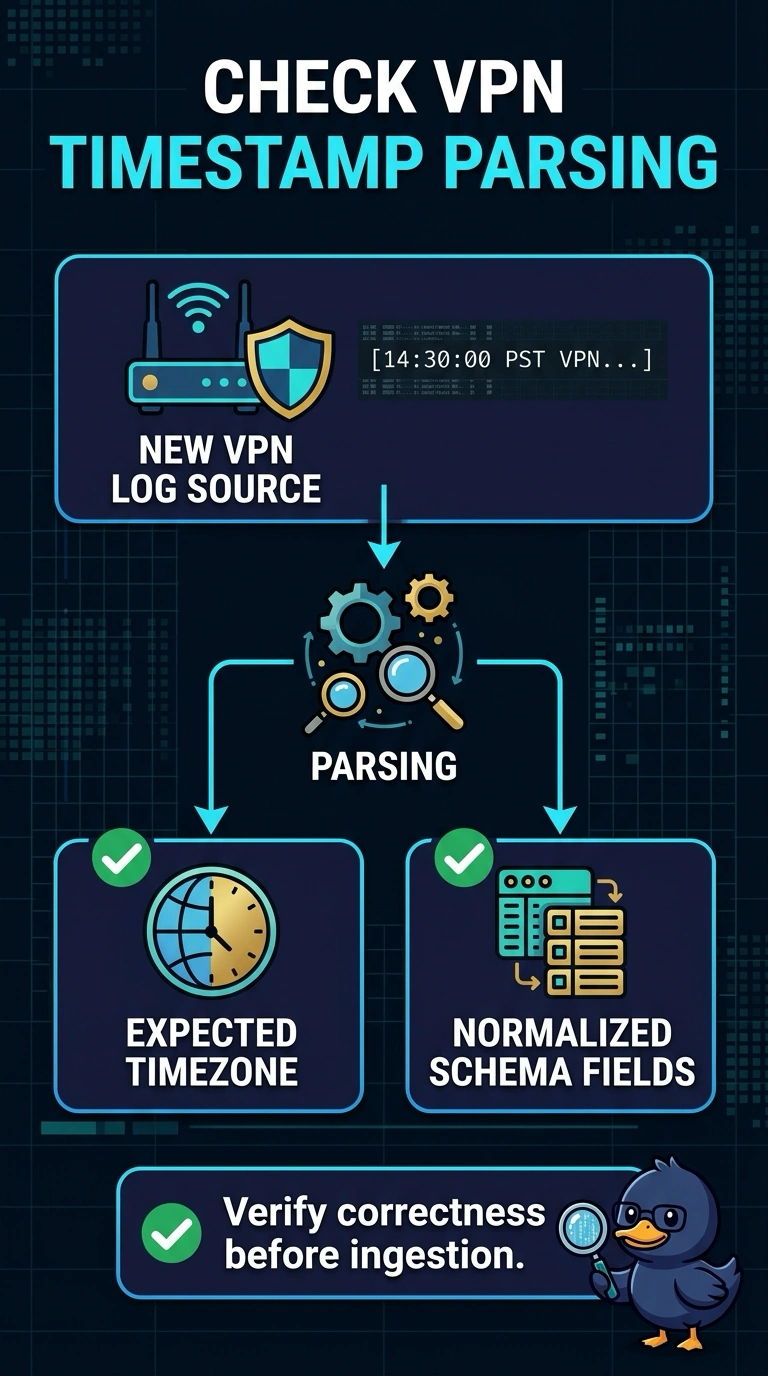
Short Explanation
If two watches are set to different time zones, two people can meet at the same moment and still disagree on the hour. Before you blame the query logic, make sure the new log source parses timestamps and fields consistently. The trap is changing rules or servers before checking parser alignment.
Full Explanation
When newly onboarded telemetry fails to correlate chronologically, you should Verify that the new VPN log source parses timestamps into the expected timezone and normalized schema fields. If a parser misinterprets local time as UTC or maps user and IP attributes into non-standard fields, cross-source joins and timeline ordering break down silently. Choosing to Rewrite the CQL search to remove all time window filters across the entire dataset degrades query performance and floods results with unrelated historical records without fixing the misalignment. Deciding to Restart the warehouse file server to force a reset of its local system clock risks service disruption and ignores that the anomaly began with the newly onboarded VPN source. Opting to Delete the existing correlation rule and recreate it with a lower alert threshold alters detection sensitivity while leaving the underlying timestamp and schema mismatch unresolved. As a caveat, some appliances emit timestamps without explicit timezone offsets, requiring parser configuration rather than endpoint changes. As an operational check, compare raw event timestamps against parsed SIEM timestamps for both sources in a narrow sample query.
Prefer to study offline? Printable PDF study book + test engine ($7.50, unofficial). These questions stay free here.