
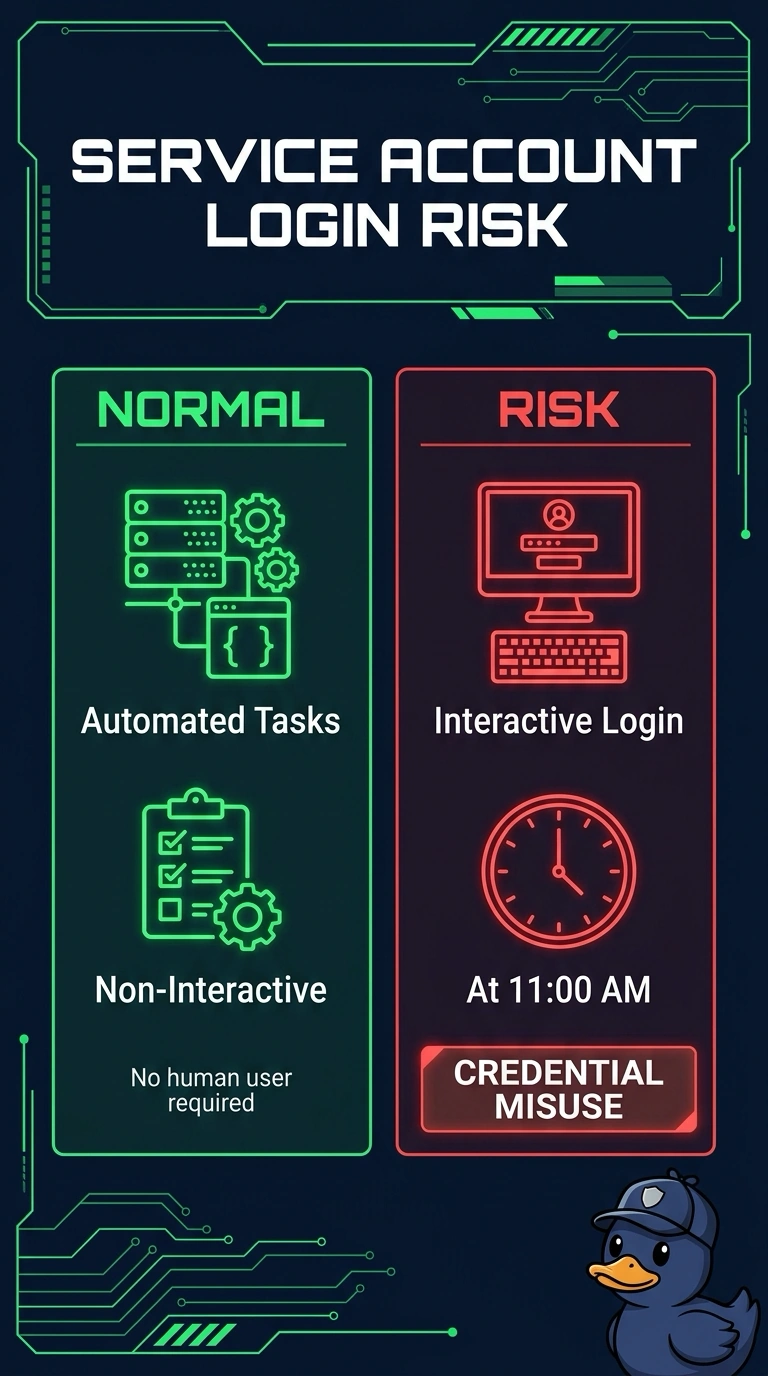
A logistics company SOC analyst investigates an alert showing an interactive remote desktop login using a database backup service account at 11:00 AM. Why should this immediately raise suspicion during investigation?
Select an answer to reveal the explanation.
Short Explanation
A backup service account logging in interactively is like seeing a delivery truck parked in the executive valet lane—it is the wrong tool for that job. The trap is ignoring the alert just because it happened during daytime hours. Always question interactive sessions on automated accounts so you catch stolen credentials early.
Full Explanation
Understanding normal account behavior is essential when evaluating authentication anomalies in Falcon Next-Gen SIEM. The reason this is suspicious is that Service accounts are normally restricted to automated non-interactive tasks, so interactive logins often indicate credential misuse by an attacker or unauthorized administrator. Claiming that Backup service accounts are prohibited from authenticating to any server during daytime business hours is false because scheduled jobs and maintenance tasks often run throughout the day as non-interactive sessions. Stating that Remote desktop logins always bypass Falcon Next-Gen SIEM logging unless a custom correlation rule exists confuses event ingestion with detection authoring. Claiming that Interactive logins automatically disable the service account's scheduled backup jobs across the domain describes a non-existent side effect. As a caveat, occasionally an administrator misuses a service account during emergency troubleshooting, so verify change tickets before declaring an intrusion. As an operational check, correlate the interactive logon event with the source workstation IP, initiating user context, and any subsequent process launches on the target server.
Prefer to study offline? Printable PDF study book + test engine ($7.50, unofficial). These questions stay free here.