
A healthcare SOC analyst investigates a suspicious script alert on a clinic laptop and notices zero endpoint events from that laptop over the next thirty minutes. What should the analyst verify before concluding the activity ended harmlessly?
Select an answer to reveal the explanation.
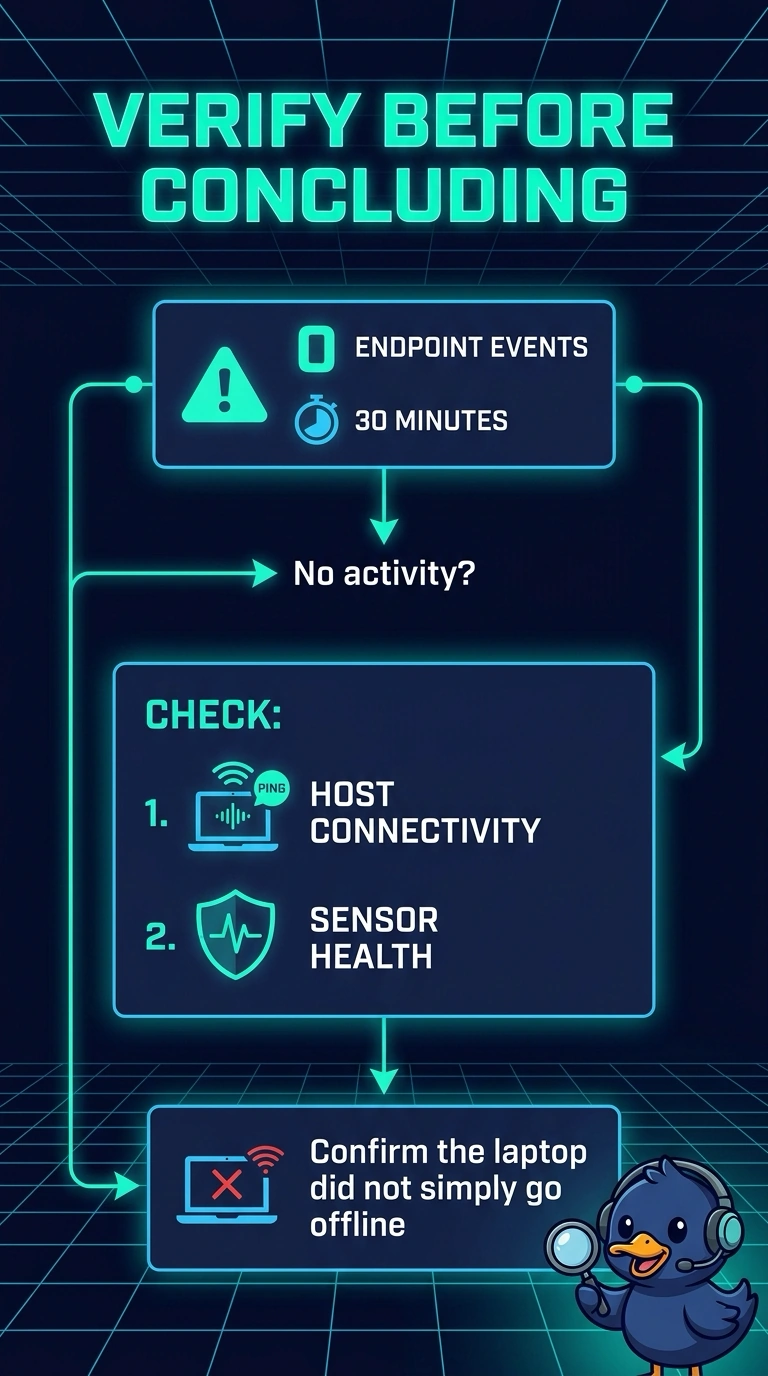
Short Explanation
When a noisy suspect suddenly goes quiet, it does not always mean they left the building because sometimes the camera just lost power. The trap is reading missing telemetry as proof that a threat stopped. Check whether your endpoint is still online and reporting before you assume the coast is clear.
Full Explanation
An absence of recent endpoint telemetry does not equal an absence of malicious activity, especially on portable clinic laptops that sleep, disconnect, or experience sensor tampering. You should Check host connectivity and sensor health to confirm the laptop did not simply go offline, because a powered-off or disconnected host stops sending events until it reconnects. Choosing to Close the case immediately as benign because thirty minutes of silence proves no persistence ignores the possibility that persistence already executed or the sensor was disabled. Choosing to Delete the original alert from the queue so it does not skew monthly response-time metrics destroys investigation history and violates auditability. Deciding to Assume the Falcon Fusion SOAR workflow automatically reimaged the laptop in the background relies on an unverified assumption rather than checking actual workflow execution and host status. As a caveat, if the host is online and healthy yet still silent, check whether the log ingestion pipeline is delayed before closing. As an operational check, review the host's last-seen timestamp and sensor status in Falcon Next-Gen SIEM and check network or VPN logs for recent activity.
Prefer to study offline? Printable PDF study book + test engine ($7.50, unofficial). These questions stay free here.