
While investigating a suspected cloud account takeover at a SaaS company, an analyst sees authentication logs from an unfamiliar IP at 3:00 AM alongside routine activity from the employee's laptop. What should the analyst verify to distinguish interactive sign-in records from background token activity while reconstructing access?
Select an answer to reveal the explanation.
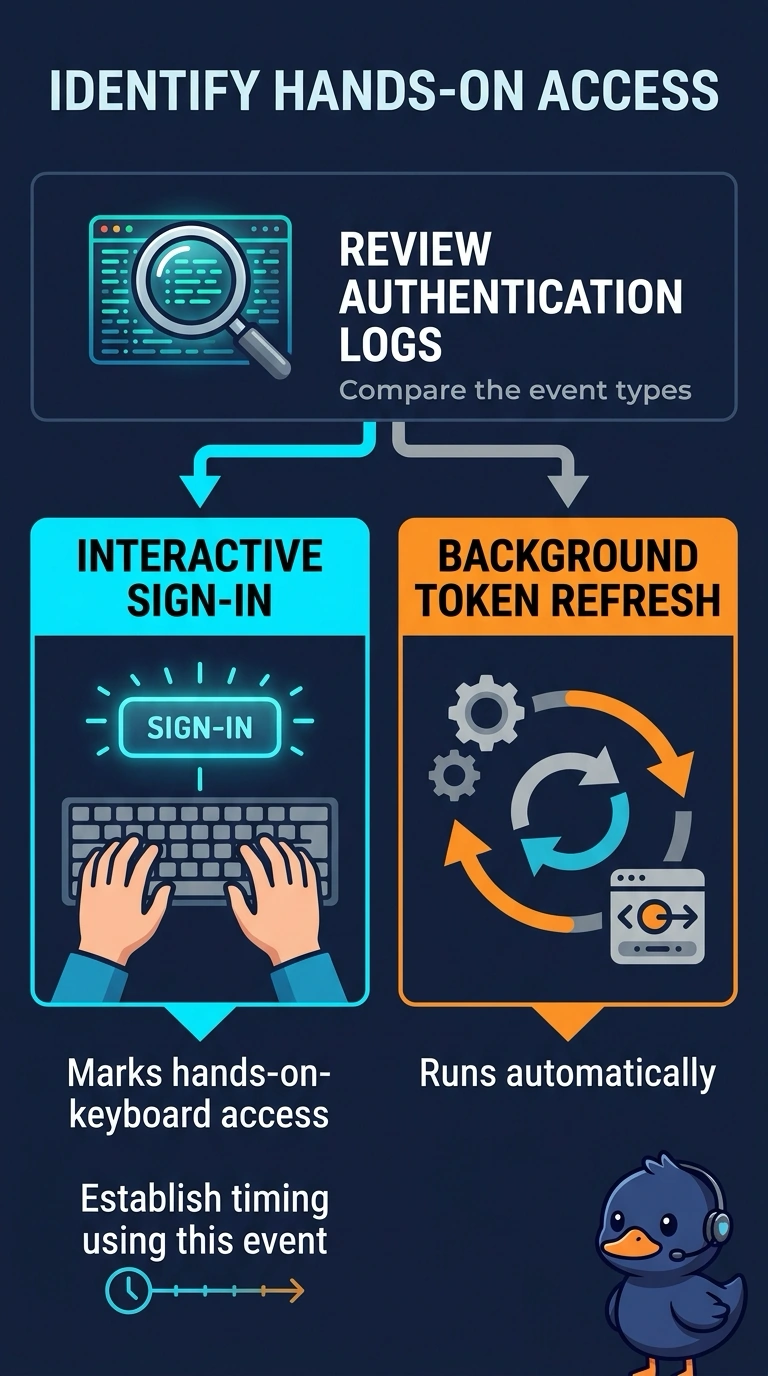
Short Explanation
Not every cloud login at 3:00 AM means someone is sitting at a keyboard—background apps renew tokens in their sleep. If you treat every refresh like a live sign-in, your timeline will blame the wrong window and miss the real intrusion.
Full Explanation
Modern cloud identity providers log both interactive user sign-ins and non-interactive token refreshes, and mixing them together distorts an intrusion timeline. Choosing to Distinguish interactive sign-in events from automated background token refreshes in the logs lets you: Sign-in type distinguishes authentication flows, not human presence or benign intent; stolen tokens and automated attackers can produce noninteractive activity, so correlate resource/API actions and device/session context. Selecting Assume every authentication record represents a manual password entry creates false-positive timeline branches and can misidentify when and how credentials were used. Opting to Ignore the 3:00 AM event because the employee's laptop also logged activity risks overlooking active attacker access using stolen session cookies or credentials from an external IP. Choosing to Reset the SIEM dashboard time filter to hide overnight authentication logs conceals critical evidence and breaks investigation integrity. As a caveat, an attacker with a stolen refresh token can also generate non-interactive events from an unfamiliar IP, so inspect IP address, user-agent, and device state together. For an operational check, filter identity telemetry by sign-in type and correlate the earliest unfamiliar-IP session with subsequent API or resource access.
Prefer to study offline? Printable PDF study book + test engine ($7.50, unofficial). These questions stay free here.