
A manufacturing SOC analyst confirms that an attacker used stolen credentials on a jump host to access two file servers. An existing Falcon Fusion SOAR workflow isolates only the host named in the triggering alert. What should the analyst do?
Select an answer to reveal the explanation.
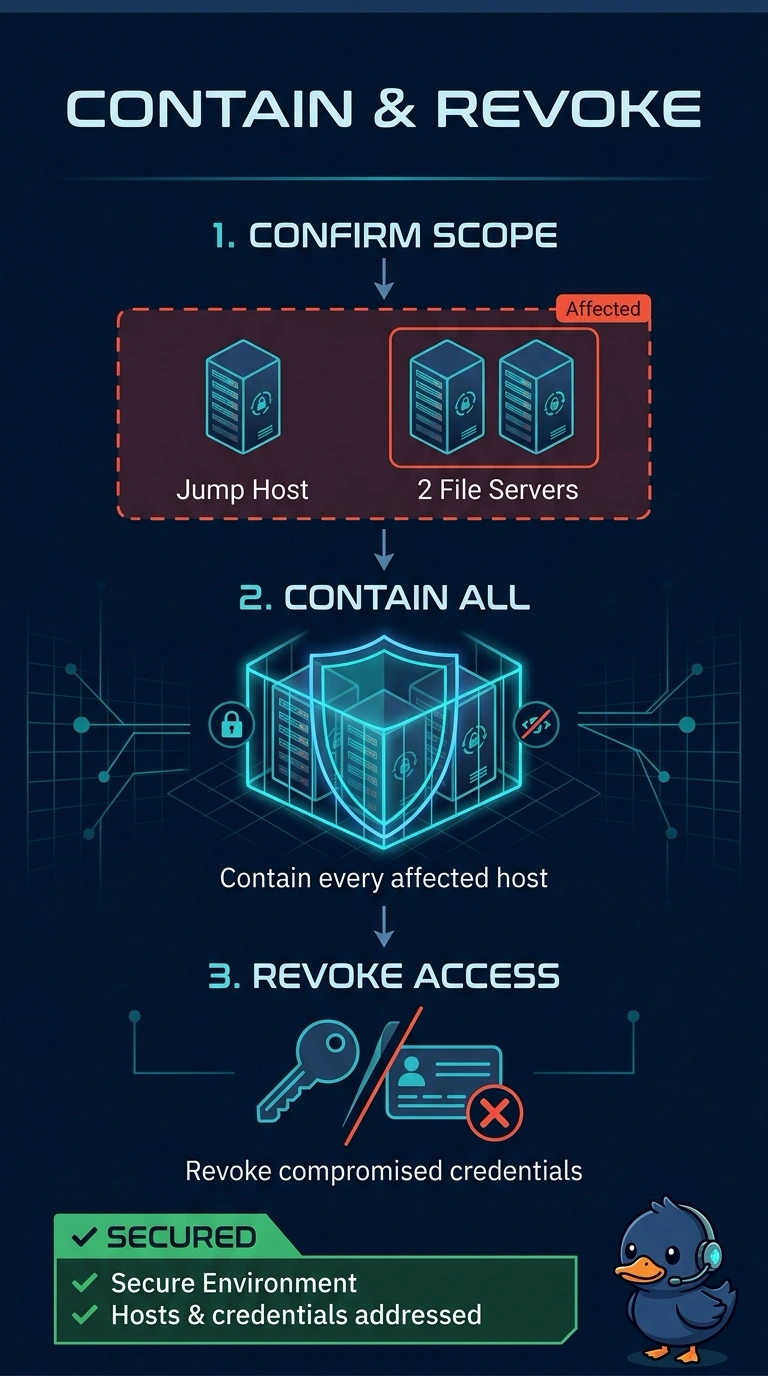
Short Explanation
Automated SOAR playbooks feel like a one-click finish line, so it is tempting to hit run and move on. Here is the trap: if the workflow only isolates the jump host, the attacker can keep operating on those two file servers with stolen credentials. You must contain every confirmed asset and cut off the compromised account.
Full Explanation
Effective containment must match the full scope of confirmed attacker access, which is why the analyst should trigger containment for all confirmed affected hosts and revoke the compromised credentials. Isolating only the jump host leaves the two accessed file servers exposed and allows the adversary to reuse the stolen identity elsewhere on the network. Choosing to run the single-host SOAR workflow once and assume the attacker's session will time out automatically leaves active lateral movement unaddressed and risks data theft or ransomware deployment. Deciding to delete the correlation rule that generated the jump-host alert so the case queue stays clean removes future visibility without stopping the active intrusion. Choosing to wait for the next scheduled vulnerability scan to confirm whether the file servers were modified delays response far too long and uses a posture tool instead of incident telemetry. As an operational caveat, verify the business role of the file servers and coordinate urgent containment with infrastructure owners if critical production workflows depend on them. As an operational check, query authentication and endpoint logs after containment to confirm no further sessions use the revoked credentials or originate from the isolated hosts.
Prefer to study offline? Printable PDF study book + test engine ($7.50, unofficial). These questions stay free here.