
While scoping a suspicious domain seen on a retail point-of-sale server, an analyst searches branch DNS logs and finds zero hits for two remote stores. What should the analyst do before declaring those two stores unaffected?
Select an answer to reveal the explanation.
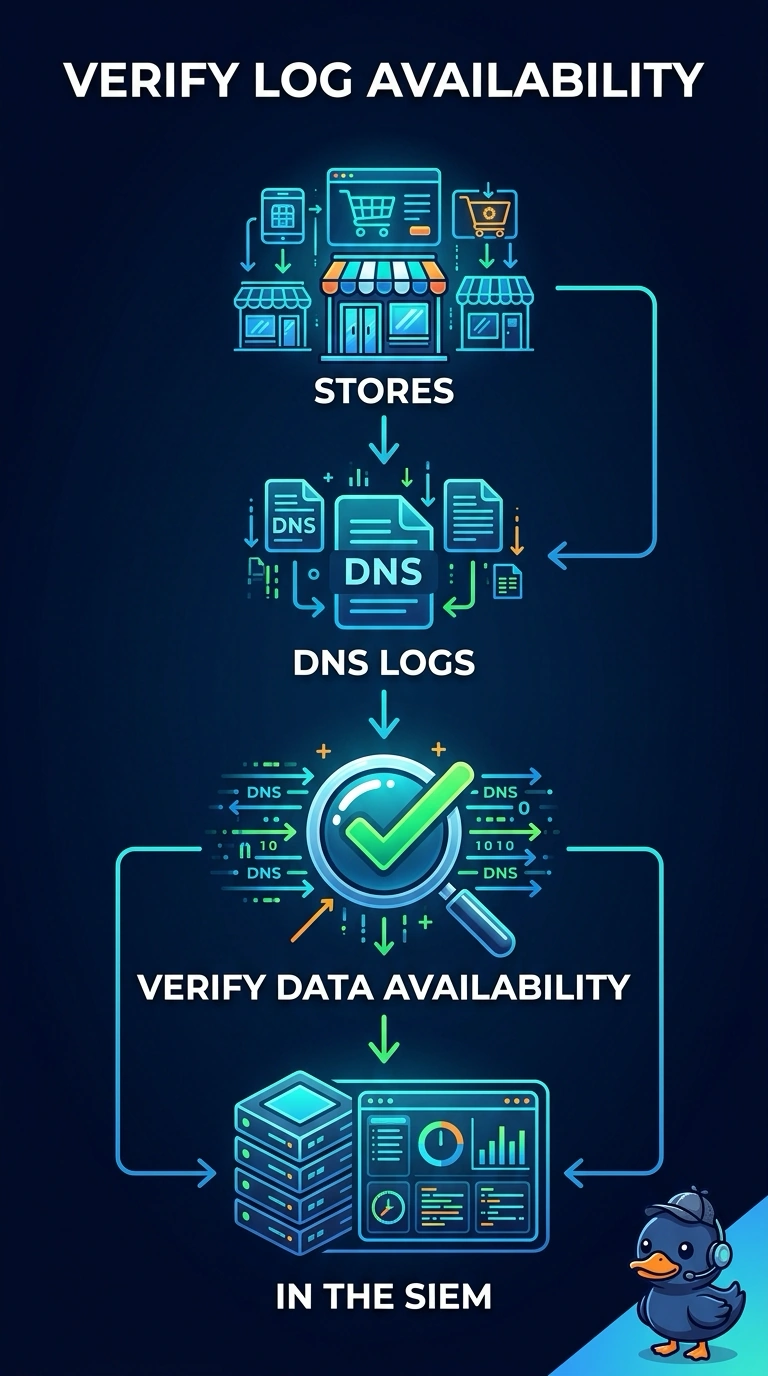
Short Explanation
An empty search result is reassuring only if you know the camera was actually plugged in and recording. Before you declare those stores clean, check data availability to confirm their DNS logs are reaching the SIEM.
Full Explanation
An absence of search results in a SIEM proves zero activity only when the required telemetry was collected and is searchable for the relevant location and time range. Before concluding that the two remote stores never queried the suspicious domain, verify data availability for those stores’ DNS logs in the SIEM; this can reveal ingestion gaps, forwarder outages, or branch DNS traffic that was not collected. Marking the two branch stores as confirmed clean risks leaving compromised point-of-sale environments undetected because visibility is missing. Deleting the suspicious domain IOC from the investigation timeline discards valid evidence observed on another server simply because two branches returned no hits. Triggering a Fusion SOAR containment workflow against every branch store would impose disruptive response actions across stores without confirming exposure. As an exam caveat, confirm that the log source is onboarding for both stores and that the query window matches the suspected activity period. As a practical check, run a broad baseline CQL search for any DNS events from those two store identifiers during the target timeframe to confirm telemetry is present.
Prefer to study offline? Printable PDF study book + test engine ($7.50, unofficial). These questions stay free here.