
A retail SOC analyst notices that a custom correlation rule fires on the exact same single-host PowerShell execution that already generates a first-party Falcon endpoint detection, adding no external network or identity context. What should the analyst evaluate?
Select an answer to reveal the explanation.
Short Explanation
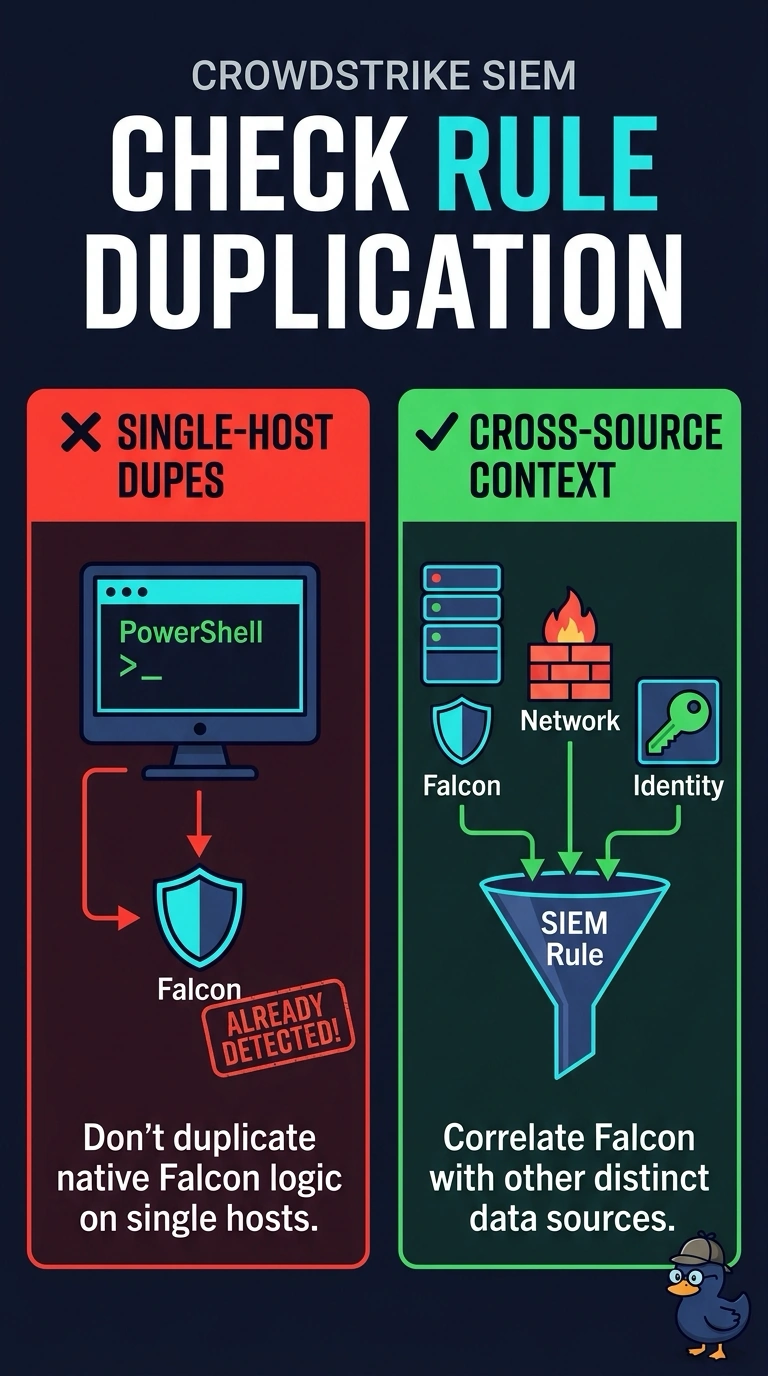
Building a custom rule that merely echoes what the endpoint sensor already catches is like hiring a second guard to stand next to the first one and shout the exact same thing. You want custom correlation rules to add cross-source context, not duplicate alerts.
Full Explanation
The analyst should evaluate Whether the custom correlation rule duplicates native detection logic instead of correlating cross-source context. Custom correlation rules in Falcon Next-Gen SIEM are most valuable when they join multiple events or log sources—such as endpoint, identity, and network telemetry—rather than mirroring a single-event first-party detection. Choosing to examine Whether to disable first-party Falcon endpoint detections globally so only the custom correlation rule fires would dangerously weaken core endpoint visibility across the retail fleet. Choosing to check Whether raising the custom correlation rule's severity to critical will automatically merge it with firewall logs misunderstands severity settings, which only prioritize alerts rather than joining new data sources. Choosing to investigate Whether third-party passthrough alerts from the web proxy are somehow causing the endpoint sensor to double-log confuses independent detection origins, as proxy passthrough alerts do not alter native endpoint telemetry. As a caveat, confirm that the native detection captures all required fields before retiring a redundant rule. For an operational check, compare the triggering logic and alert metadata of both detections in the SIEM to verify full coverage.
Prefer to study offline? Printable PDF study book + test engine ($7.50, unofficial). These questions stay free here.