
A university SOC analyst enables a new correlation rule to detect internal port scanning, and a single misconfigured network scanner generates 80 separate alerts within three minutes—one for each target server. How should the analyst refine the correlation rule to consolidate related activity?
Select an answer to reveal the explanation.
Short Explanation
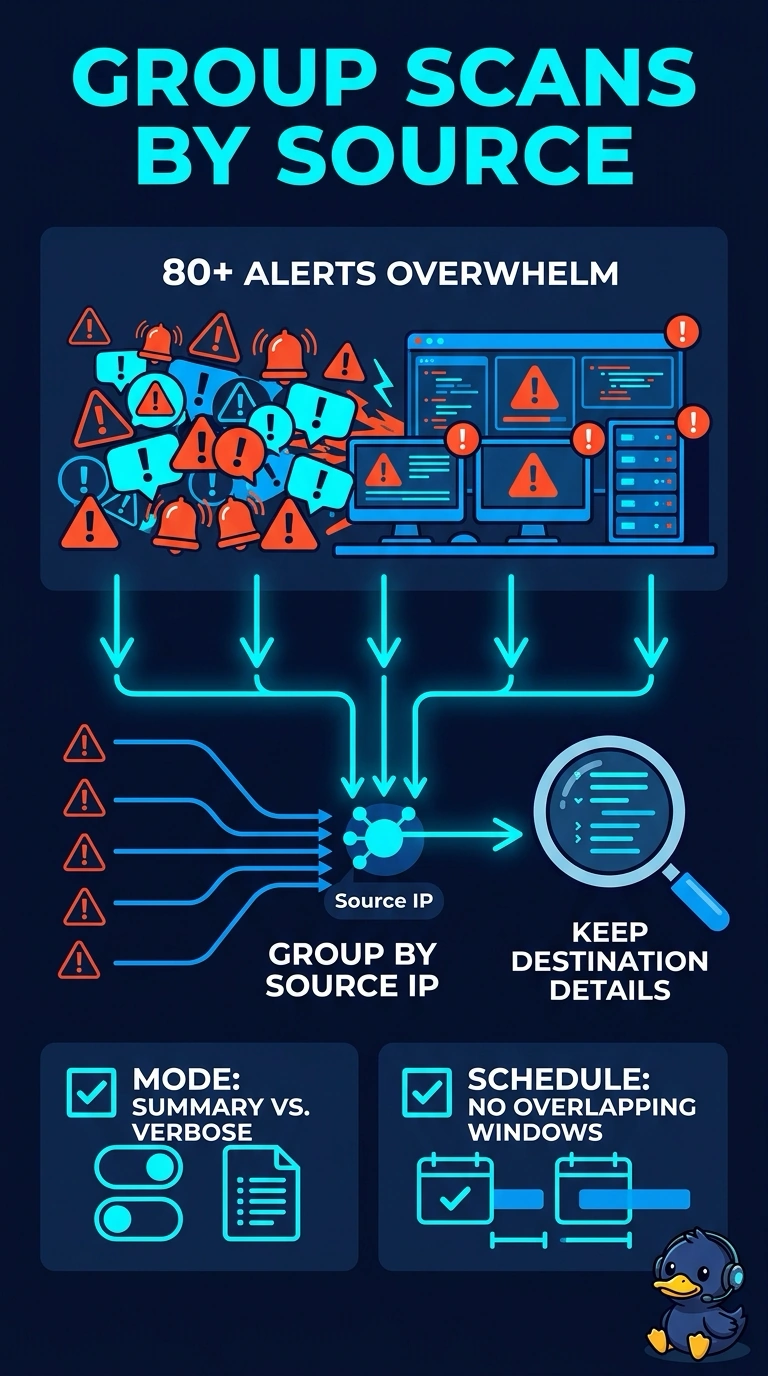
Getting 80 separate alerts for one noisy scanner is like getting 80 voicemails when you needed one summary text. You can tame that flood by aggregating on the initiating entity while keeping destination details for drilldown, and the trap is tweaking severity or labels instead of fixing how events are grouped.
Full Explanation
Consolidating related scan activity requires "Aggregate by initiating source IP within the evaluation window while retaining destination details for drilldown" so the correlation engine groups all targeted ports and hosts from that scanner together within each evaluation window, keeping destination data as contributing events you can expand for triage. This aggregation reduces per-target noise without losing forensic detail. Verify Summary versus Verbose trigger mode and overlapping search windows as well; query grouping shapes result rows, while mode and schedule determine detection count. Choosing "Raise the rule severity from medium to critical so the SOC prioritizes the scanner without consolidating events" only changes the priority label and still leaves analysts triaging many separate alerts. Selecting "Remove the MITRE ATT&CK Discovery mapping from the correlation rule metadata" strips useful behavioral context without reducing alert volume or changing grouping logic. Opting to "Replace the correlation rule with a third-party passthrough alert generated by an external scanner for outside visibility" abandons custom SIEM correlation logic and does not solve internal-to-internal scan aggregation. Caveat: grouping strictly by source IP works well for a single scanner, but if multiple hosts behind a shared NAT gateway scan simultaneously, you may need an additional host or user identifier to avoid merging unrelated activity.
Prefer to study offline? Printable PDF study book + test engine ($7.50, unofficial). These questions stay free here.