
An insurance firm SOC analyst reviews a medium-severity correlation-rule detection titled for potential credential harvesting on an underwriting workstation. Before escalating the host for containment, what should the analyst inspect first?
Select an answer to reveal the explanation.
Short Explanation
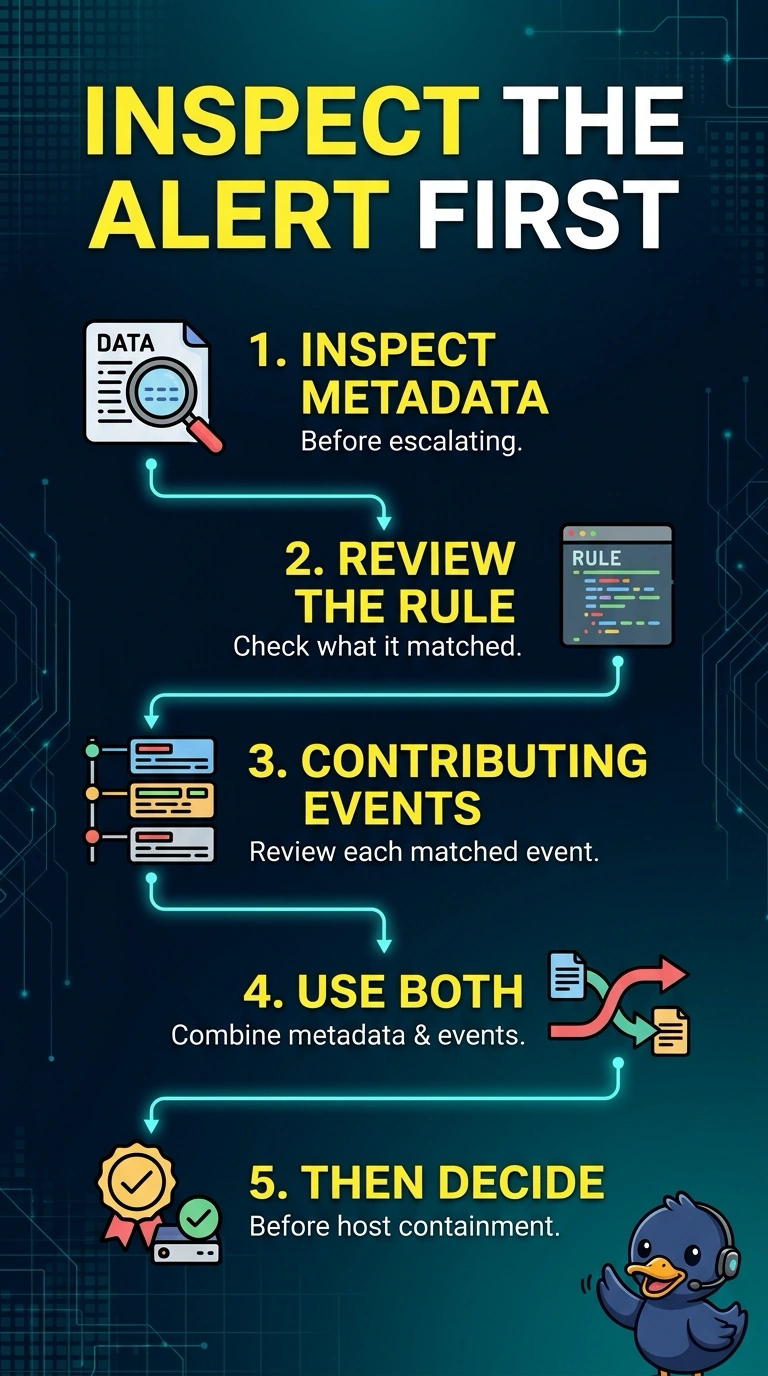
A correlation rule title is like a fire alarm label on a hallway panel—it tells you what kind of trouble was flagged, not which room actually has smoke. Before you escalate for containment, look at the alert metadata and contributing events that matched the rule so you know what really happened. Jumping straight to generic ATT&CK definitions, upstream firewall policies, or containment workflows skips the evidence check and risks isolating a healthy workstation.
Full Explanation
Correlation rules in Falcon Next-Gen SIEM evaluate queries against ingested telemetry and generate detections when defined conditions are met. Examining "The alert metadata and contributing events matched by the rule" reveals the exact timestamps, host context, user accounts, and source records that caused the detection to fire, allowing the analyst to verify whether the behavior is malicious or benign administrative activity. "The MITRE ATT&CK tactic definition attached to the rule summary" only explains the general adversary objective associated with the rule and cannot confirm what occurred on the underwriting workstation. Checking "The upstream third-party firewall policy that forwarded raw logs" is misplaced as a first step because a correlation-rule detection originates from SIEM query logic across ingested data rather than a single upstream appliance rule. Reviewing "The automated containment workflow settings for isolating the endpoint" is premature before the analyst validates the underlying evidence and confirms unauthorized activity. As a caveat, even well-written correlation rules can fire on legitimate software updates or authorized IT scripts that resemble attacker behavior. As an operational check, review the contributing event fields, parent processes, and user session context in the alert details before initiating escalation or containment.
Prefer to study offline? Printable PDF study book + test engine ($7.50, unofficial). These questions stay free here.