
A school district SOC receives a third-party passthrough detection from a cloud web gateway flagging suspicious outbound traffic from a staff laptop, but the alert includes no process name or parent command. How should the analyst validate the activity?
Select an answer to reveal the explanation.
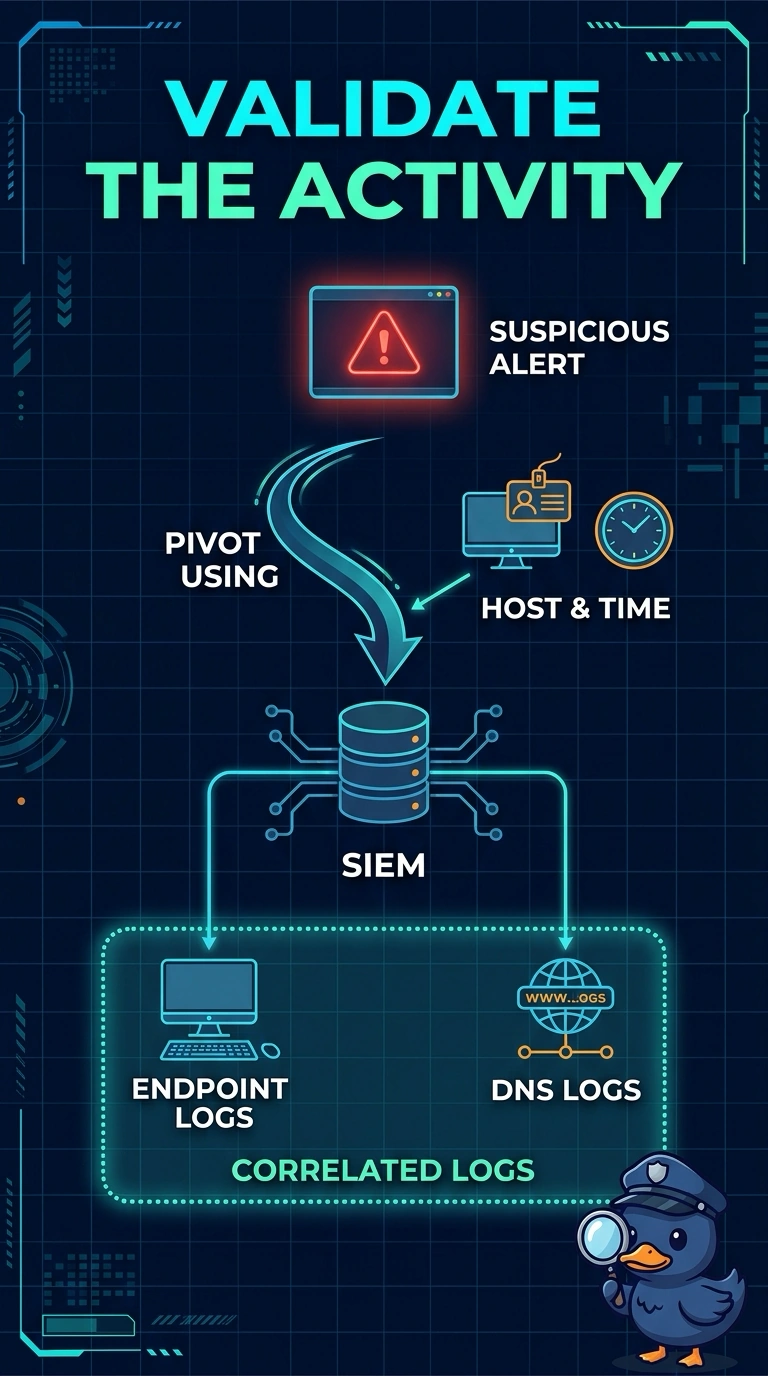
Short Explanation
A perimeter gateway sees the traffic leaving the building, not which program inside the laptop sent it. The trap is dismissing a third-party passthrough alert just because it lacks endpoint process lineage that you can easily pull from correlated SIEM logs.
Full Explanation
Third-party network appliances inspect traffic at the perimeter and rarely capture host-level execution details, making Pivot into correlated endpoint and DNS logs in the SIEM using host and time the right validation step. By matching the laptop's identifier, source IP, and timestamp against Falcon endpoint telemetry, the analyst can see which binary initiated the connection. Choosing Disable the third-party passthrough integration until it includes process trees blinds the SOC to legitimate perimeter detections over a limitation inherent to network sensors. Choosing Automatically close the alert as a false positive because process metadata is absent risks missing real command-and-control traffic simply because the gateway lacked host visibility. Choosing Ask the user to reboot the laptop and see whether the gateway alerts again disrupts the user and destroys volatile state without answering what sent the traffic. As a caveat, confirm whether NAT or proxy forwarding altered the client IP before pivoting. For an operational check, search endpoint network-connect and DNS request events around the gateway timestamp to link the destination to a specific process.
Prefer to study offline? Printable PDF study book + test engine ($7.50, unofficial). These questions stay free here.