
A software company SOC notices that a correlation rule linking cloud identity sign-ins with firewall blocks has not generated a single alert in three weeks, even during red-team testing. What should the analyst check first?
Select an answer to reveal the explanation.
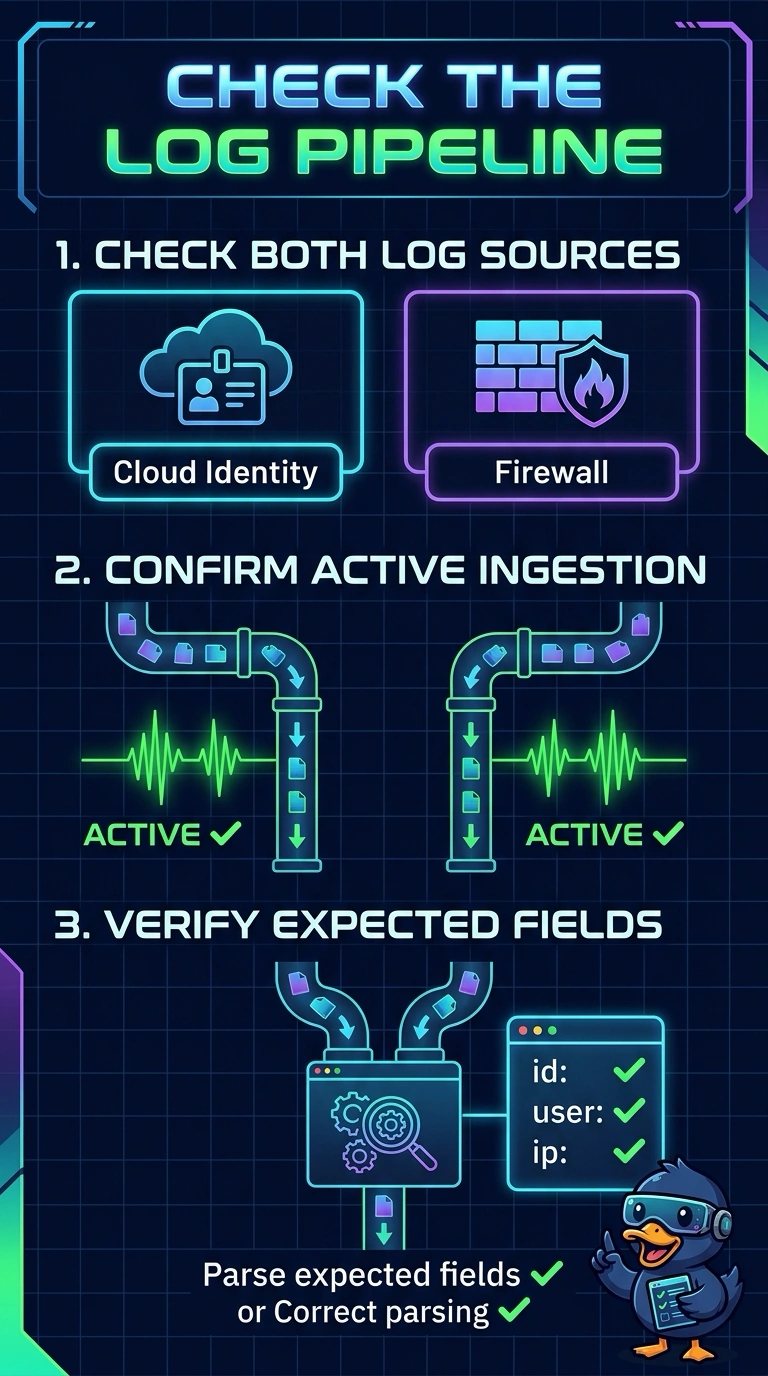
Short Explanation
A quiet detection queue can trick you into thinking the network is safe when the sensor pipeline is actually broken. The trap is tweaking rule metadata or severity when one of the required log feeds stopped arriving. Always confirm your telemetry is flowing and parsing before you trust zero alerts.
Full Explanation
A multi-source correlation rule cannot fire if any required data stream is missing or unparsed, making it essential to verify that both the cloud identity and firewall log sources are actively ingesting and parsing expected fields. If a connector token expired or a parser update renamed a normalized field, even deliberate red-team activity will fail to match the rule's join criteria. Choosing to lower the correlation rule's severity threshold so informational events trigger alerts only changes the priority label on matched detections and does nothing when no matches occur. Attempting to replace the correlation rule with a Falcon Fusion SOAR enrichment playbook confuses automated response and enrichment with query-based detection logic. Deciding to add a MITRE ATT&CK tactic tag to the rule metadata to increase detection sensitivity fails because ATT&CK tags are descriptive labels for analysts, not query conditions that alter matching. As a caveat, ingestion alone is not enough if timestamps are skewed or normalized fields remain empty, so inspect sample parsed events from both sources. As an operational check, run separate CQL queries on the cloud identity and firewall datasets for the red-team test window to confirm the expected events and fields exist.
Prefer to study offline? Printable PDF study book + test engine ($7.50, unofficial). These questions stay free here.