
A hospital SOC receives a medium-severity correlation alert on an internet-facing clinical scheduling portal and a high-severity alert on an isolated test printer. How should the analyst prioritize triage?
Select an answer to reveal the explanation.
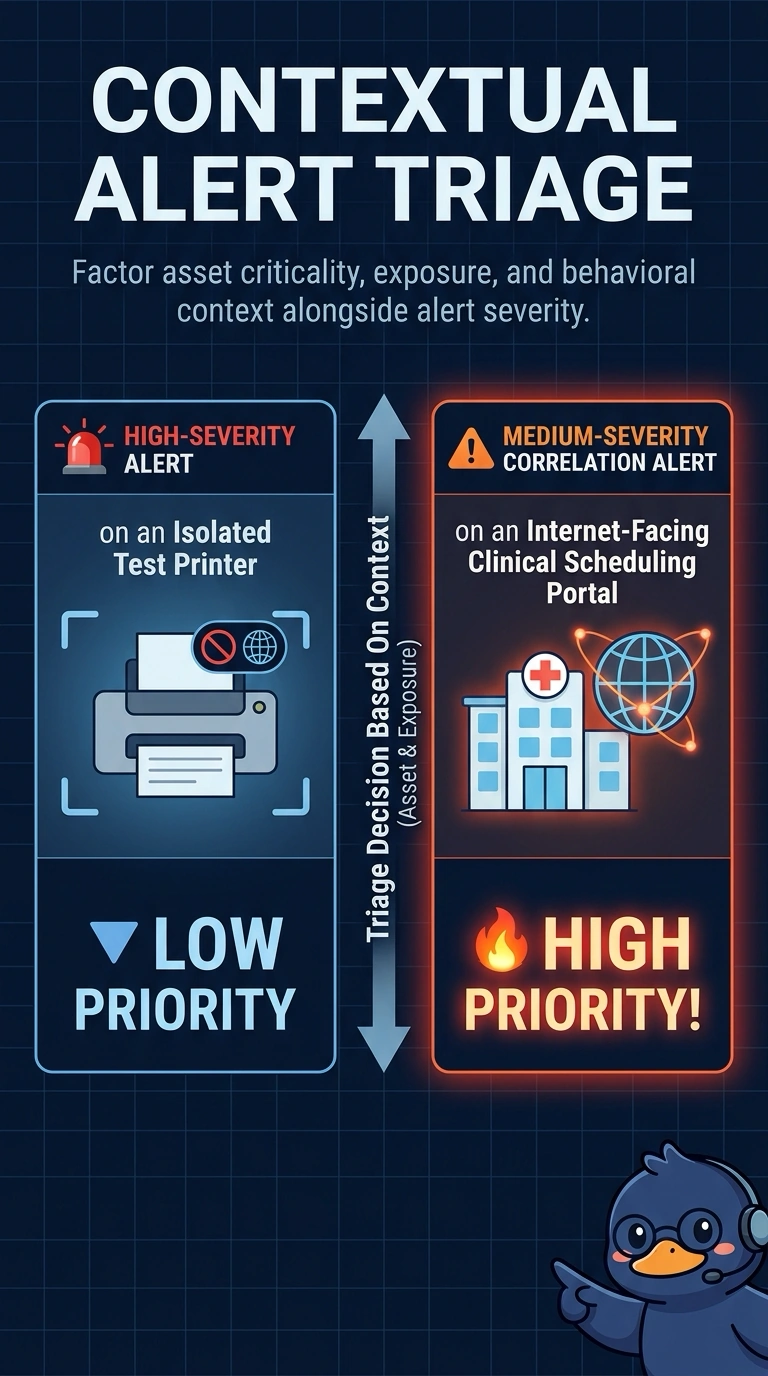
Short Explanation
A small spark next to an oxygen tank demands faster attention than a loud alarm in an empty storage closet. When you triage alerts, severity scores are only one input—asset exposure and criticality matter just as much. The trap is sorting your queue strictly by severity label.
Full Explanation
Sound triage requires that you Factor asset criticality, exposure, and behavioral context alongside the alert severity. An internet-facing scheduling portal supporting clinical operations carries far greater potential impact than an isolated test printer, even if its initial rule severity is lower. Choosing to Always investigate the high-severity alert first because severity ratings measure confirmed business impact mistakes a generic rule score for full business-risk assessment. Deciding to Close the medium-severity alert automatically because medium alerts indicate benign administrative activity risks missing real intrusions that trigger moderate-severity detections. Opting to Escalate both alerts directly to executive leadership before checking whether either event is a false positive wastes leadership attention and bypasses basic analyst validation. As a caveat, high-severity alerts still need timely review once critical exposed assets are assessed. As an operational check, enrich both alerts with asset role, network exposure, and recent user activity in your triage workflow before setting final priority.
Prefer to study offline? Printable PDF study book + test engine ($7.50, unofficial). These questions stay free here.