
A retail platform team upgrades its Kubernetes cluster nodes and notices that new pods are running, but Falcon Cloud Security shows the Falcon sensor DaemonSet pods failing with permission errors when trying to mount host paths. Which prerequisite should the team verify?
Select an answer to reveal the explanation.
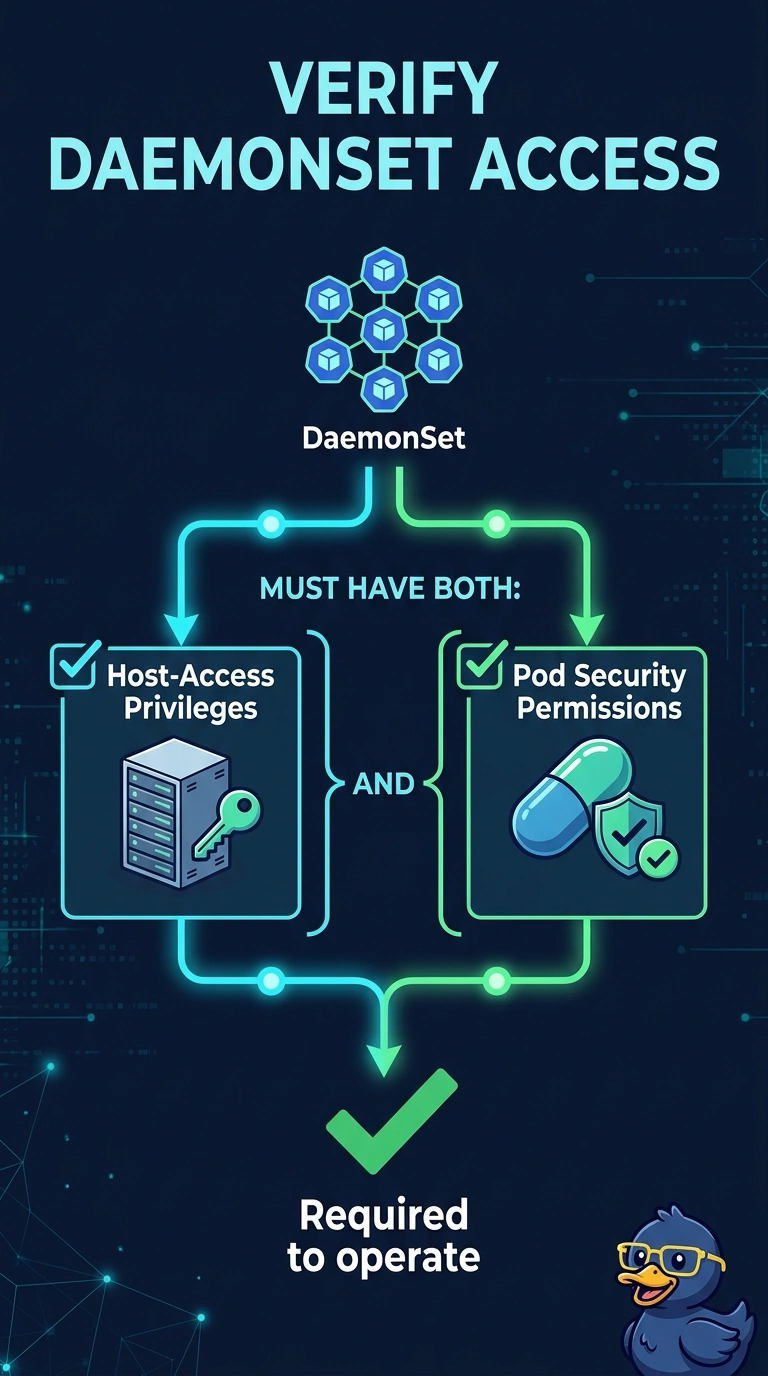
Short Explanation
Think of a node-level sensor like a building security system that needs master-key access to inspect your hallways—if a cluster upgrade tightens the locks, you get blocked at the door. The trap is chasing registry credentials when the error explicitly points to host-path mount permissions.
Full Explanation
Verifying Whether the DaemonSet has the required host-access privileges and Pod Security permissions directly addresses why sensor pods fail when mounting host paths, because node-level Falcon sensors require elevated namespace or Pod Security permissions to observe kernel and container runtime activity across the host. Checking Whether the private container registry credentials expired during the cluster upgrade would explain an image-pull failure, not a runtime permission error when attempting to mount host paths. Checking Whether the cloud organization's scheduled compliance reports are configured for CSV output has no bearing on Kubernetes pod scheduling or host-mount authorization. Checking Whether Terraform Infrastructure-as-Code scanning is enabled on the application repository evaluates pre-provisioning templates in source control rather than live Kubernetes DaemonSet permissions. Keep in mind as a caveat that cluster upgrades sometimes reset namespace labels or enforce stricter default Pod Security standards on system namespaces. As an operational check, inspect the DaemonSet pod events and verify that the dedicated sensor namespace and service account still hold the documented privileges required by the Falcon sensor deployment.
Prefer to study offline? Printable PDF study book + test engine ($7.50, unofficial). These questions stay free here.