
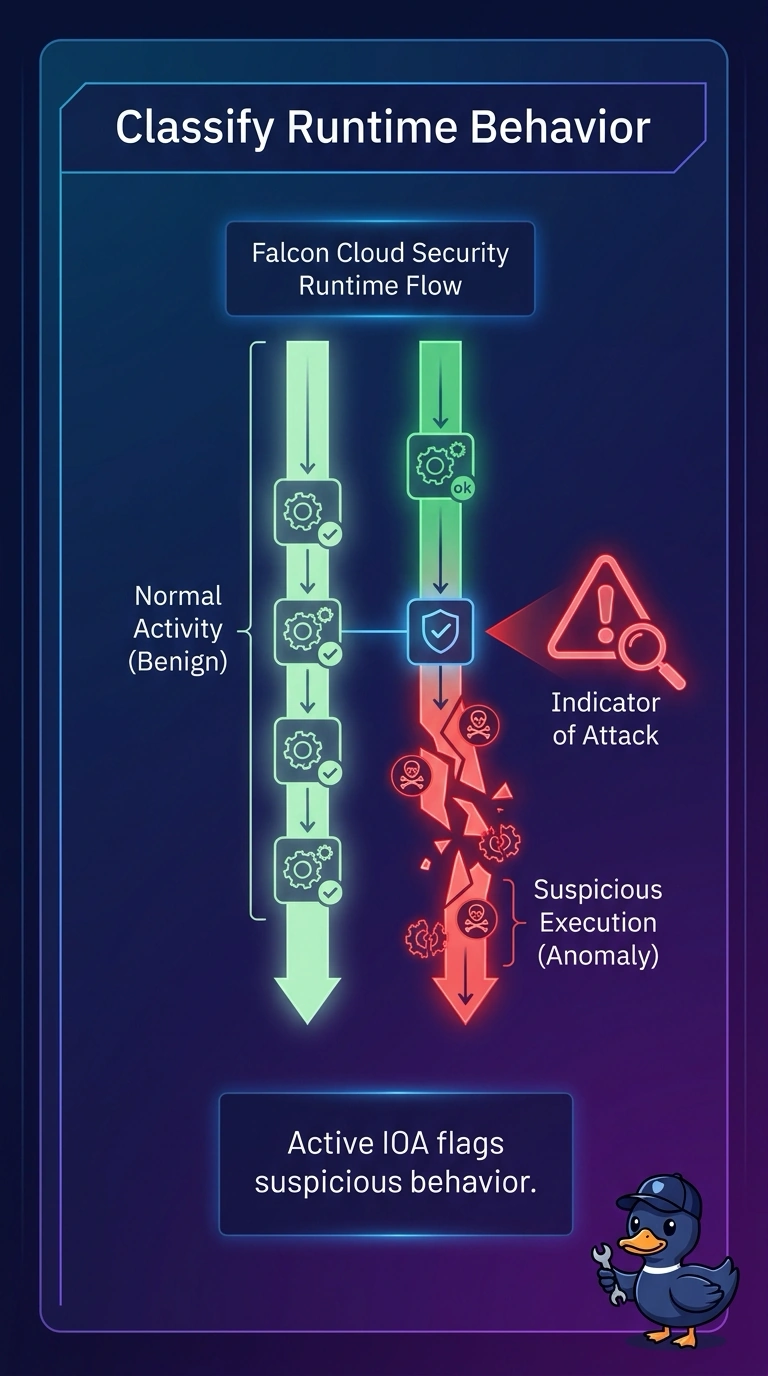
A hospital SOC analyst receives a Falcon Cloud Security runtime alert showing a running web container spawning an interactive shell and attempting to read local credential files. How should the analyst classify this event?
Select an answer to reveal the explanation.
Short Explanation
A vulnerability scan tells you a window lock is weak, while a motion sensor tells you someone is climbing through the room. When you see a live container spawning a shell and reaching for credentials, the trap is treating active attacker behavior like a static scan.
Full Explanation
Spawning an interactive shell and reading credential files inside a live workload reflects real-time malicious or unauthorized activity, making An active runtime Indicator of Attack showing suspicious execution behavior the accurate classification. Falcon sensors observe process execution and file access at runtime to surface Indicators of Attack that static scans cannot predict before deployment. A pre-runtime image assessment finding for an outdated package fails because package assessment inspects image layers before execution and does not observe live shell spawning. A routine cloud posture benchmark check for storage encryption is incorrect because posture benchmarks evaluate cloud control-plane settings against frameworks rather than in-container process behavior. An agentless cloud account registration failure for the cluster fails because onboarding errors prevent cloud resource discovery rather than generating runtime execution alerts from a running pod. As an exam caveat, distinguish static misconfigurations and vulnerable packages from observed runtime behavior—only runtime telemetry proves an action is occurring. For an operational check, review the process tree, container image identity, and network connections in the detection details to confirm whether an authorized administrator or an attacker initiated the shell.
Prefer to study offline? Printable PDF study book + test engine ($7.50, unofficial). These questions stay free here.