
A distributed office SOC team wants to ensure that when a Fusion SOAR notification workflow triggers on a critical cloud posture finding, responders can trace which automated actions ran and whether delivery succeeded. What should the team review in Falcon Cloud Security?
Select an answer to reveal the explanation.
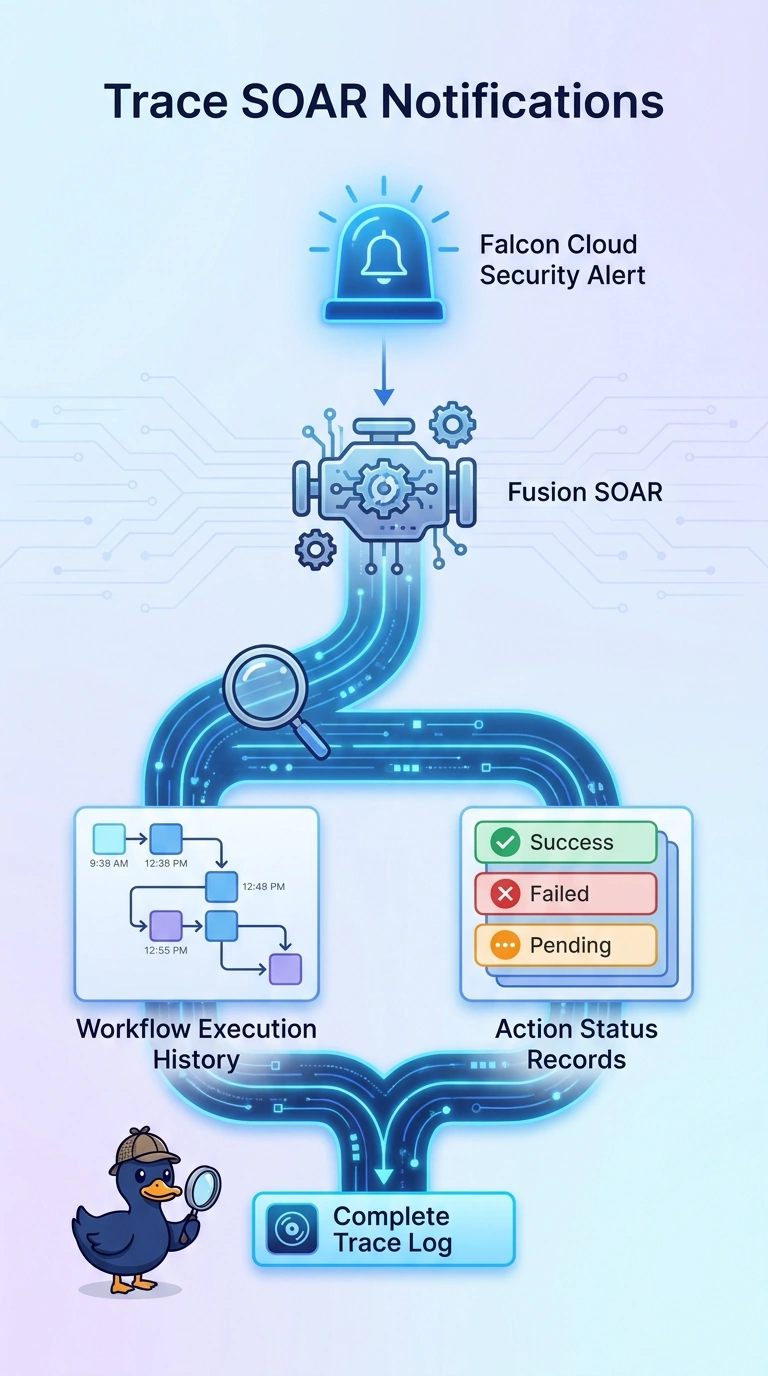
Short Explanation
When an automated alert workflow runs, you need the flight recorder to prove every step actually fired and landed. The trap is looking in inventory or cluster settings instead of the workflow's own execution records.
Full Explanation
Reviewing The Fusion SOAR workflow execution history and action status records gives responders direct visibility into whether a trigger condition matched, which workflow steps executed, and whether external notification or remediation actions succeeded or failed. Checking The container registry's pre-runtime package vulnerability inventory shows software libraries inside stored container images, not whether a SOAR workflow delivered an alert. Inspecting The Kubernetes DaemonSet node selector configuration on worker nodes governs where runtime sensor pods schedule in a cluster rather than auditing SOAR automation runs. Examining The cloud provider's Infrastructure-as-Code template diff in source control tracks planned infrastructure code changes in Git, not real-time notification delivery inside Falcon Cloud Security. Keep in mind as a caveat that a workflow marked as triggered can still fail at an individual downstream action if an external webhook or API credential is invalid. As an operational check, open the Fusion SOAR execution history for the workflow, filter for recent runs matching the critical finding, and verify each action step reports a completed status.
Prefer to study offline? Printable PDF study book + test engine ($7.50, unofficial). These questions stay free here.