
A retail cloud engineer applies a fix in the cloud console for an open posture finding, yet Falcon Cloud Security still lists the finding as active a few minutes later. What should the engineer check first?
Select an answer to reveal the explanation.
Short Explanation
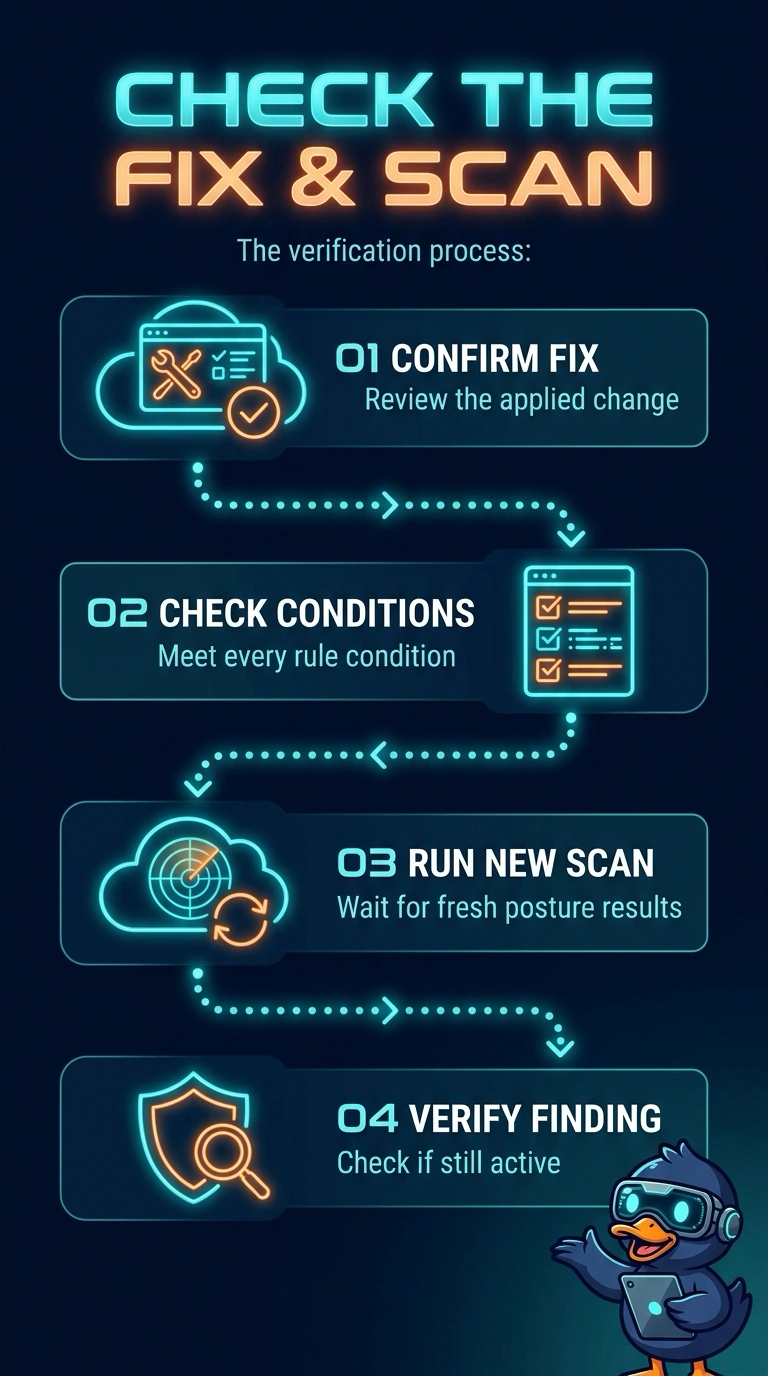
Fixing a cloud setting is like cleaning your room before an inspection—the chore is done, but the grade only updates after the inspector walks back through. You need to verify both that the fix met every requirement and that a fresh posture scan has completed. The trap is blaming Kubernetes admission controls or node sensors for cloud control-plane posture status.
Full Explanation
Whether the applied change satisfied all rule conditions and a new posture scan has run is correct because cloud posture findings update only after the cloud provider state fully meets the rule criteria and Falcon Cloud Security performs its next assessment cycle. A partial fix—such as restricting one port while leaving another exposed—will keep the finding open. Whether the Kubernetes admission policy needs to be restarted to clear cloud posture alerts is incorrect because admission policies govern pod deployment requests inside clusters rather than cloud control-plane posture findings. Whether the Falcon sensor DaemonSet on worker nodes was updated to the newest image digest is incorrect because node-level runtime sensors monitor workload execution rather than evaluating cloud account posture rules. Whether the account's scheduled weekly PDF report has already been emailed to leadership is incorrect because scheduled reports deliver summaries of existing findings and do not trigger posture re-evaluation. As a caveat, if Infrastructure-as-Code templates are not updated to match the console change, the next deployment may reintroduce the misconfiguration. As an operational check, trigger or wait for the next cloud posture scan and inspect the resource's evaluated configuration details to confirm all rule criteria are met.
Prefer to study offline? Printable PDF study book + test engine ($7.50, unofficial). These questions stay free here.