
A software enterprise has hundreds of cloud accounts with an AWS S3 organizational requirement for a designated customer-managed SSE-KMS default on new uploads; developers replace it with SSE-S3, and the approved KMS/key-access remediation has been validated. This creates a recurring posture finding where developers violate the required KMS default; S3 still automatically encrypts new uploads with SSE-S3, while a separate one-time finding flags an overly complex legacy IAM trust policy. How should the security team handle these two remediation needs in Falcon Cloud Security?
Select an answer to reveal the explanation.
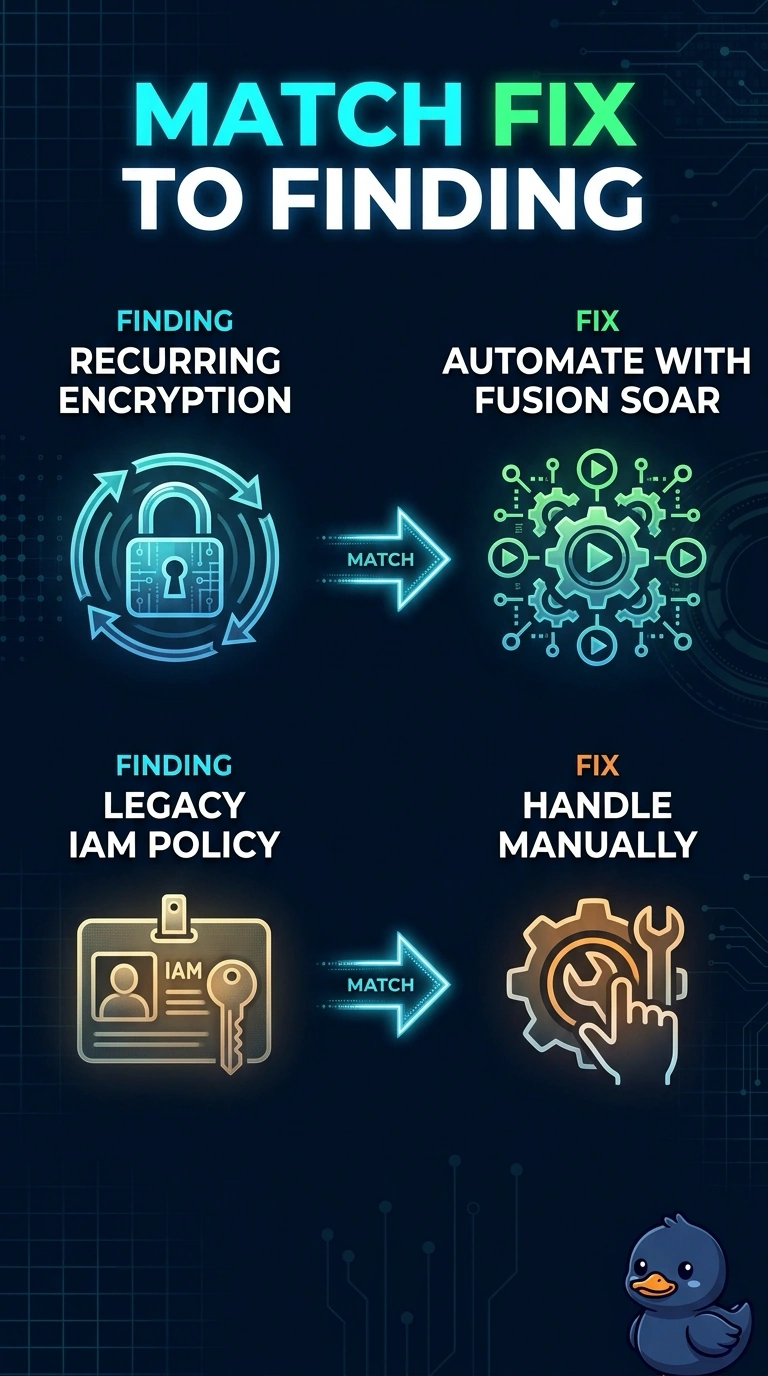
Short Explanation
Think of this like home maintenance: you automate the sprinklers you have already tested, but you still inspect a cracked foundation by hand. You can safely auto-restore the validated SSE-KMS default when developers violate the required KMS default, knowing S3 still automatically encrypts new uploads with SSE-S3, while you keep the one-off legacy IAM trust policy under human review.
Full Explanation
The correct approach is to Automate the recurring encryption fix with a Fusion SOAR workflow while handling the legacy IAM policy manually. Restoring the designated customer-managed SSE-KMS default on new uploads is standardized and repeatable across hundreds of accounts where teams violate the required KMS default; S3 still automatically encrypts new uploads with SSE-S3, so the gap is control compliance rather than missing encryption. Because the approved KMS/key-access remediation has been validated and KMS permissions and availability have been tested, the workflow can safely reapply the correct bucket default when triggered by posture findings. Changing the bucket default does not retroactively re-encrypt existing objects, so prior objects written with SSE-S3 remain as-is unless separately remediated. By contrast, the complex legacy IAM trust policy may support production dependencies that require human review. Using guided manual remediation for every recurring encryption finding across all accounts wastes effort and leaves drift exposed. Disabling the storage encryption posture rule and relying solely on scheduled weekly reports removes real-time visibility and lets non-compliant defaults persist. Triggering an automated Fusion SOAR workflow to rewrite the legacy IAM trust policy risks removing a needed principal and breaking authentication.
Prefer to study offline? Printable PDF study book + test engine ($7.50, unofficial). These questions stay free here.