
A hospital SOC integrates Falcon Cloud Security with its incident paging system via Fusion SOAR, but on-call engineers are immediately paged for hundreds of informational and low-severity posture findings in sandbox accounts. How should the team refine the workflow?
Select an answer to reveal the explanation.
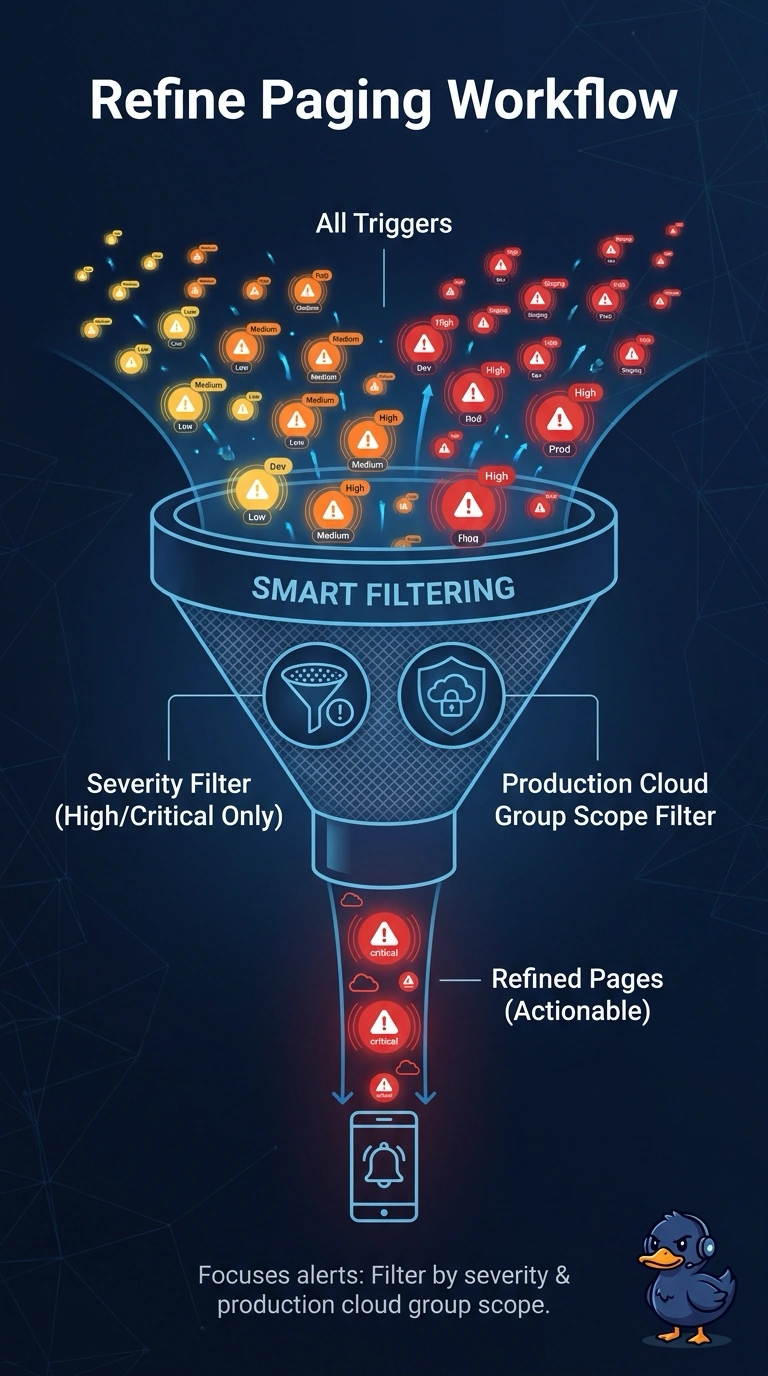
Short Explanation
You can stop the 2 a.m. pages for sandbox typos without making your on-call team mute every alert. Filtering by severity and production cloud group reduces noise while keeping actionable production risks visible.
Full Explanation
Filtering triggers by severity and production cloud group scope keeps high-urgency paging focused on actionable production risks while allowing lower-severity or sandbox findings to remain visible through standard queues or reports. Scoping notifications this way reduces alert fatigue without sacrificing visibility. Turning off all cloud posture assessments across the entire hospital would blind the organization to genuine misconfigurations and compliance drift. Removing the production cloud accounts from Falcon Cloud Security would eliminate monitoring where it matters most and would not stop sandbox alerts from firing. Requiring manual approval before sending any email or chat notification would defeat real-time alerting by adding human delay before the SOC is notified. As an exam caveat, findings excluded from paging still need periodic review through dashboards or scheduled reports; filtering pages is not the same as disabling assessment or ignoring findings. As a practical check, confirm that severity and production-scope fields are available in the event used by the notification condition, and test both sandbox and production findings to verify that only the intended events page on-call engineers.
Prefer to study offline? Printable PDF study book + test engine ($7.50, unofficial). These questions stay free here.