
A manufacturing compliance manager configures a recurring weekly posture report for external auditors covering only regulated production accounts, but the first delivered report includes findings from engineering test accounts. What should the manager adjust?
Select an answer to reveal the explanation.
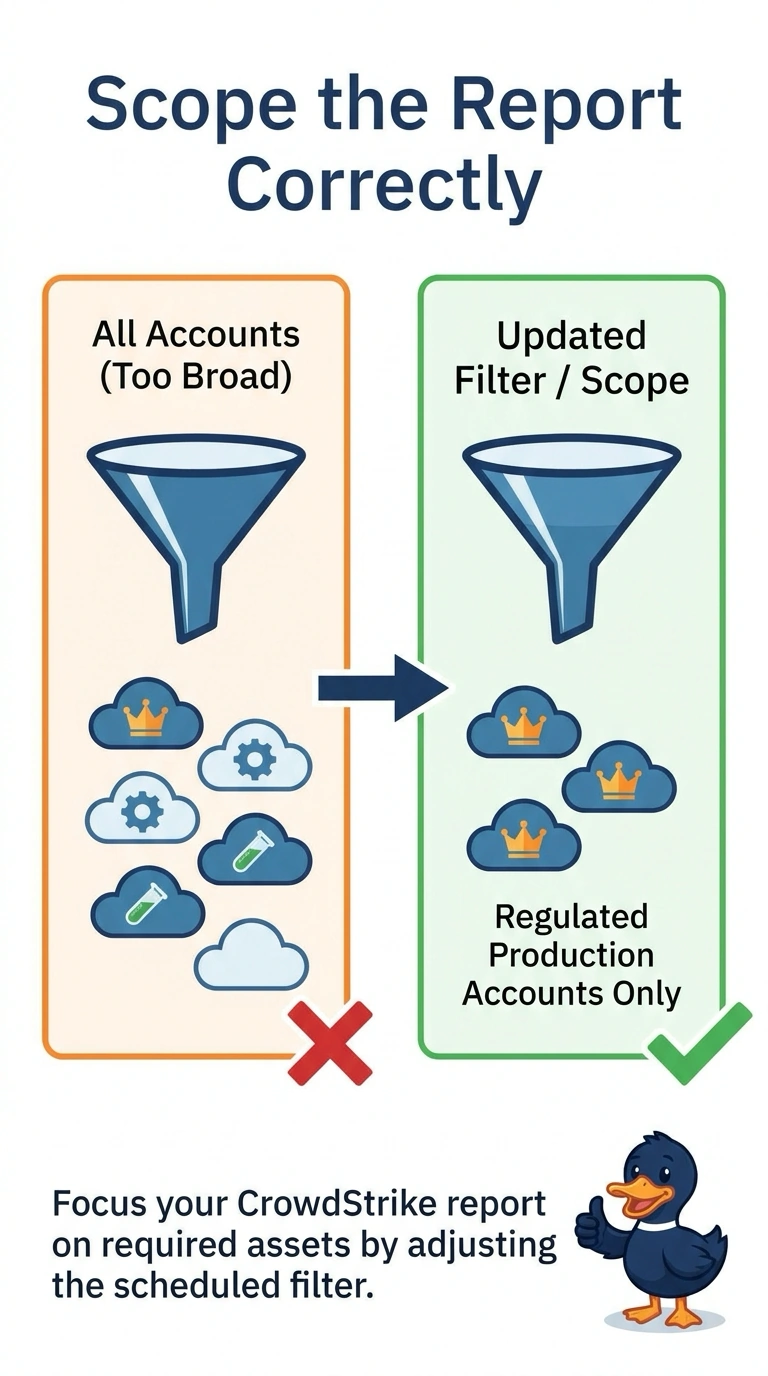
Short Explanation
Sending auditors a report full of sandbox noise is like handing a building inspector blueprints for a temporary tool shed. Before you schedule recurring compliance summaries, make sure the report scope matches the exact accounts under review.
Full Explanation
Scheduled reports pull findings according to the filters and cloud groups assigned to the report definition, so the manager should Update the scheduled report filter or cloud group scope to include only the production accounts. Narrowing the report's target scope keeps audit deliverables focused on regulated environments while leaving security monitoring intact elsewhere. Choosing to Disable all runtime sensor detections across the engineering test accounts would blind the SOC to threats in test workloads without fixing the posture report's account filter. Opting to Replace the scheduled report with a real-time chat notification workflow changes the delivery channel to noisy alerts instead of producing the periodic audit summary external stakeholders need. Meanwhile, Delete the engineering test accounts from the cloud provider organization is destructive and unnecessary when the issue is simply report scoping. Caveat: if new production accounts are onboarded later, make sure they are placed into the scoped cloud group so they are not accidentally omitted from future audit runs. Operational check: edit the scheduled report configuration, verify the selected cloud group or account filter matches only production accounts, and generate a test run to confirm the output.
Prefer to study offline? Printable PDF study book + test engine ($7.50, unofficial). These questions stay free here.