
A manufacturing cloud security team designs a new Fusion SOAR workflow intended to automatically restrict overly permissive security group rules whenever a posture finding triggers. Before enabling automated enforcement across production cloud accounts, what should the team do to reduce operational risk?
Select an answer to reveal the explanation.
Short Explanation
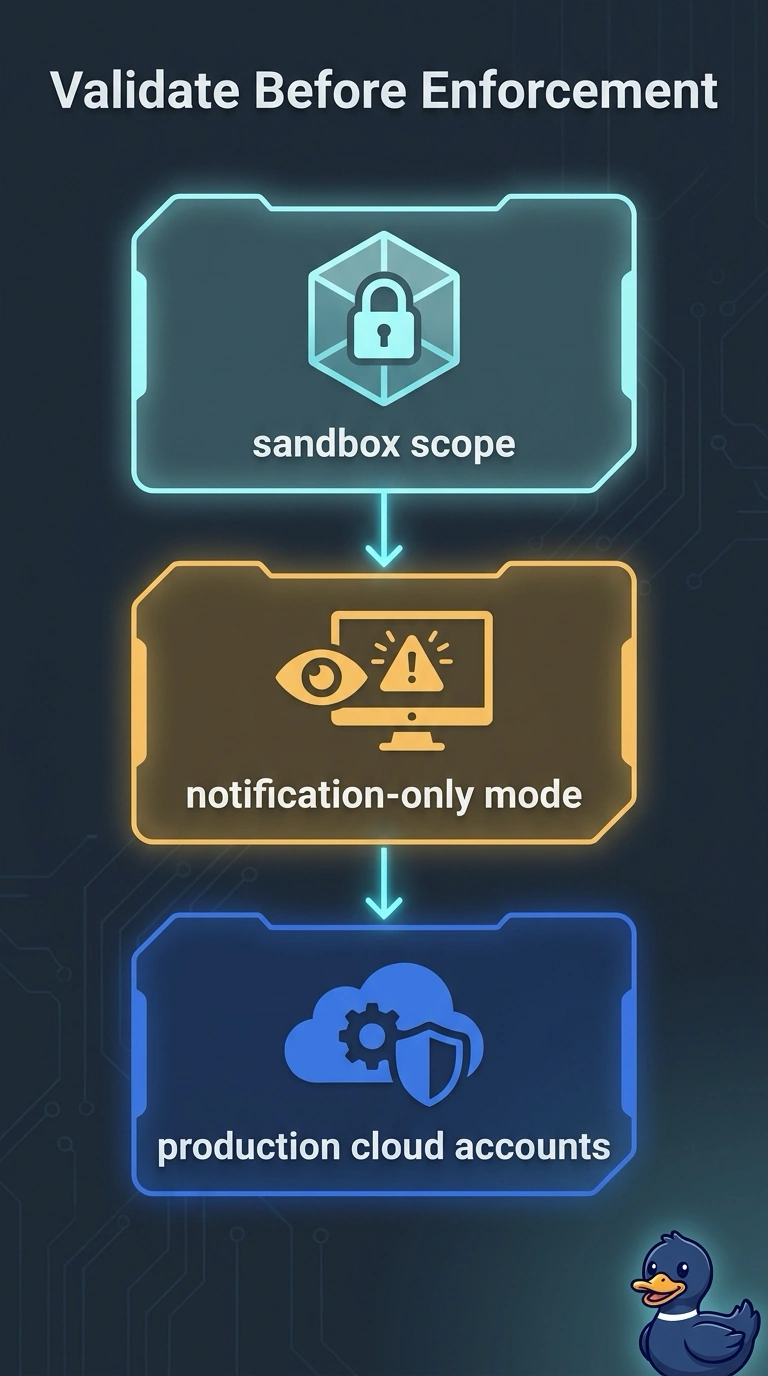
Before you let an automated workflow rewrite production firewall rules, test-drive it somewhere safe where a mistake cannot take down factory traffic. The trap is assuming automation is harmless without dry-run validation or turning off visibility while you test.
Full Explanation
Choosing to Validate the workflow in a sandbox scope or notification-only mode first lets you verify trigger conditions, target selection, and action logic without disrupting live production connectivity. Automated security group changes can inadvertently sever legitimate application traffic if scoped too broadly, so staged validation confirms the workflow behaves as intended. Choosing to Disable all posture policies in production until the workflow completes creates a dangerous blind spot by halting compliance and misconfiguration monitoring across live accounts. Choosing to Uninstall Falcon sensors from worker nodes while testing cloud changes removes runtime workload protection unnecessarily and does not affect control-plane workflow logic. Finally, choosing to Delete existing cloud security findings so only new alerts trigger workflows does not prevent a misconfigured rule from breaking production resources once triggered. As a caveat, sandbox environments should mirror production tagging and resource structure closely enough to catch scoping errors. For an operational check, run the workflow against a designated non-production cloud group or review notification-only outputs before enabling automated remediation.
Prefer to study offline? Printable PDF study book + test engine ($7.50, unofficial). These questions stay free here.