
A retail cloud engineer applies a Terraform update to close a publicly exposed security group flagged by Falcon Cloud Security. How should the engineer confirm the remediation succeeded?
Select an answer to reveal the explanation.
Short Explanation
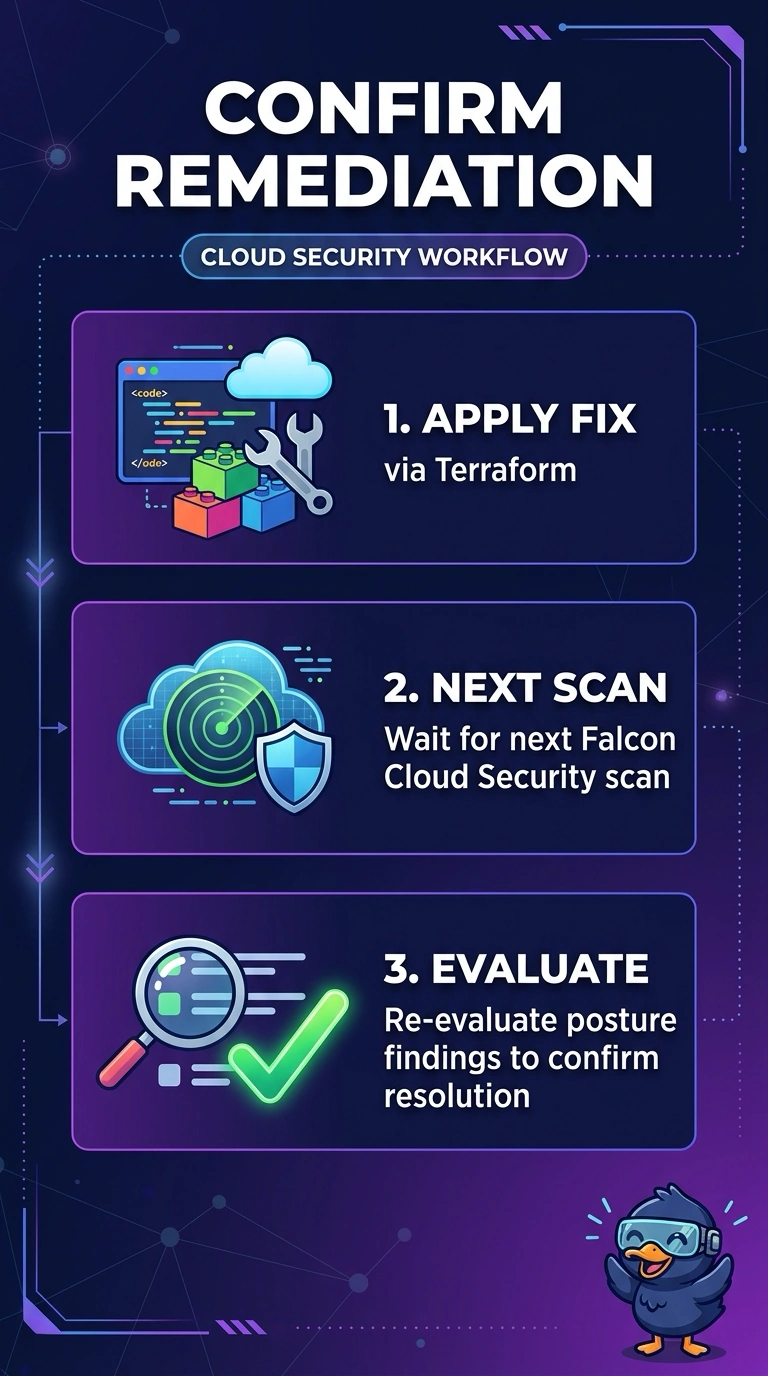
Deploying a Terraform fix feels great, but you never call a repair finished until the next inspection confirms the leak is gone! The trap is hiding the alert by disabling the rule or tearing down account registration. You should wait for or trigger the next posture evaluation and verify the finding clears.
Full Explanation
Remediating a cloud misconfiguration in infrastructure-as-code changes the live control-plane state, which must then be re-assessed by posture scanning to close the finding accurately. The proper verification step is to Re-evaluate posture findings after the next scan to confirm resolution so you have evidence that the security group rule is actually closed in the cloud environment. Choosing to Delete the cloud account from its cloud group and re-register it from scratch is unnecessary operational churn that disrupts monitoring continuity. Choosing to Disable the posture rule globally so the finding no longer appears in reports merely hides the alert and blinds the organization to future exposures across all accounts. Choosing to Restart every Kubernetes worker node DaemonSet pod to clear cached posture alerts targets runtime container sensors, which do not manage cloud control-plane posture findings. As a caveat, if Terraform state drifts again later or another rule still permits public ingress, the finding will remain open or reopen on subsequent scans. For an operational check, inspect the live security group inbound rules in the cloud account and verify that the corresponding posture finding transitions to resolved after the posture scan completes.
Prefer to study offline? Printable PDF study book + test engine ($7.50, unofficial). These questions stay free here.