
A manufacturing security team plans to build a Fusion SOAR workflow to respond to high-severity cloud findings on production databases, but wants to avoid unintended outages from automatic changes. Which workflow design best balances speed and safety?
Select an answer to reveal the explanation.
Short Explanation
An automated fire sprinkler is great until it drenches an active server rack over a false alarm. When your team automates production response, the trap is choosing destructive auto-actions or dropping real-time alerts instead of adding a quick approval gate.
Full Explanation
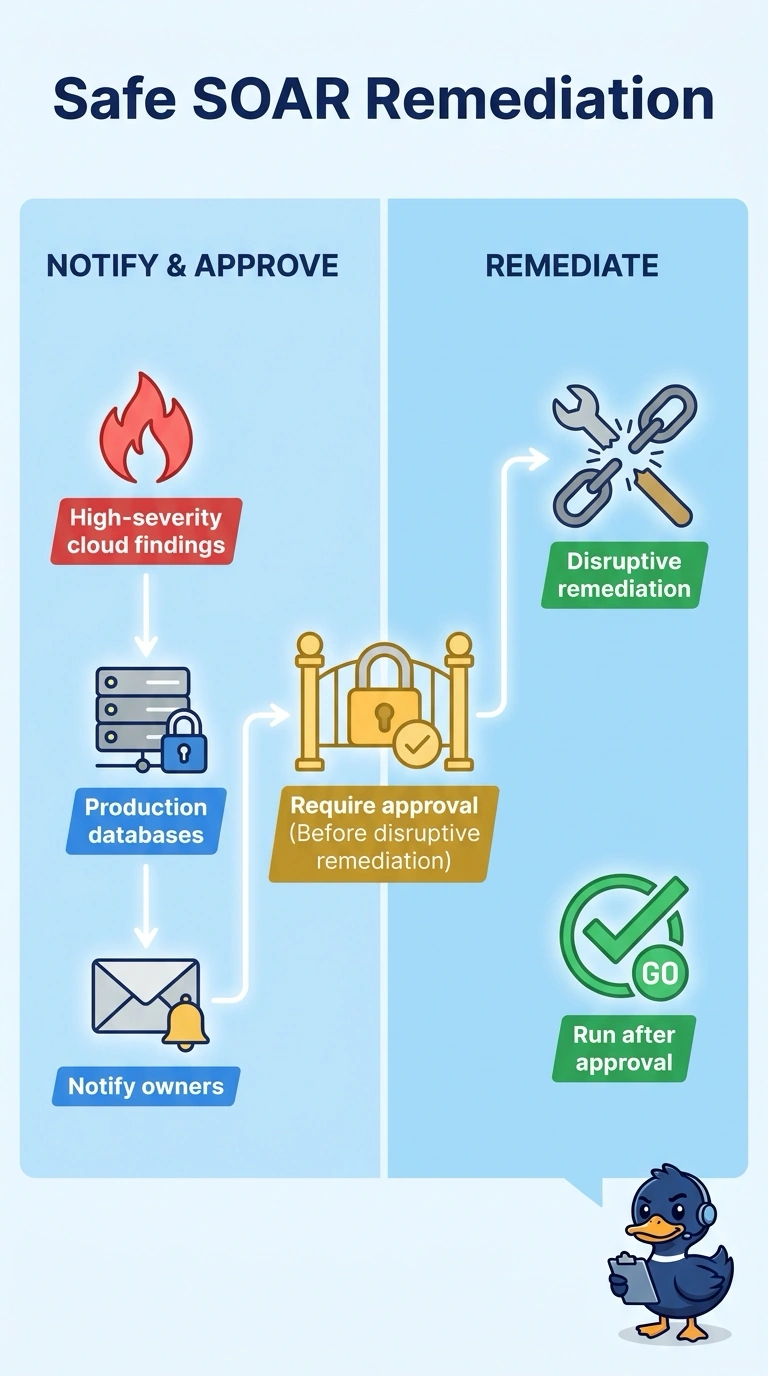
Notify owners and require an approval step before running disruptive remediation gives the security team fast alerting and automated execution while protecting critical production databases from accidental downtime. Using Fusion SOAR to gather context, notify the responsible owner, and pause for explicit confirmation before modifying live infrastructure keeps humans in control of high-impact changes. Automatically delete any flagged production database as soon as an alert fires fails because destructive actions without review can cause severe data loss and business outages. Disable all posture assessments on production accounts to prevent false alarms is wrong because turning off visibility leaves critical production systems unmonitored. Send weekly scheduled PDF reports instead of generating real-time alert notifications fails because waiting days for a summary report delays response to high-severity findings that need timely triage. As an exam caveat, remember that Falcon Cloud Security distinguishes notifications, recommendations, and approved remediation actions rather than assuming every alert should trigger immediate unapproved changes. For an operational check, test the workflow on a non-production database and verify that notification delivery and approval gating work before enabling it on production.
Prefer to study offline? Printable PDF study book + test engine ($7.50, unofficial). These questions stay free here.