
A retail development team's application source code contains no direct flaws, yet pre-runtime image assessment flags critical vulnerabilities in the container image before deployment. How does the assessment discover these issues?
Select an answer to reveal the explanation.
Short Explanation
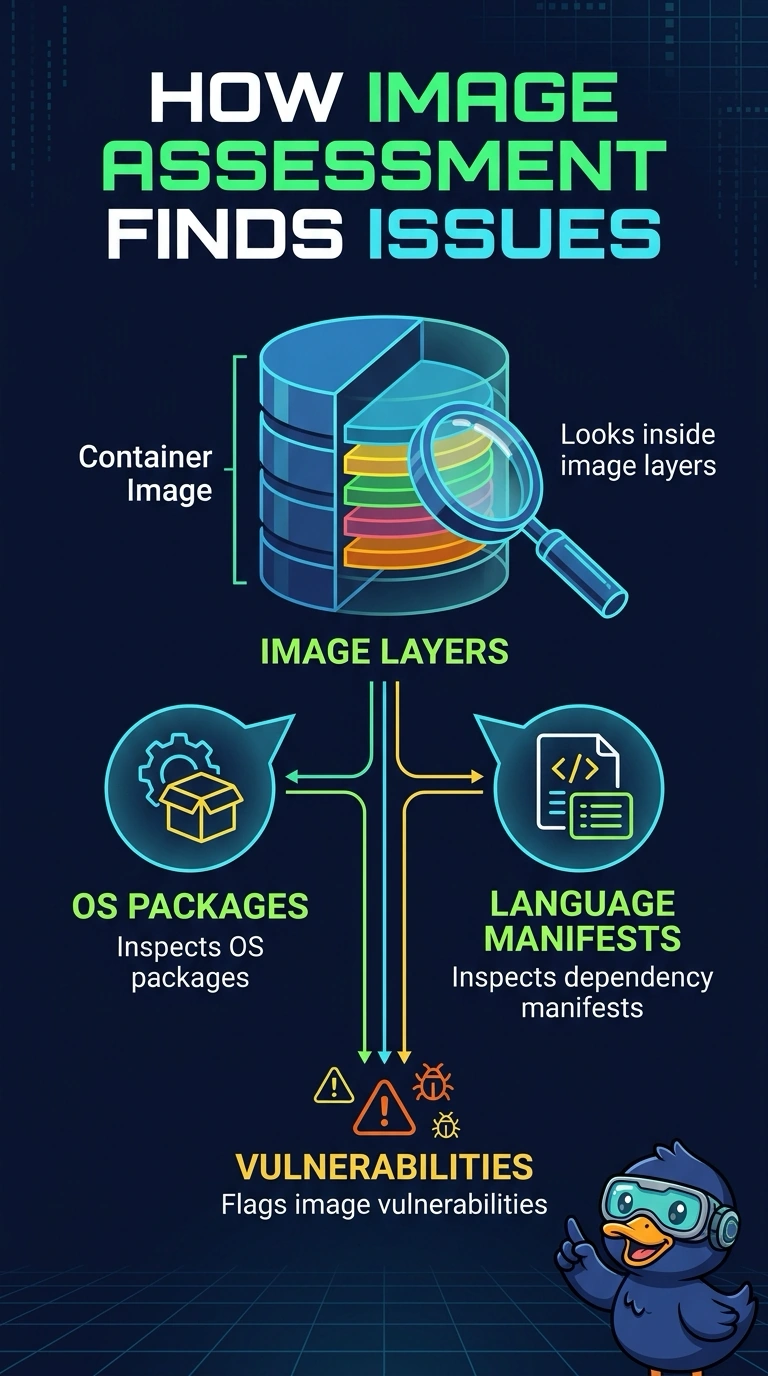
Even if your own code is spotless, the container image brings along an entire pantry of operating system packages and third-party libraries. The trap is thinking pre-runtime scanning runs live traffic tests or watches kernel calls, when it actually inspects the software inventory baked into the image.
Full Explanation
It inspects OS packages and language dependency manifests inside image layers to identify known vulnerabilities in both base operating system components and inherited third-party libraries before the container ever runs. Because container images bundle application code together with system utilities and transitive dependencies, flaws in any included package surface during pre-runtime assessment. By contrast, It executes the container's web endpoints against live traffic in production describes dynamic application testing in a live environment rather than static pre-runtime image analysis. It audits cloud storage bucket permissions and VPC route tables in the account describes Cloud Security Posture Management on the cloud control plane, not image layer inspection. It monitors kernel system calls made by running pods on Kubernetes worker nodes describes runtime workload protection performed by deployed Falcon sensors after startup. As a caveat, pre-runtime image assessment only identifies known cataloged vulnerabilities and embedded issues, so zero pre-runtime findings do not eliminate the need for runtime monitoring. For an operational check, review the package inventory in the image finding details to trace the vulnerable library to its base image or dependency manifest.
Prefer to study offline? Printable PDF study book + test engine ($7.50, unofficial). These questions stay free here.