
A retail DevSecOps team already scans container images in its CI/CD pipeline before pushing builds. Why should the team also integrate Falcon Cloud Security with its container registry?
Select an answer to reveal the explanation.
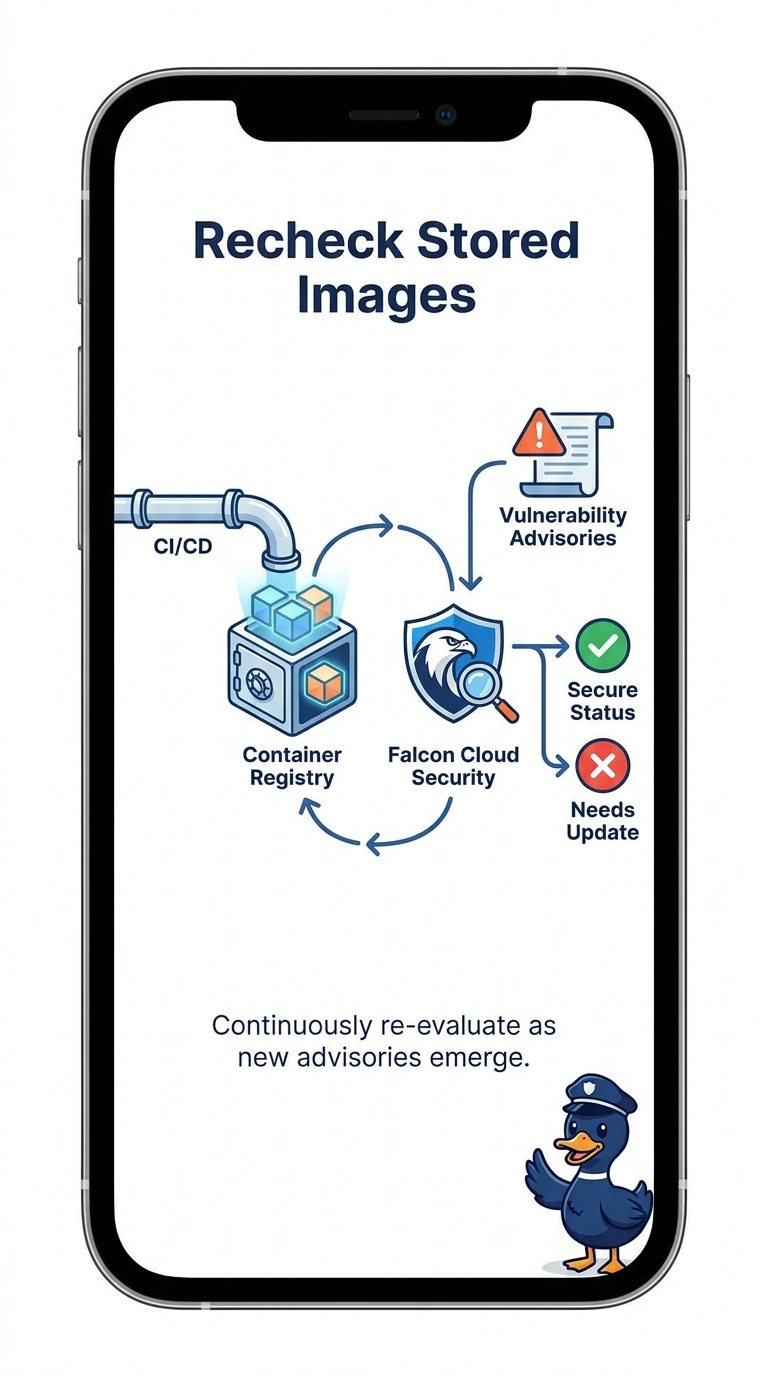
Short Explanation
A clean bill of health on build day does not guarantee your stored image stays safe next month. The trap is assuming registry integration automatically patches packages or watches live network traffic. You pair registry scanning with CI/CD checks so newly published vulnerabilities are caught even when nobody is rebuilding images.
Full Explanation
The team integrates its container registry To continuously re-evaluate stored images as new vulnerability advisories emerge. A CI/CD scan only evaluates an image at the moment it is built, so an image that passed with zero known flaws can become vulnerable weeks later when a new CVE is disclosed for one of its packages. Registry integration keeps assessing stored images against updated vulnerability intelligence without waiting for a new pipeline run. Choosing To automatically patch vulnerable operating system packages inside stored container images is incorrect because image assessment identifies and reports vulnerabilities rather than rewriting immutable image layers. Choosing To monitor live network connections initiated by running containers after deployment describes runtime sensor telemetry rather than pre-runtime registry scanning. Choosing To enforce Kubernetes pod scheduling rules when developers deploy directly to a cluster describes Kubernetes admission control, which gates cluster deployments rather than scanning stored registry repositories. As a caveat, registry integration requires valid registry credentials and network reachability to remain current. For an operational check, inspect a previously scanned repository tag after a new advisory update to confirm its assessment timestamp and findings refresh.
Prefer to study offline? Printable PDF study book + test engine ($7.50, unofficial). These questions stay free here.