
A software engineering team configures pre-runtime image assessment to scan only the newest tag pushed to its container registry, yet production Kubernetes clusters frequently deploy older pinned version tags or immutable digests. What security gap does this configuration create?
Select an answer to reveal the explanation.
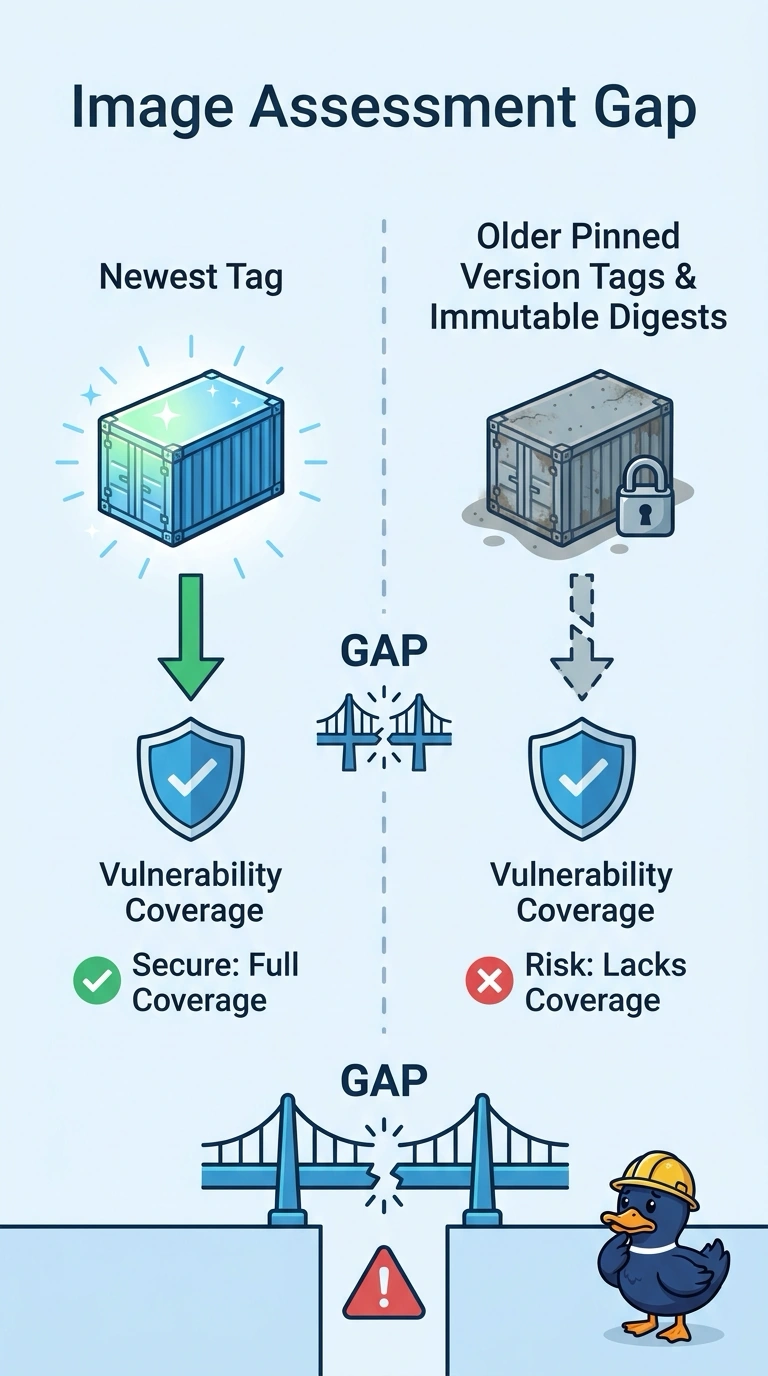
Short Explanation
Scanning only the latest tag is like checking today's newspaper while your production servers are still reading last month's edition. If you pin older tags or immutable digests in deployment manifests, those images slip past a narrow tag filter and run without pre-runtime visibility.
Full Explanation
Container registries store multiple versions and digests of an application image, and production manifests often pin specific release tags or digests for stability. When only the newest tag is evaluated, Deployed workloads using older tags or digests may lack vulnerability coverage because those older artifacts are never assessed or re-evaluated as new advisories emerge. The claim that Runtime Falcon sensors on worker nodes will automatically uninstall themselves is incorrect because node sensor lifecycle is independent of registry scan filters. The claim that Cloud posture policies will stop checking storage buckets for public access confuses registry image assessment with agentless cloud control-plane posture monitoring. The claim that Version-controlled Terraform templates will no longer be evaluated during builds refers to Infrastructure-as-Code scanning, which is separate from container registry tag scoping. Note that even an image scanned weeks ago can become vulnerable today when newly disclosed CVEs affect its packages. Review the registry integration scope and compare running cluster image digests against assessed images in the image assessment inventory.
Prefer to study offline? Printable PDF study book + test engine ($7.50, unofficial). These questions stay free here.