
A hospital platform team creates a cloud posture rule flagging Kubernetes pods that run with privileged containers, yet developers can still launch privileged pods into the cluster. Why does the posture rule not stop the deployment?
Select an answer to reveal the explanation.
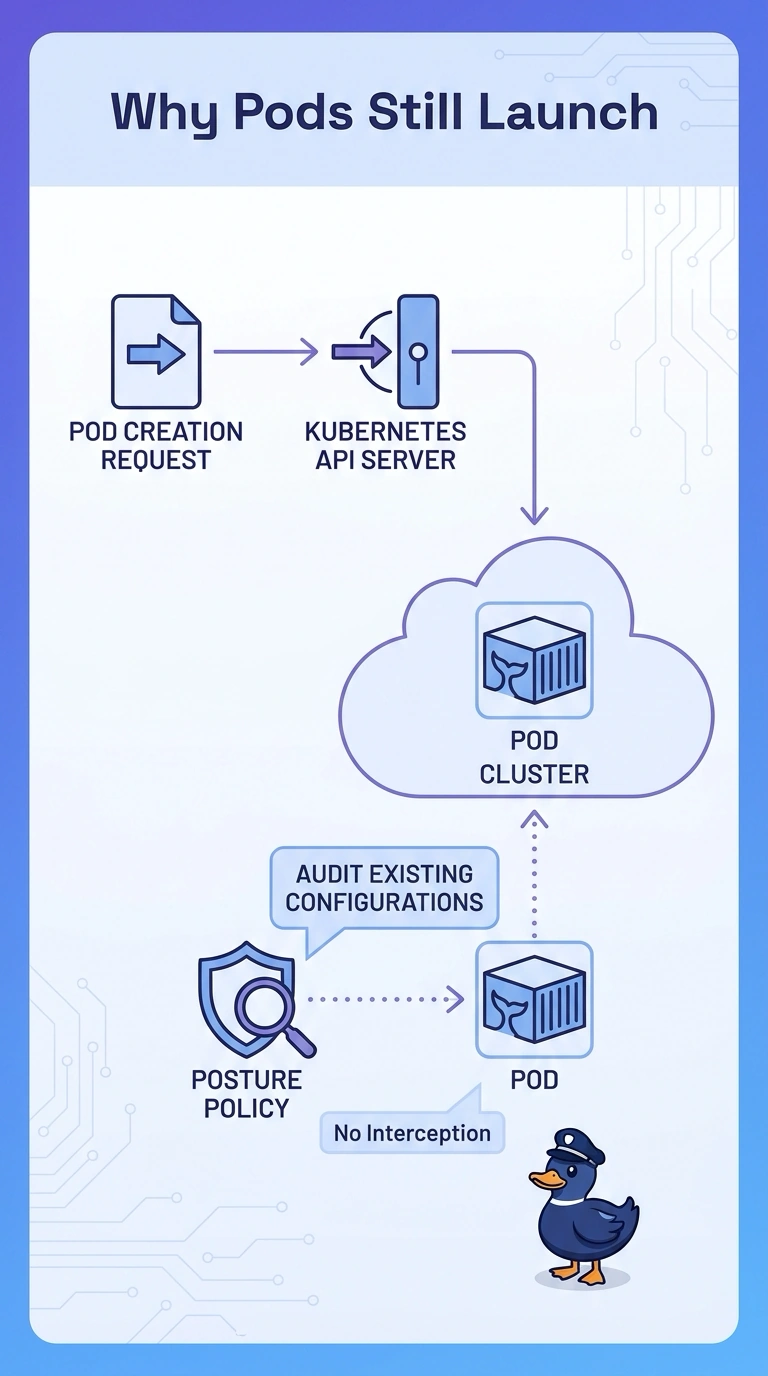
Short Explanation
A posture rule is like a building inspector who visits after construction finishes, not the security guard checking badges at the gate. Because it evaluates state after resources exist, developers can still schedule non-compliant pods. The trap is expecting an auditing rule to act like a real-time gatekeeper when you need an admission policy.
Full Explanation
Cloud posture rules evaluate resource state after deployment, which is why "Posture policies audit existing configurations rather than intercepting pod creation requests" is the correct explanation. Preventing a privileged pod from starting requires a Kubernetes admission policy that intercepts API creation requests synchronously before scheduling occurs. "Posture policies only evaluate cloud storage buckets and ignore Kubernetes cluster workloads" is incorrect because posture assessments also inspect Kubernetes cluster and workload configurations after they exist. "Posture policies require runtime Falcon sensors to be installed on every pod before blocking" fails because posture scanning is agentless and admission control operates at the cluster API layer rather than inside individual pods. "Posture policies automatically convert all blocking rules into alert-only mode for healthcare clusters" is wrong because posture rules do not perform inline deployment blocking for any industry tier. As a caveat, enabling an admission policy only governs new pod requests and will not terminate already-running privileged pods. As an operational check, verify that a Kubernetes admission policy targeting privileged pods is deployed and set to block mode.
Prefer to study offline? Printable PDF study book + test engine ($7.50, unofficial). These questions stay free here.