
A school district software team wants a single pre-runtime policy gate that flags container builds containing either vulnerable Linux OS packages or vulnerable third-party application libraries before images reach production. Which policy configuration meets this goal?
Select an answer to reveal the explanation.
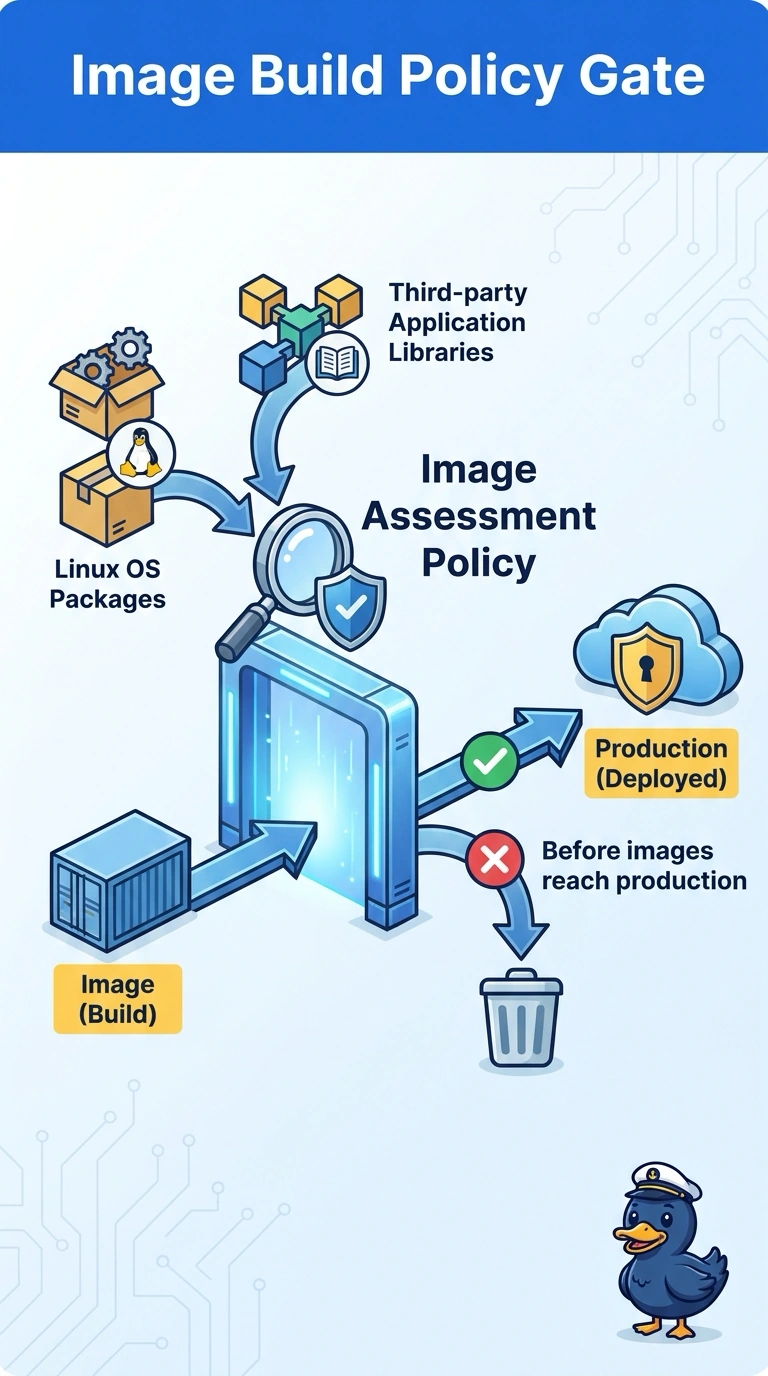
Short Explanation
Think of an image assessment policy as the full-stack inspector for your container builds, checking both the OS foundation and the application libraries sitting on top. Don't reach for posture or admission rules here—they check cloud accounts and pod specs, not the packages inside your image.
Full Explanation
An image assessment policy covering OS and application dependencies is the correct configuration because image assessment policies govern pre-runtime container evaluation across both base operating system packages and application-layer language libraries, allowing teams to warn or fail builds from one unified rule set. A cloud posture policy checking storage bucket encryption and IAM roles fails because posture policies evaluate cloud provider control-plane settings rather than software packages inside container images. A runtime protection policy blocking unauthorized interactive shell execution is incorrect because runtime policies monitor live executing processes after deployment rather than gating builds before production. A Kubernetes admission policy enforcing host-network pod restrictions also misses the mark because it validates pod deployment specifications at scheduling time rather than inspecting OS and language dependencies inside the image. As a caveat, policy rules only enforce as expected when the image assessment policy is enabled and assigned to the appropriate policy group for the target registry or CI/CD pipeline. As an operational check, test the policy against a sample image containing both an OS CVE and a library CVE to confirm both are flagged.
Prefer to study offline? Printable PDF study book + test engine ($7.50, unofficial). These questions stay free here.