
A manufacturing platform team enables a new blocking Kubernetes admission policy in Falcon Cloud Security to stop pods using unapproved base images, yet several pods with that unapproved image were already running beforehand and stay active. Why does this happen?
Select an answer to reveal the explanation.
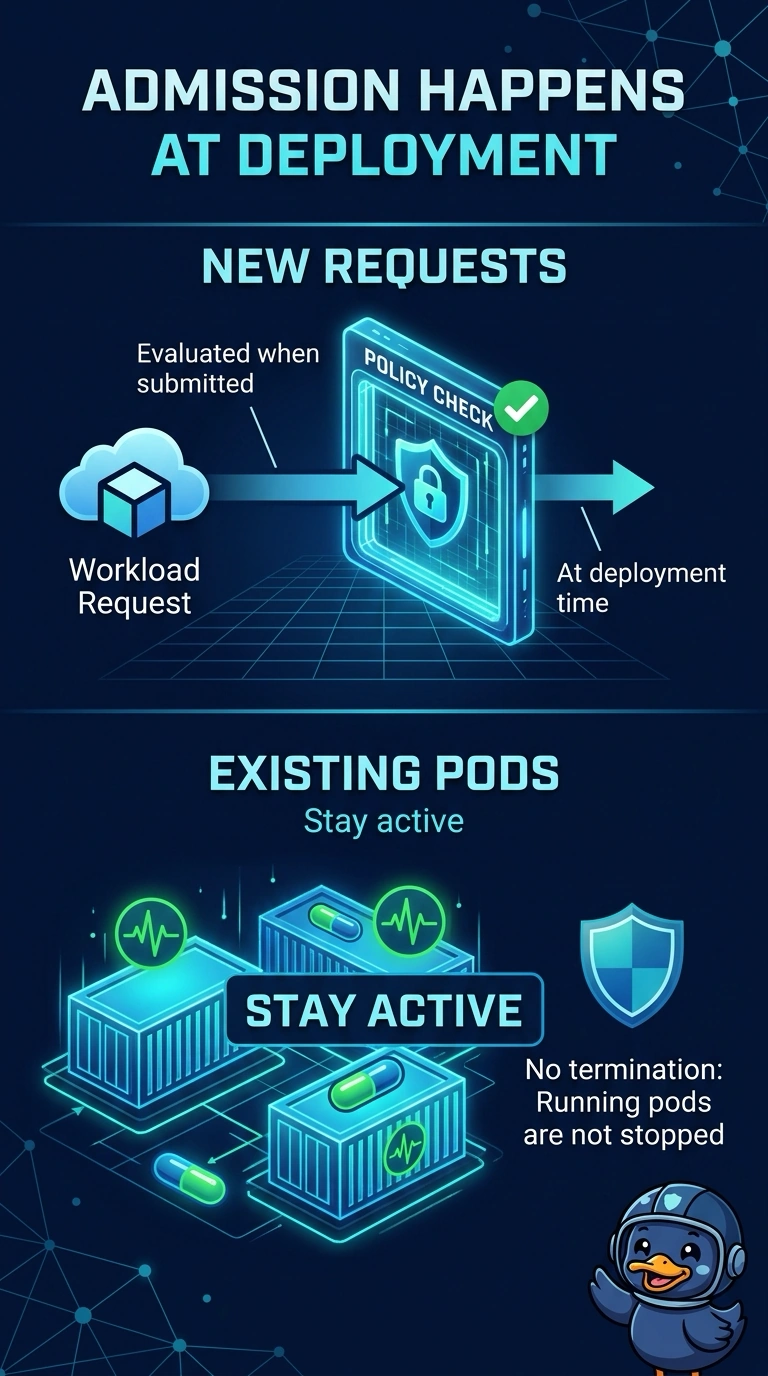
Short Explanation
Think of admission control like a bouncer checking IDs at the door—it stops new guests from entering, not people already seated inside. The trap is expecting a new admission policy to retroactively evict running pods. To address existing workloads, you also need runtime monitoring or a controlled workload rollout.
Full Explanation
Kubernetes admission controllers intercept pod creation and update requests in the API server, which is why "Admission policies evaluate workload requests at deployment time and do not terminate already-running pods" explains the behavior. Existing pods were admitted before the policy took effect, so they continue running until replaced, restarted, or manually drained. The other explanations misstate how the platform works. Saying "Admission policies only inspect container registries and never evaluate Kubernetes API requests" confuses admission control with registry image assessment, because admission control specifically evaluates Kubernetes API admission requests. Claiming "The Falcon runtime sensor automatically overrides admission policies whenever legacy workloads are running" is false because runtime sensors and admission controllers operate at different lifecycle stages and do not override one another. Stating "Cloud posture policies must be deleted before any Kubernetes admission policy can enforce blocking rules" is incorrect because posture policies and admission policies are independent and complementary. As a caveat, rolling restarts or autoscaling events will trigger new admission checks and block non-compliant pods later. For an operational check, list running pods using the unapproved image and schedule a controlled redeployment.
Prefer to study offline? Printable PDF study book + test engine ($7.50, unofficial). These questions stay free here.