
A hospital software team needs to allow one approved legacy diagnostic container image that still triggers a low-risk base-package rule, while keeping the strict image assessment policy enforced for all other clinical builds. What should the team configure?
Select an answer to reveal the explanation.
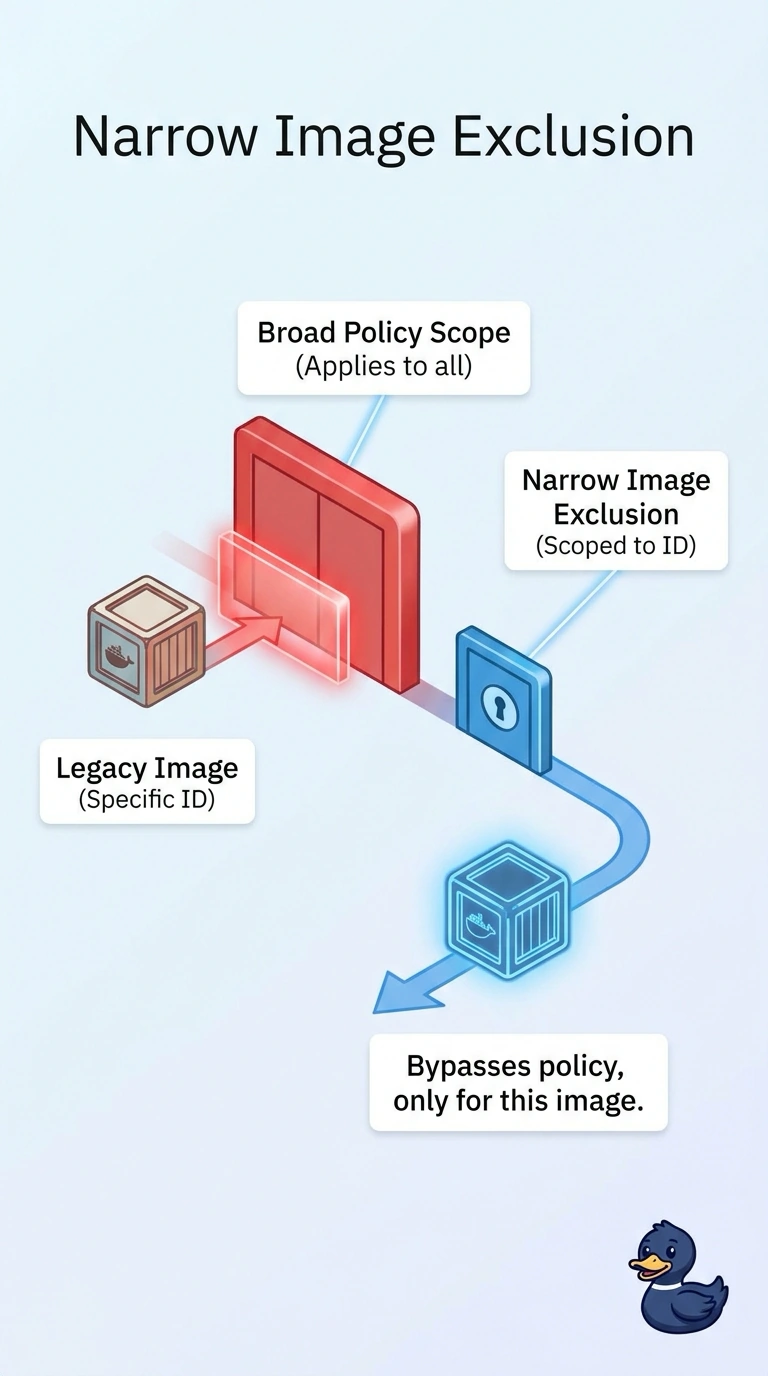
Short Explanation
Handling one legacy exception by turning off cluster-wide security is like removing every smoke detector in a hospital because one toaster smokes. You want a narrow, targeted exception that leaves strict checks active everywhere else.
Full Explanation
Scoping an exception tightly preserves baseline security, so the team should configure An image assessment policy exclusion scoped to that specific legacy image. Image assessment policies support exclusions so an approved exception applies only to the intended image without relaxing vulnerability or compliance checks for other clinical builds. In contrast, A global runtime protection policy change disabling process monitoring on all nodes targets runtime execution rather than pre-runtime image evaluation and removes critical host detection across the fleet. Similarly, A cloud account scan exclusion removing the entire production cluster from posture checks would blind cloud control-plane monitoring across production instead of addressing a single container image rule. Finally, A custom cloud posture rule requiring every storage bucket to carry a legacy tag governs cloud storage metadata and has no effect on container image assessment policies. Caveat: document an expiration review for any image exclusion so temporary legacy exceptions do not become permanent blind spots. Operational check: verify that the legacy image passes with the scoped exclusion active while a separate test image violating the same rule still triggers the policy.
Prefer to study offline? Printable PDF study book + test engine ($7.50, unofficial). These questions stay free here.