
A software engineering team wants to actively block unauthorized shell execution inside production Kubernetes containers while only logging similar events in staging clusters so developers can troubleshoot deployments. How should the team configure Falcon Cloud Security policies?
Select an answer to reveal the explanation.
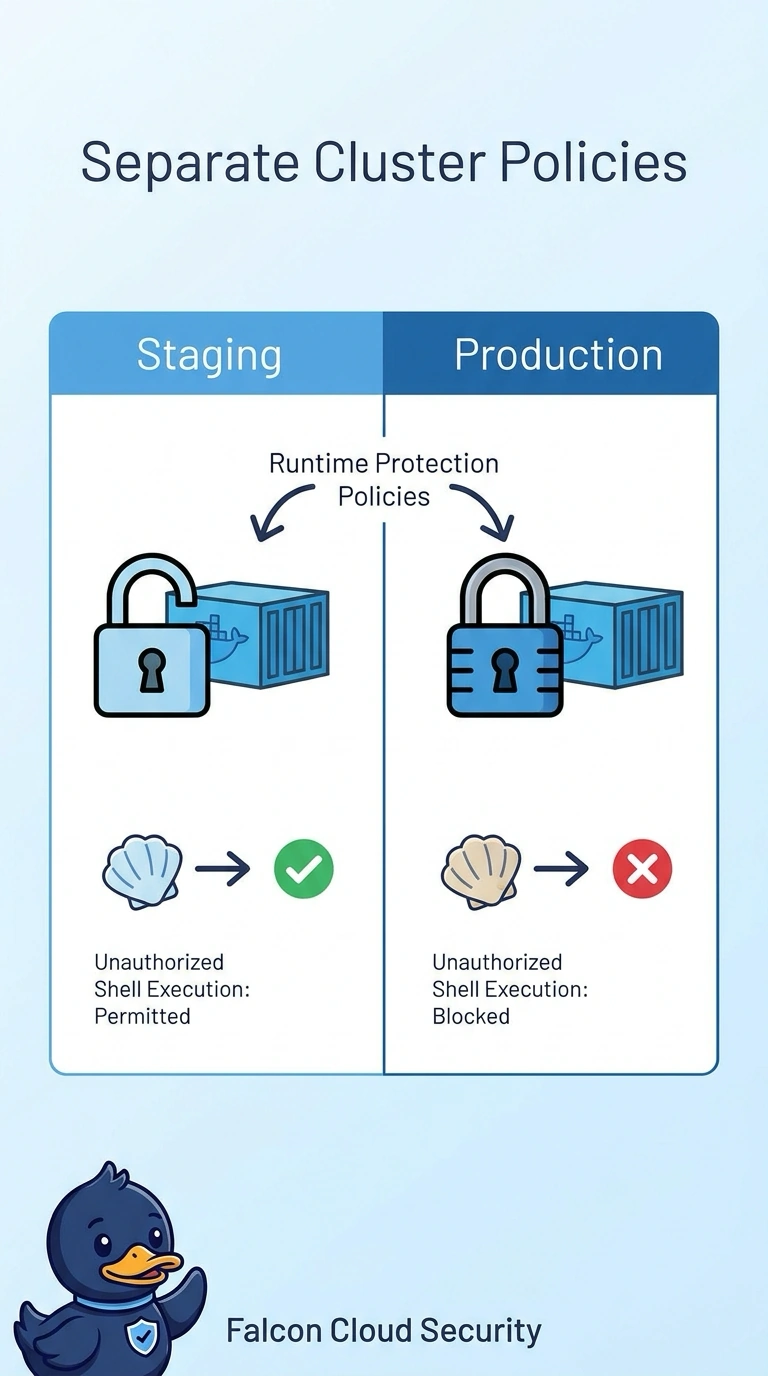
Short Explanation
Production needs a bouncer at the door, while staging needs a security camera so your engineers can still debug. The trap is turning off runtime rules everywhere or mixing up admission and posture policies with live container behavior. Scope distinct runtime policies by environment so each cluster gets the exact enforcement level it needs.
Full Explanation
The team should Assign separate runtime protection policies scoped to production and staging clusters. Runtime protection policies govern how the Falcon sensor responds to live activity inside running containers, such as unauthorized shells or suspicious process execution. By scoping a prevention-enabled runtime policy to production clusters and a detection-only runtime policy to staging clusters, security teams block attacks in production without disrupting legitimate developer troubleshooting in staging. Choosing to Disable all runtime protection rules globally and rely on pre-runtime image assessment policies leaves running production containers unmonitored because pre-runtime scans only inspect static images before execution. Choosing to Create a cloud posture policy that restricts outbound network access on staging storage buckets addresses cloud control-plane storage settings rather than in-container process behavior. Choosing to Configure a Kubernetes admission policy to terminate running staging pods after deployment misunderstands admission control, which evaluates pod creation requests before scheduling rather than terminating already running containers. As a caveat, leaving staging in detection-only mode means teams must still review staging alerts for real compromises. For an operational check, verify the documented Falcon host-group targeting and precedence for the production versus staging worker nodes, plus applicable rule/exception scope, and confirm a test shell event is blocked in production but only logged in staging.
Prefer to study offline? Printable PDF study book + test engine ($7.50, unofficial). These questions stay free here.