
A hospital IT team wants to monitor encryption and public-access posture findings on clinical production cloud accounts while allowing more permissive review in developer sandbox accounts. How should the team organize visibility using cloud groups?
Select an answer to reveal the explanation.
Short Explanation
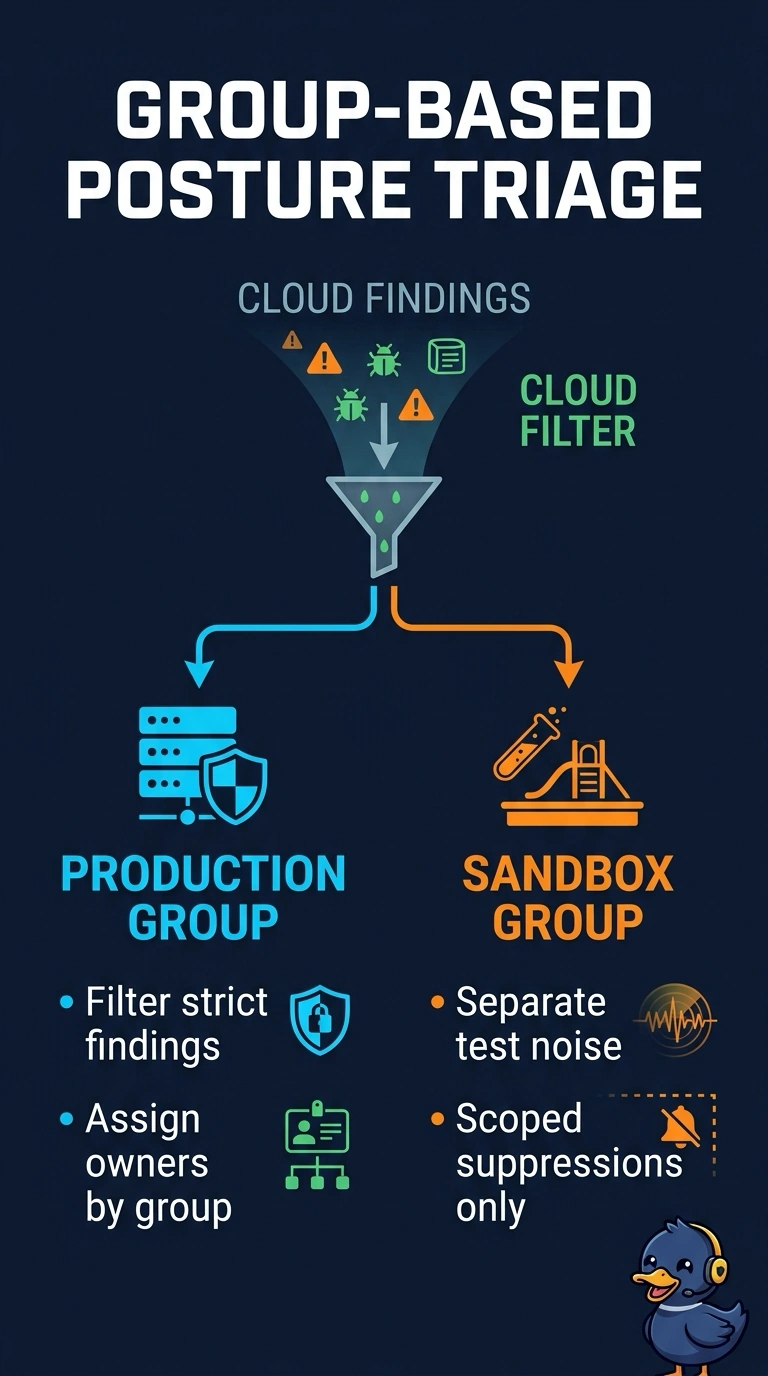
You would not unlock the hospital pharmacy just because a training lab needs open supplies. You can keep production findings front and center while giving sandbox teams room to test by filtering with cloud groups and scoping suppression to sandbox noise.
Full Explanation
Filter findings by cloud groups with ownership and scoped sandbox suppressions lets the team separate production and sandbox visibility without changing provider configuration. Cloud groups organize accounts by tier or business unit so findings can be filtered, assigned, and triaged to the intended owners and risk context. Disable the strict posture rules globally so developer sandbox accounts do not trigger alerts fails because turning off rules across the entire tenant removes important production signals for unencrypted storage and public access. Replace all posture policies with runtime container sensors on production worker nodes is incorrect because runtime sensors protect workloads and containers rather than evaluating cloud control-plane encryption and public-access posture. Delete sandbox cloud accounts from Falcon Cloud Security before each posture scan fails because unregistering accounts eliminates all visibility and creates repeated operational overhead. As an exam caveat, use group filtering and scoped suppression when a scenario requires different handling by environment rather than global rule changes. For an operational check, verify production accounts belong to the production cloud group and confirm suppressions are scoped only to the sandbox group.
Prefer to study offline? Printable PDF study book + test engine ($7.50, unofficial). These questions stay free here.