
A retail platform team wants to block Kubernetes deployments that request privileged container execution or host-network access before pods are scheduled, even if the container image itself has zero package vulnerabilities. Which Falcon Cloud Security policy type enforces this control?
Select an answer to reveal the explanation.
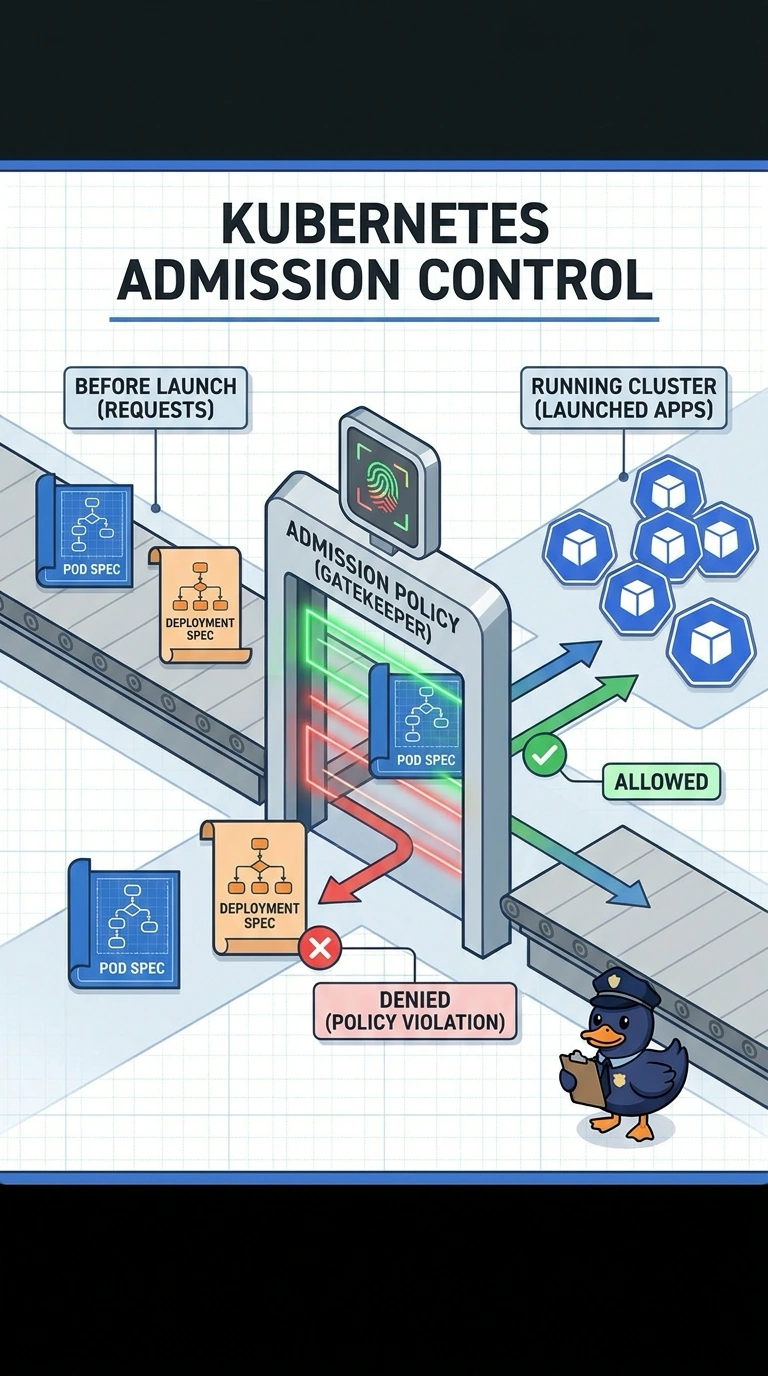
Short Explanation
Clean packages inside an image won't save you if the pod itself is configured to run with wide-open host privileges. You need a gatekeeper that inspects the deployment manifest before scheduling, rather than relying on a vulnerability scanner that only looks inside the image.
Full Explanation
Admission control intercepts Kubernetes API requests at deployment time to inspect pod and workload specifications against security rules before a node schedules the container. Choosing A Kubernetes admission policy evaluating pod and deployment specifications before launch enforces controls over settings such as privileged mode or host-network access regardless of package vulnerability status. Choosing An image assessment policy scanning operating system packages in the registry fails because package and secret scans evaluate image layers, not Kubernetes pod runtime privileges. Choosing A cloud posture policy auditing object storage encryption across accounts evaluates cloud provider control-plane configurations rather than gating Kubernetes admission requests. Choosing A runtime protection policy terminating suspicious processes inside pods reacts only after a container is already running and exhibits malicious behavior, instead of preventing an insecure pod configuration from starting. Remember that admission policies require the admission controller integration to be active on the target cluster. Confirm enforcement by submitting a test manifest requesting privileged execution and verifying the cluster admission webhook rejects it.
Prefer to study offline? Printable PDF study book + test engine ($7.50, unofficial). These questions stay free here.