
A school district cloud analyst reviews two configuration findings in Falcon Cloud Security: one flags an unused default VPC security group that is not attached to any compute instance, and another flags an overly permissive security group attached to an active production database. How should the analyst prioritize these findings?
Select an answer to reveal the explanation.
Short Explanation
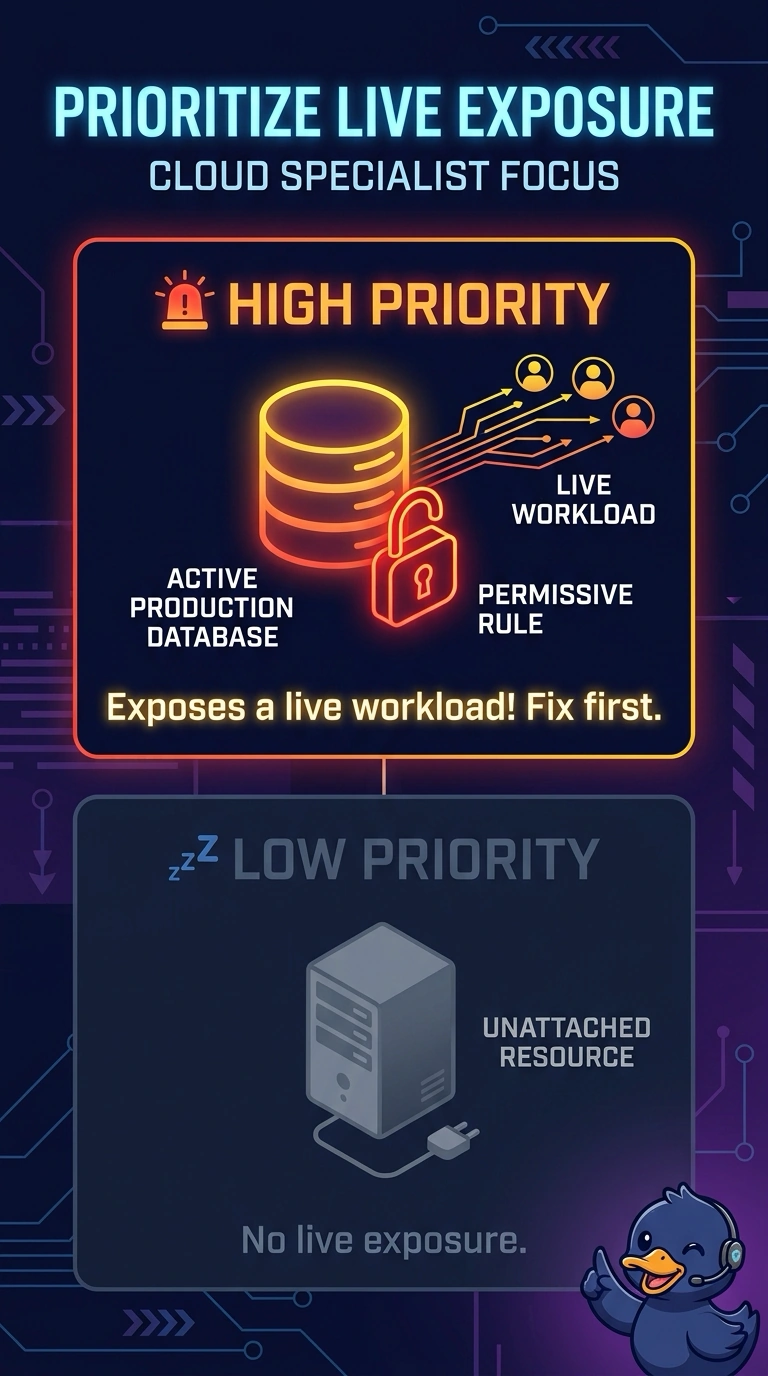
An unlocked door on an empty shed matters far less than an unlocked door on the main vault. You should prioritize the permissive firewall rule attached to a live production database because it creates immediate exposure on an active asset. The trap is treating every posture finding with equal urgency regardless of whether it is attached to a real workload.
Full Explanation
Prioritize the permissive rule attached to the active production database because it exposes a live workload, unlike the unattached resource. Risk analysis in Falcon Cloud Security weighs both the misconfiguration itself and the asset context, meaning an active database behind an overly broad rule poses immediate exposure risk. Prioritize the unused default security group first because default cloud resources automatically override custom firewall rules on every subnet. fails because an unattached security group does not govern traffic for instances using separate custom security groups. Suppress both findings permanently because cloud security group rules only affect outbound traffic and cannot expose inbound database ports. fails because security groups control both inbound and outbound traffic and frequently cause inbound exposure when misconfigured. Convert the active database finding into a pre-runtime container image alert so developers can patch it inside the next application build. fails because cloud network firewall settings are control-plane posture configurations, not container image packages. As a caveat, unused default security groups should still be tightened or cleaned up as hygiene so future instances do not inherit permissive rules. For an operational check, inspect the security group's attached network interfaces, inbound rules, and route table reachability before restricting access.
Prefer to study offline? Printable PDF study book + test engine ($7.50, unofficial). These questions stay free here.