
During a SOC investigation, an analyst sees an alert that a cloud administrator account disabled audit logging and created new access keys from an unfamiliar geolocation, alongside a separate finding for an unencrypted test bucket. How should the analyst classify the logging and key-creation alert?
Select an answer to reveal the explanation.
Short Explanation
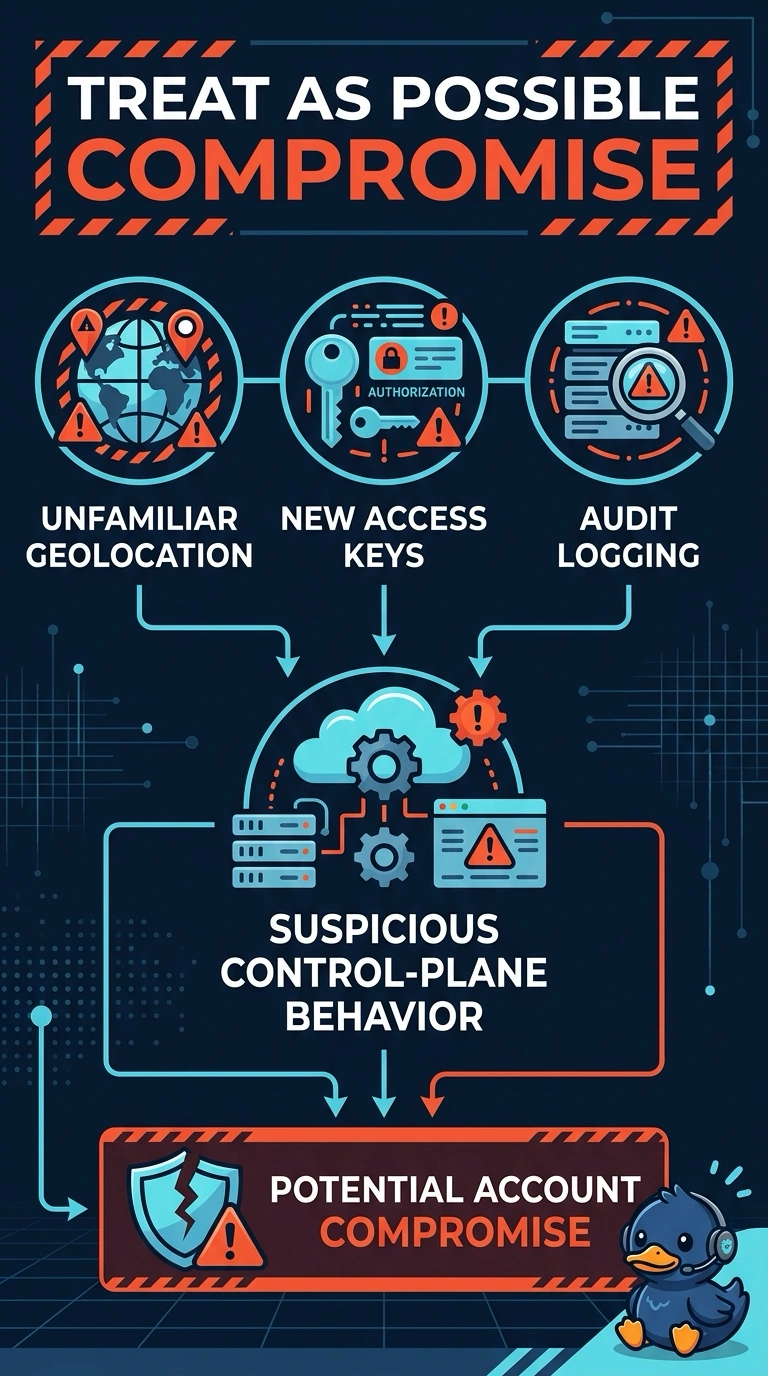
An unencrypted bucket is an unlocked door, whereas someone turning off the cameras and cutting spare keys means you have an active break-in on your hands. The trap is treating behavioral cloud identity alerts like routine posture or container checks. You should classify that logging and key-creation sequence as suspicious control-plane behavior and investigate immediately.
Full Explanation
The analyst should classify the alert As suspicious control-plane behavior indicating potential account compromise. Disabling cloud audit trails and minting new programmatic access keys from an unusual location are classic attacker actions aimed at evading detection and establishing persistence in the cloud control plane, requiring immediate incident response rather than routine backlog triage. Choosing to classify it As a routine compliance benchmark check for cloud storage encryption confuses behavioral threat detection with static posture assessments like the unencrypted test bucket. Choosing to classify it As a pre-runtime package vulnerability in an application container misattributes a live cloud identity event to static software dependencies inside an image. Choosing to classify it As a Kubernetes admission control violation during pod scheduling refers to cluster deployment gating rather than cloud account API activity. As a caveat, legitimate administrators occasionally rotate keys from travel networks, so context matters before revoking access permanently. For an operational check, review recent cloud audit logs for the administrator principal, verify whether the session was authorized, and disable any unapproved access keys.
Prefer to study offline? Printable PDF study book + test engine ($7.50, unofficial). These questions stay free here.