
A retail cloud security analyst reviews an exposed-asset finding for an object storage bucket where all IAM user policies explicitly restrict external access, yet Falcon Cloud Security flags the bucket as publicly readable. What most likely causes this exposure?
Select an answer to reveal the explanation.
Short Explanation
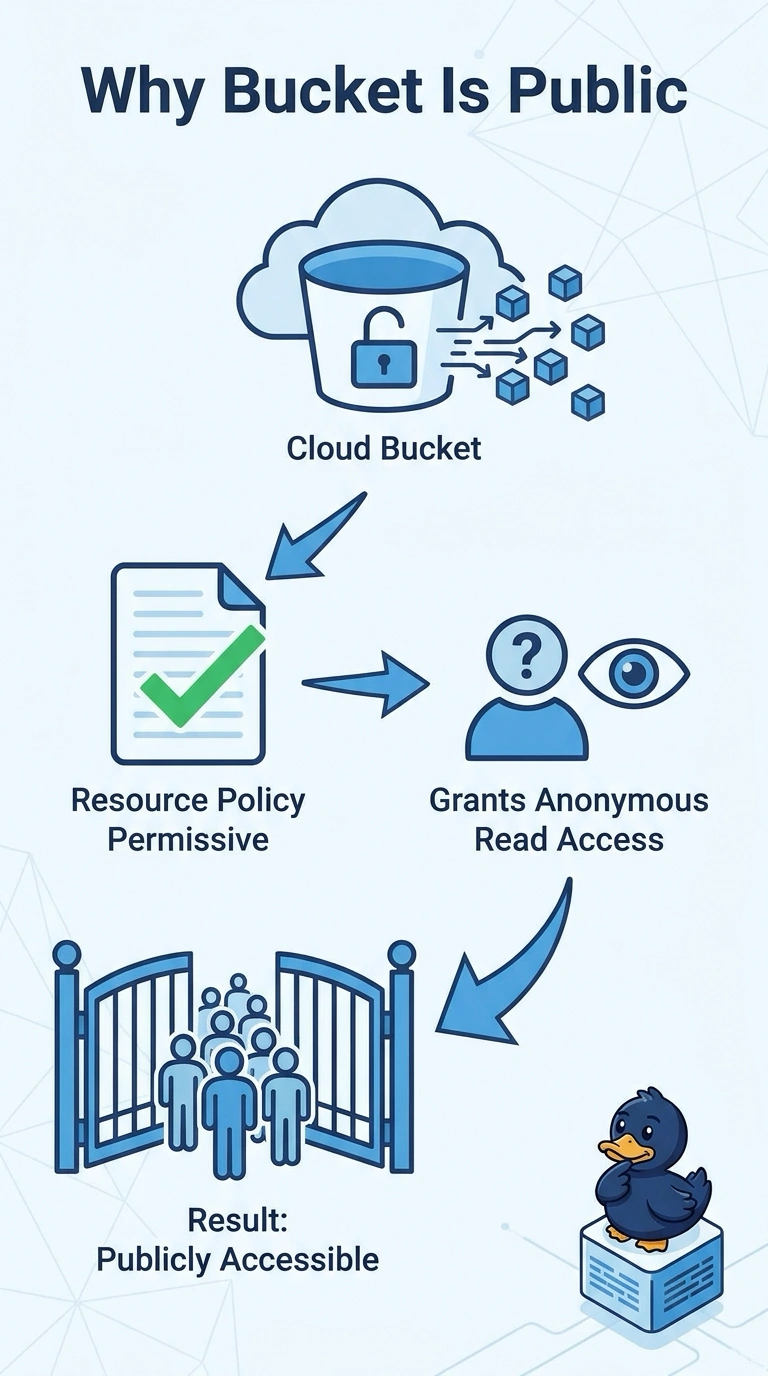
Cloud permissions work like a house with two doors—locking the front IAM door does you no good if the back bucket policy is propped wide open. The trap is assuming restrictive user policies override a permissive resource policy attached directly to the storage bucket.
Full Explanation
A permissive bucket resource policy granting anonymous read access can expose stored objects to the internet even when every IAM user policy in the account is tightly restricted. When an unauthenticated external request arrives, the cloud provider evaluates the resource-based policy attached directly to the bucket, and an explicit public allow statement grants access independently of internal user permissions. A runtime sensor alert on a connected compute instance reports host or container execution activity rather than explaining why a storage control-plane policy permits anonymous reads. An unpatched operating system library inside a nearby container image represents a package vulnerability rather than a storage access-control misconfiguration. A compliance benchmark report that only evaluates encryption settings measures cryptographic posture against a framework rather than exposing public read permissions. Keep in mind that an explicit deny in an organization-level guardrail can still block public access even when a bucket policy attempts to allow it. For an operational check, inspect the bucket policy and account-level public-access block settings in the cloud console to confirm whether anonymous principals are permitted.
Prefer to study offline? Printable PDF study book + test engine ($7.50, unofficial). These questions stay free here.