
During a SOC review at a distributed office enterprise, an analyst finds a cloud security group allowing inbound administrative remote-access traffic from any IPv4 address (0.0.0.0/0) to a production compute instance. How should the analyst assess this finding?
Select an answer to reveal the explanation.
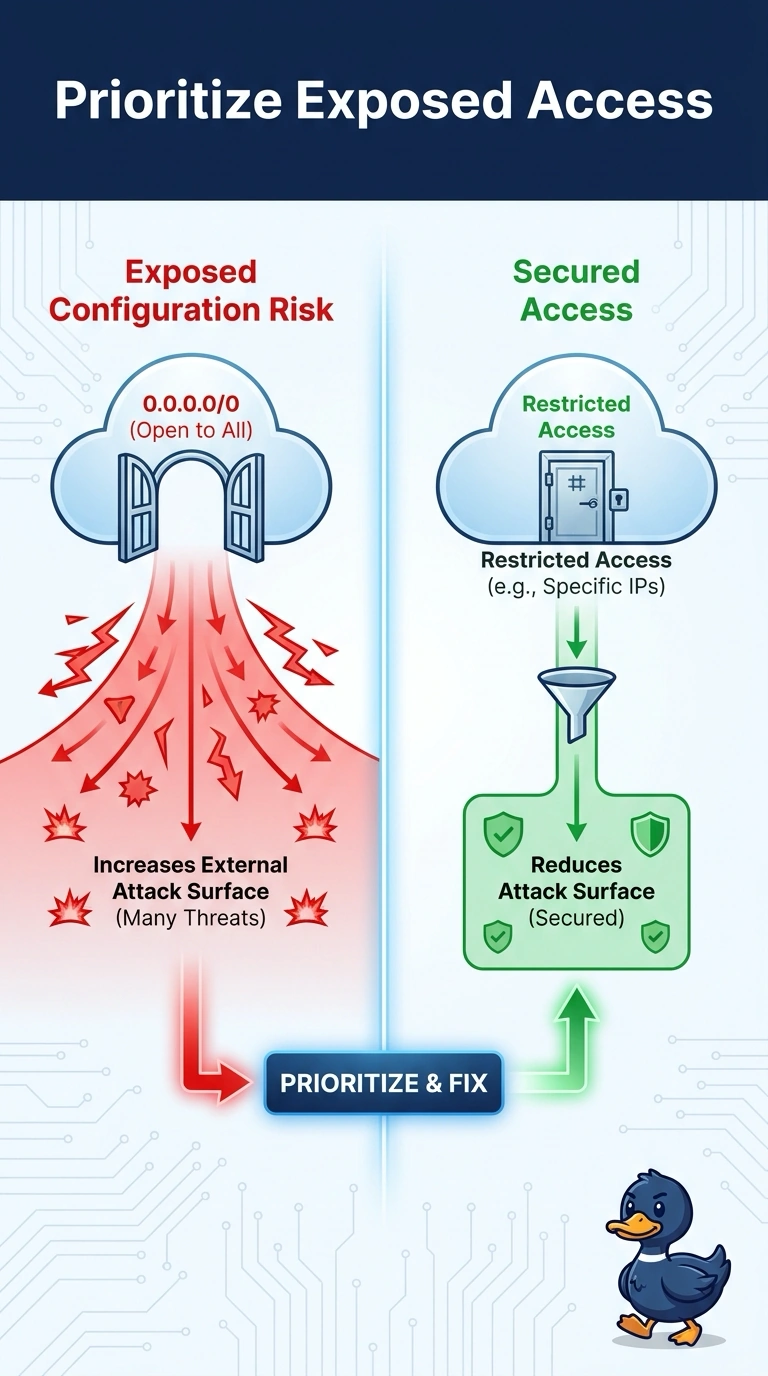
Short Explanation
Leaving your front door wide open to the entire street is an urgent exposure even before anyone steps inside. You should prioritize this unrestricted rule as a high-risk configuration exposure, avoiding the trap of treating it as active malware or ignoring it.
Full Explanation
Choosing to Prioritize it as an exposed configuration risk that increases external attack surface accurately reflects what an unrestricted public ingress rule on an administrative port represents in Falcon Cloud Security. Cloud Security Posture Management identifies control-plane misconfigurations that expose production workloads to internet-wide scanning and brute-force or exploit attempts. Choosing to Treat the open security group rule as proof of active runtime malware execution inside the instance is incorrect because a posture finding indicates exposure rather than observed malicious process behavior. Deciding to Defer remediation until a pre-runtime container image assessment flags a critical package vulnerability fails because compute instances and network firewalls require immediate network-layer protection regardless of container image status. Selecting Reclassify the finding as an informational compliance note because no IAM keys were leaked underestimates the immediate risk of unauthenticated network reachability. As a caveat, check whether the instance sits in a public subnet or behind a public IP before confirming external reachability. Operationally, restrict the security group source range to approved administrative networks and verify the posture finding clears.
Prefer to study offline? Printable PDF study book + test engine ($7.50, unofficial). These questions stay free here.