
A school district security team wants to locate cloud service accounts that hold broad administrative entitlements even though their recent activity shows they only read from a single storage bucket. Which analysis capability helps identify these over-privileged identities?
Select an answer to reveal the explanation.
Short Explanation
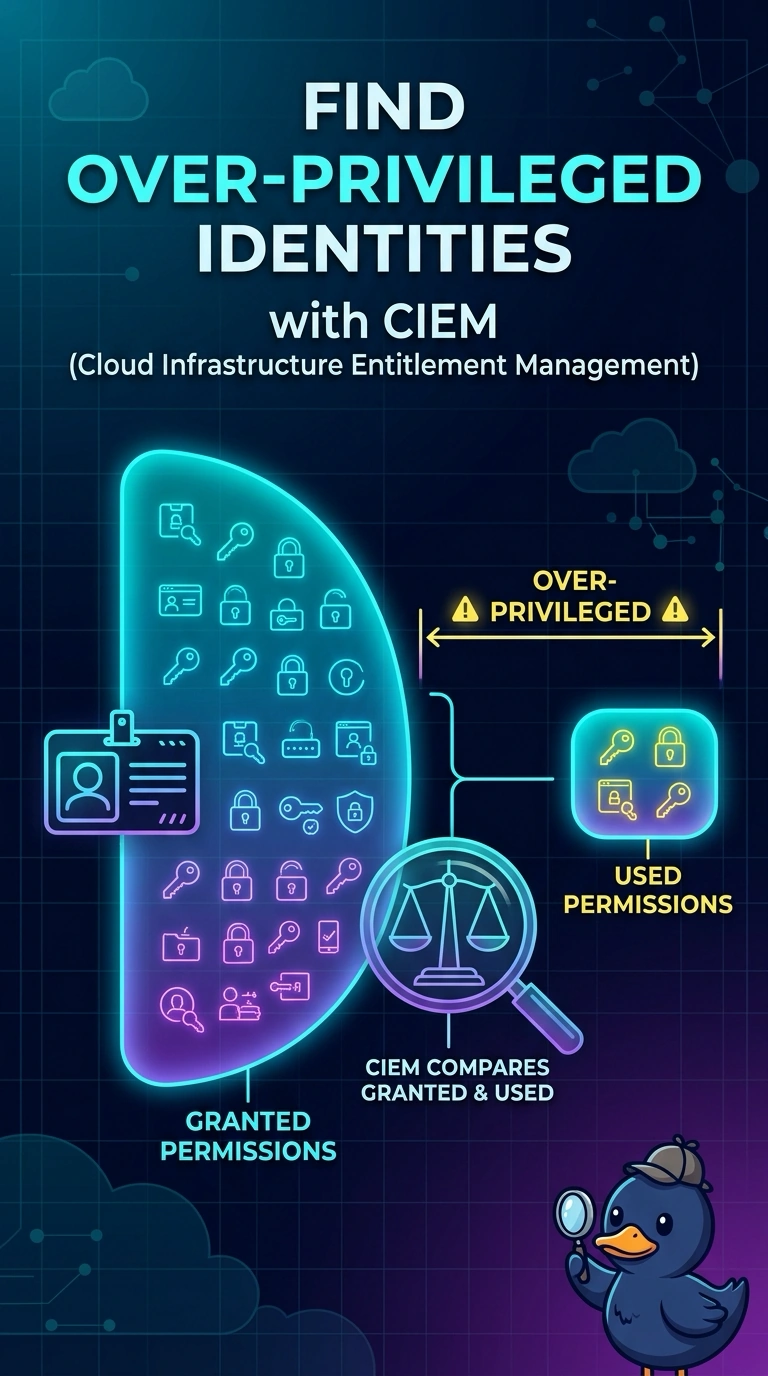
Over-privileged service accounts are silent blast-radius multipliers just waiting for a leaked credential. When you want to compare what an identity is allowed to do against what it actually uses, identity entitlement analysis is your go-to tool—not an image or container scanner.
Full Explanation
Cloud Infrastructure Entitlement Management evaluates identity policies alongside observed permission usage to highlight excessive privileges and support least-privilege remediation. Using Cloud Infrastructure Entitlement Management comparing granted and used permissions directly surfaces service accounts that possess administrative rights while only exercising narrow read access. Using Container image package assessment in the continuous integration pipeline inspects software libraries and secrets inside container builds rather than cloud IAM entitlements. Using Kubernetes admission control blocking unapproved container registries at deployment enforces cluster pod scheduling rules and does not audit cloud identity permissions. Using Runtime container drift detection alerting on newly executed binaries monitors unexpected execution inside running containers rather than analyzing static versus active IAM entitlements. Be aware that reducing permissions on service accounts should be validated against periodic jobs such as monthly backups that may not appear in a short activity window. Confirm the finding by reviewing the identity's granted policies alongside its observed permission history before tightening the role.
Prefer to study offline? Printable PDF study book + test engine ($7.50, unofficial). These questions stay free here.