
A software organization already scans container images in its registry, but developers still occasionally deploy unassessed or non-compliant images directly into production Kubernetes clusters. Which complementary capability closes this gap?
Select an answer to reveal the explanation.
Short Explanation
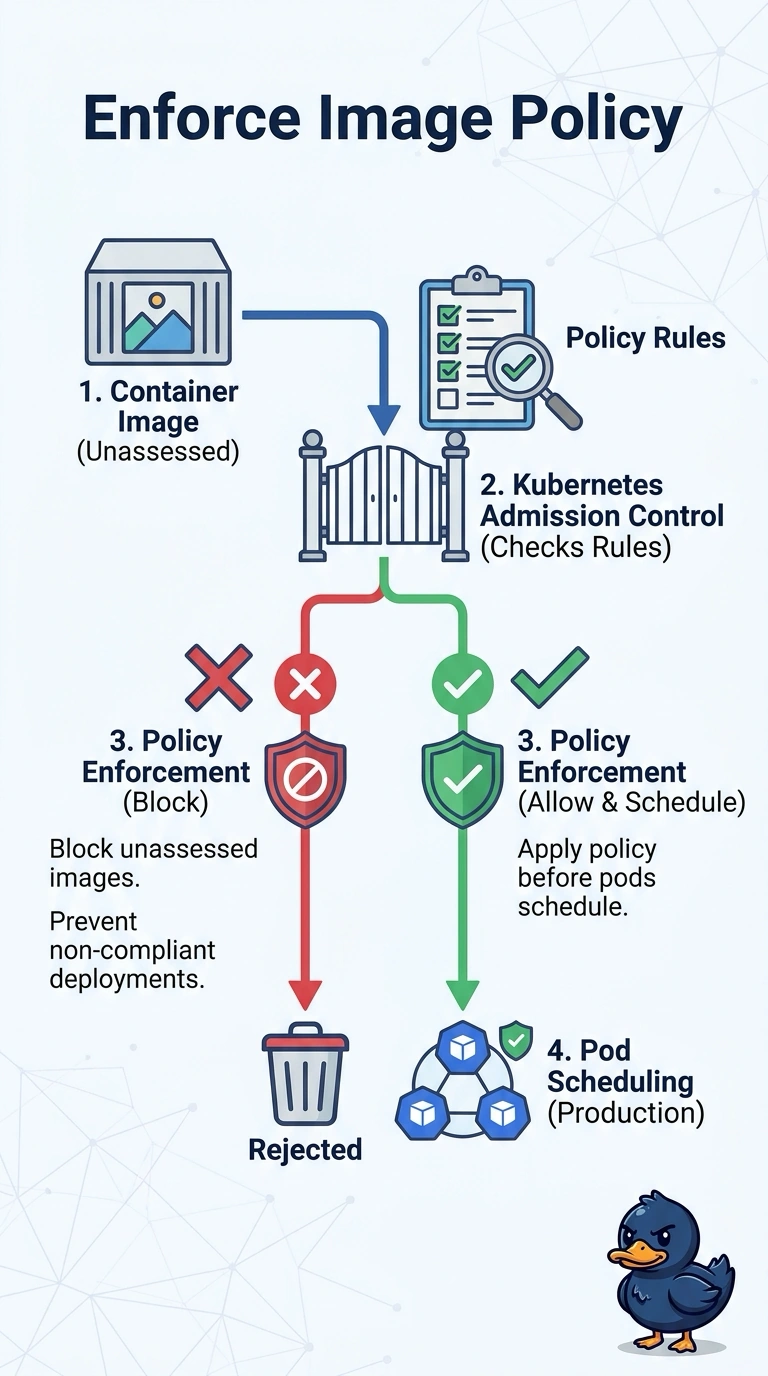
Scanning images in a registry only works if someone actually checks the report before hitting deploy. To keep unassessed images out of your cluster, you need admission control standing at the Kubernetes API door.
Full Explanation
Registry image assessment identifies vulnerabilities and misconfigurations in stored images, but by itself it does not prevent a cluster from pulling an unapproved image. Adding Kubernetes admission control enforcing image policy rules before pod scheduling bridges pre-runtime assessment and cluster enforcement by blocking non-compliant deployments at the Kubernetes API boundary. Enable KAC image assessment and set unassessed_handling to Prevent in the effective matching rule group; configure applicable assessed-image prevention and failure behavior. Otherwise KAC can Alert or Allow Without Alert for unknown images. Adding Scheduled weekly compliance reports emailed to engineering leads provides delayed audit visibility rather than real-time deployment enforcement. Adding Data Security Posture Management scanning cloud object storage locates sensitive data stores and exposure risks rather than gating Kubernetes pod creation. Adding Cloud Infrastructure Entitlement Management reviewing user roles evaluates cloud identity permissions rather than inspecting container image compliance during pod scheduling. Keep in mind that admission control still should be paired with runtime sensors to detect threats that emerge after a compliant image starts running. Verify enforcement by attempting to schedule an unassessed test image and confirming the admission controller blocks the pod.
Prefer to study offline? Printable PDF study book + test engine ($7.50, unofficial). These questions stay free here.