
A distributed enterprise is preparing automated registration templates to onboard both AWS accounts and Azure subscriptions into Falcon Cloud Security. Why must the cloud architect prepare different identity constructs for each provider?
Select an answer to reveal the explanation.
Short Explanation
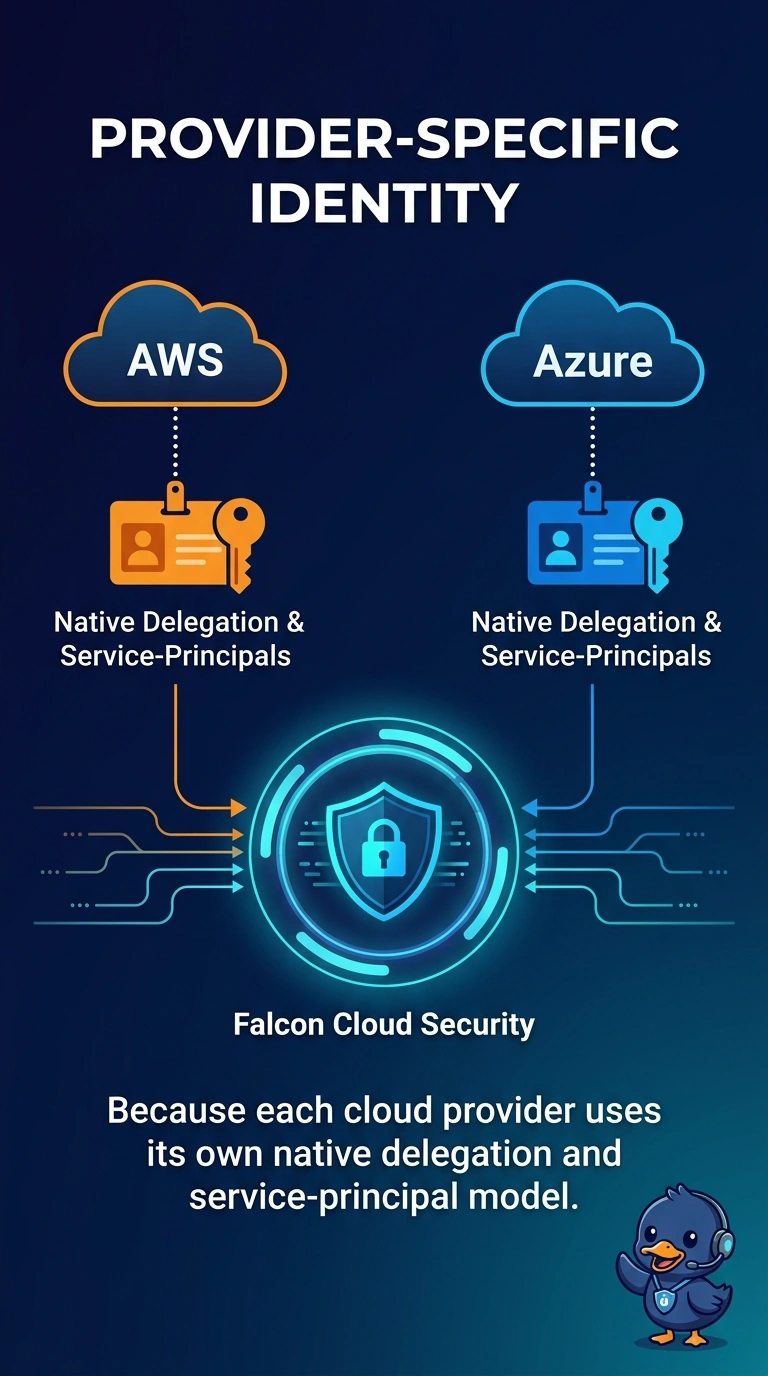
Every cloud provider speaks its own authentication dialect, so your onboarding template cannot use a single universal role format across AWS and Azure. You have to match each provider's native identity delegation model during registration.
Full Explanation
Cloud account registration in Falcon Cloud Security relies on each provider's native identity and access mechanism to grant read-only discovery (and optional remediation) permissions. "Because each cloud provider uses its own native delegation and service-principal model" is correct because AWS onboarding relies on cross-account IAM roles with trust policies, whereas Azure uses service principals or app registrations scoped to subscriptions or management groups. "Because Falcon Cloud Security only supports automated organization onboarding for one cloud" is false because multi-cloud environments can automate registration for each supported provider separately. "Because multi-cloud registration requires installing host sensors before account APIs" confuses agentless control-plane registration with Cloud Workload Protection sensor deployment. "Because Azure subscriptions can only be monitored through manual CSV finding imports" is incorrect because Falcon Cloud Security integrates directly with Azure APIs for continuous posture assessment. Caveat: reusing an AWS IAM trust-policy pattern verbatim in another provider's template will fail validation. Operational check: generate and deploy the provider-specific onboarding template for each cloud platform and confirm healthy registration status.
Prefer to study offline? Printable PDF study book + test engine ($7.50, unofficial). These questions stay free here.