
A distributed office IT team needs to monitor one standalone cloud account managed for a temporary joint project, without onboarding or gaining visibility into the rest of the partner's cloud organization. Which registration approach fits this requirement?
Select an answer to reveal the explanation.
Short Explanation
Onboarding an entire cloud organization for one shared project is like buying a whole apartment building just to rent a single studio. When you only need visibility into one isolated account, choose a scope that matches that boundary.
Full Explanation
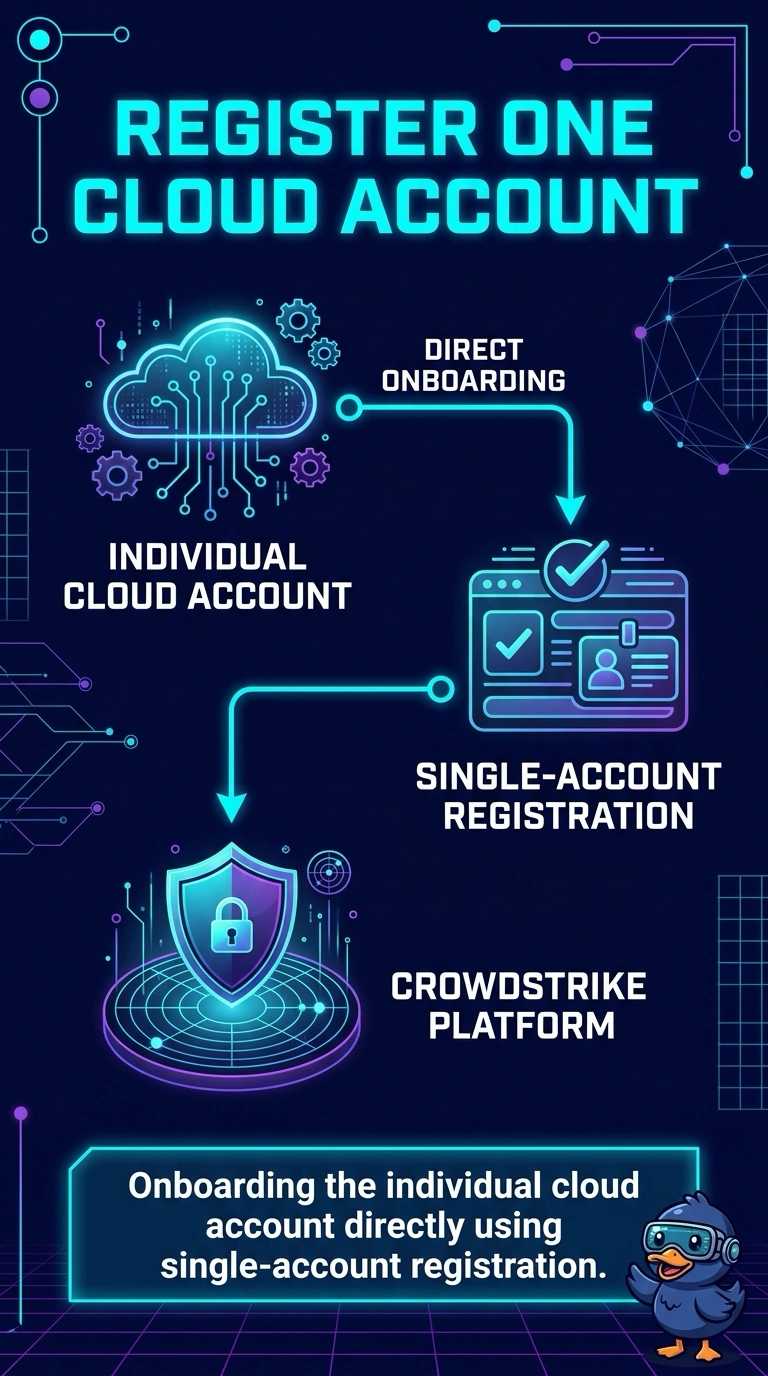
When visibility must remain strictly limited to one standalone account, Onboarding the individual cloud account directly using single-account registration scopes permissions and inventory solely to that account. This avoids requiring organization-level administrative access from the partner and keeps unrelated member accounts out of scope. Conversely, Registering the entire cloud organization hierarchy for automatic discovery is designed for enterprise-wide onboarding and would attempt to discover and monitor every account under the partner's organization. Choosing Applying a global scan exclusion across all existing production cloud groups does not onboard a new external account and would instead suppress visibility into your own production resources. Finally, Deploying a Kubernetes DaemonSet sensor onto the partner's management console is invalid because a DaemonSet runs on Kubernetes cluster nodes for container runtime telemetry, not as a cloud account registration mechanism. Caveat: single-account registration does not automatically onboard sibling accounts created later, so any additional project accounts would need separate registration. Operational check: confirm the standalone account appears in the inventory with healthy registration status and verify no unintended organization accounts were imported.
Prefer to study offline? Printable PDF study book + test engine ($7.50, unofficial). These questions stay free here.