
A retail cloud engineer deploys cross-account IAM roles across several new AWS accounts for Falcon Cloud Security onboarding, but one account fails verification with an authorization error despite having the same permission policy as the others. What registration detail should the engineer verify?
Select an answer to reveal the explanation.
Short Explanation
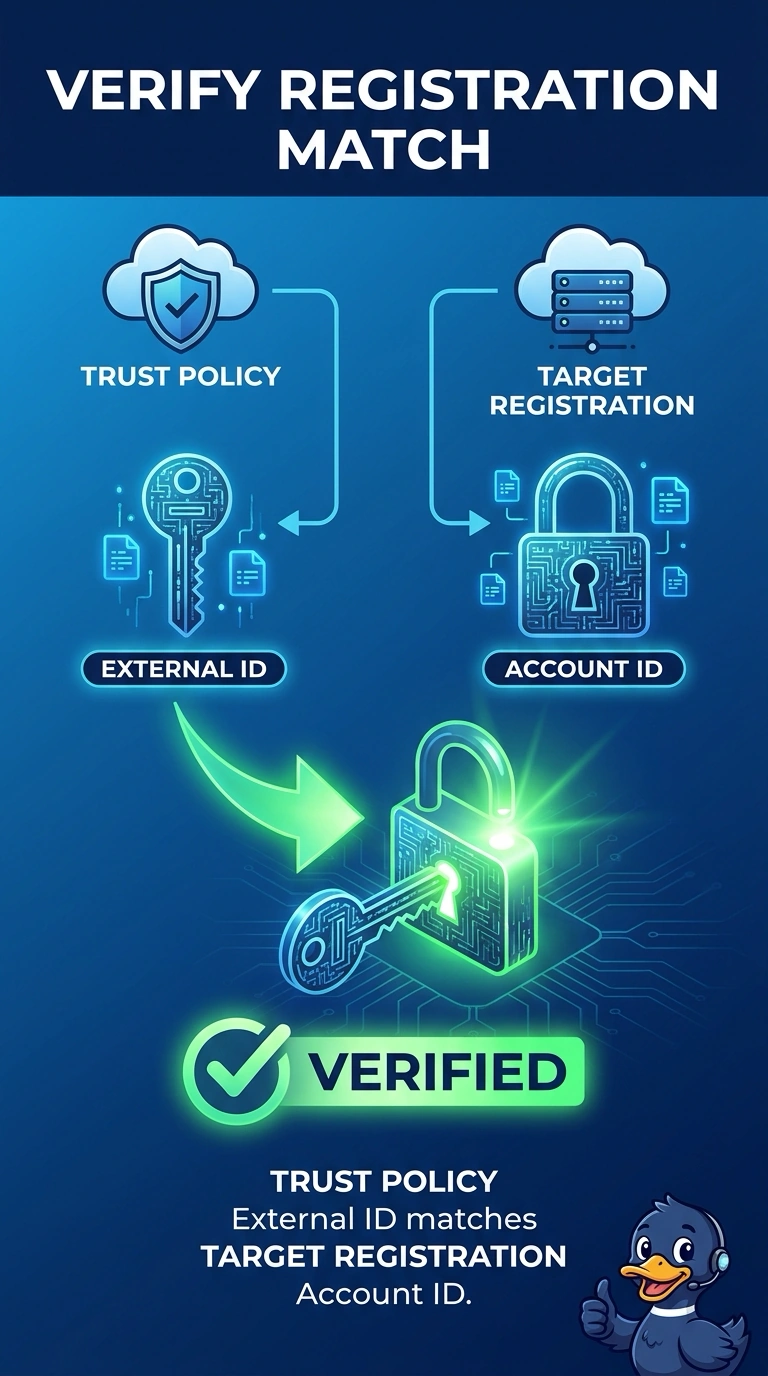
When identical permission policies work everywhere except one account, you have a trust mismatch at the front door. You can focus on the external ID and account ID used for registration, rather than workload or reporting settings that do not control role assumption.
Full Explanation
Verifying that the trust policy external ID and account ID match the target registration addresses the authorization failure because cross-account onboarding depends on Falcon Cloud Security being allowed to assume the role with the expected external ID for that specific account. Even when the attached permission policy is identical across accounts, a mismatched external ID or incorrect account identifier can block role assumption immediately. Pinning the Kubernetes DaemonSet image tag to a digest concerns cluster sensor deployment, not cloud account IAM role assumption, so it does not resolve this registration failure. Choosing CSV rather than PDF for the scheduled compliance report changes report formatting after data is collected and does not affect onboarding authentication. Enabling runtime drift detection on storage buckets likewise does not determine whether the cross-account role can be assumed. One caveat is that manually copying onboarding templates across accounts can leave a stale external ID in the trust policy. As a practical check, compare the trust policy external ID and registered account ID in the cloud provider with the onboarding parameters in Falcon Cloud Security.
Prefer to study offline? Printable PDF study book + test engine ($7.50, unofficial). These questions stay free here.