
A retail enterprise adopts a multi-cloud architecture across AWS and Azure. After onboarding its AWS organization hierarchy into Falcon Cloud Security, the team notices that Azure subscriptions do not appear in the asset inventory. What is the most likely reason?
Select an answer to reveal the explanation.
Short Explanation
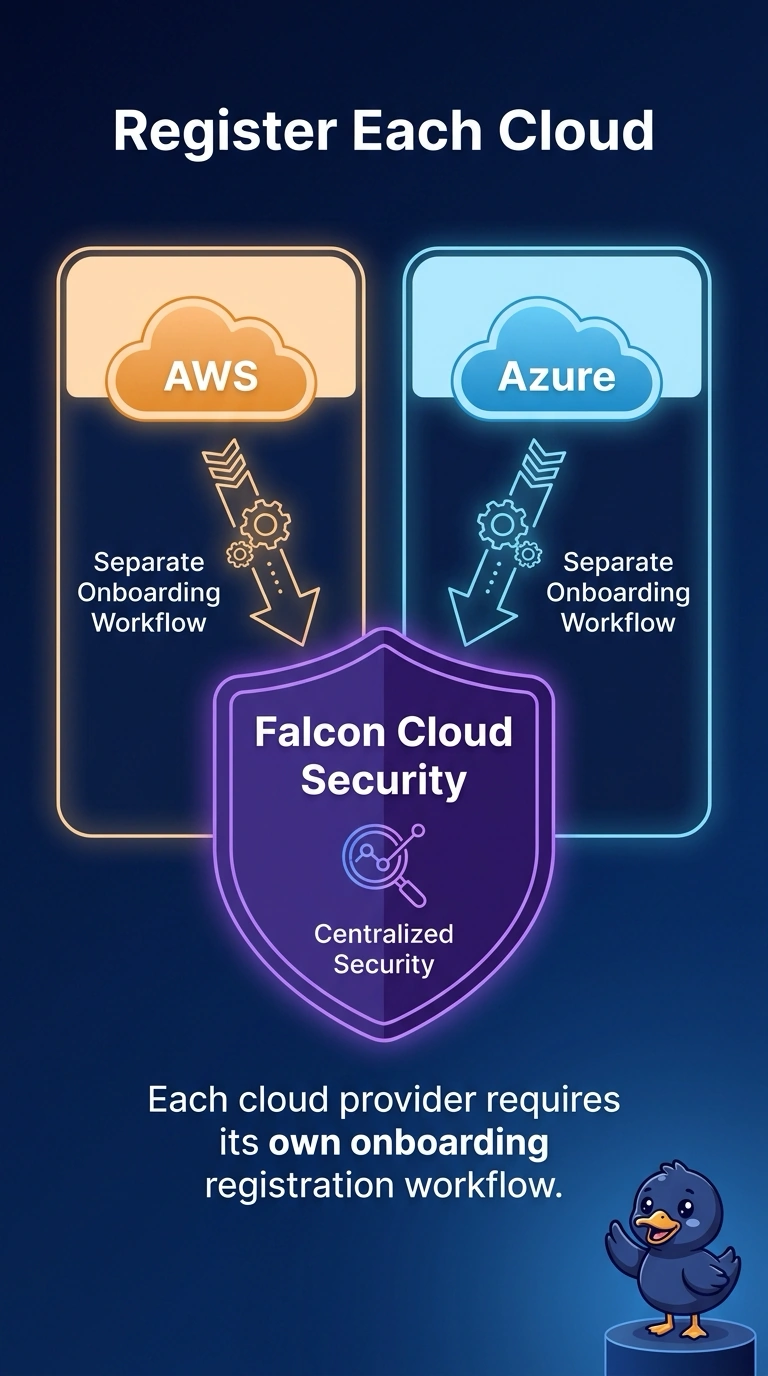
Onboarding your AWS organization is a great first step, but it won't magically reach across the street to inspect Azure. In a multi-cloud setup, you have to register each cloud provider separately using its own native identity and onboarding flow.
Full Explanation
Cloud providers expose distinct control-plane APIs, identity models, and tenant structures, so registering an organization in one cloud platform only grants visibility into that provider's accounts. Recognizing that Each cloud provider requires its own onboarding registration workflow explains why Azure subscriptions remain absent until an Azure-specific registration is completed. Suggesting that The Falcon sensor DaemonSet must be installed on Azure before AWS can discover it is incorrect because AWS account registration never discovers Azure subscriptions, and agentless CSPM does not require Kubernetes DaemonSets. Suggesting that Azure subscriptions are automatically hidden whenever an AWS organization is active is false because Falcon Cloud Security supports concurrent multi-cloud visibility across providers. Suggesting that Scheduled compliance reports must be enabled before multi-cloud inventory appears confuses reporting delivery with cloud account onboarding. Note that once both providers are registered, you can organize accounts and subscriptions into cloud groups for documented organization, ownership and risk filtering; verify each policy's actual assignment mechanism separately. Confirm multi-cloud readiness by completing the Azure registration flow and verifying both providers show healthy status.
Prefer to study offline? Printable PDF study book + test engine ($7.50, unofficial). These questions stay free here.