
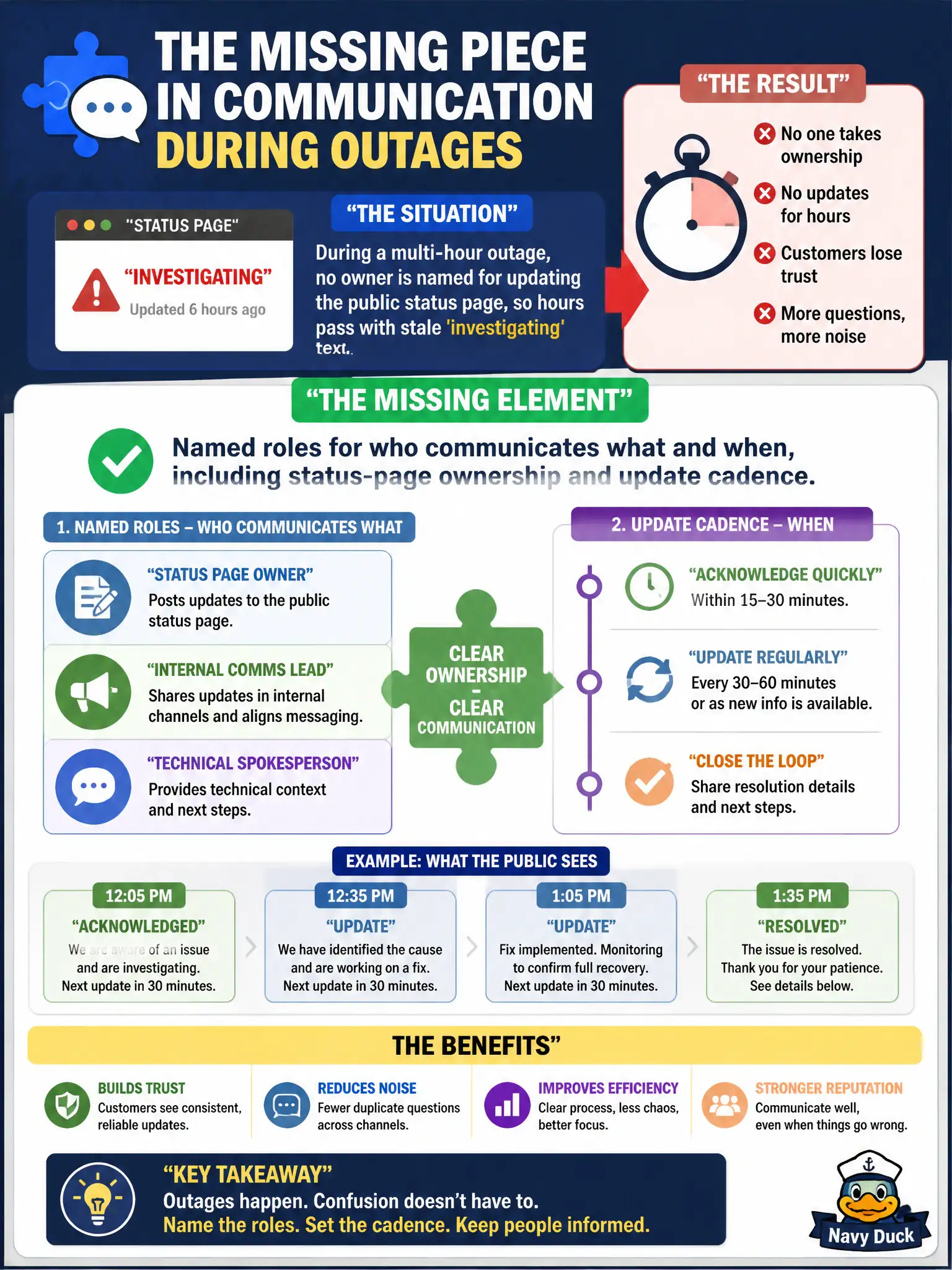
During a multi-hour outage, no owner is named for updating the public status page, so hours pass with stale 'investigating' text. What element was missing from the communication strategy?
Select an answer to reveal the explanation.
Short Explanation
A status page with no owner is a ghost ship—stale by lunch. Strategy has to name who posts, what they say, and how often they refresh.
Full Explanation
A communication strategy for a multi-hour outage needs named roles for who communicates what and when, including status-page ownership and update cadence; without an owner, stale investigating text persists and citizens lose trustworthy information. Requiring that only the CEO may type status-page updates personally creates a bottleneck incompatible with after-hours and multi-hour incidents. Freezing status pages until a full root-cause report is published withholds operational status that users need while forensics continue. Unlimited volunteer editors so anyone on social media can rewrite the status page destroys message control and invites conflicting unauthorized edits. Role clarity, backup communicators, and cadence turn strategy into execution under stress. Exam caveat: technical investigation ownership differs from public status ownership; both must be named. Operational check: assign primary and backup status-page owners in the outage playbook, define update intervals, authorize interim service-impact language without waiting for root cause, prohibit ad-hoc public editors, and drill the first update within the target minutes after declaration of a major civic service outage.