
A lab supervisor waves off missing first-aid kits and eyewash stations because '911 exists.' What should the risk manager correct?
Select an answer to reveal the explanation.
Short Explanation
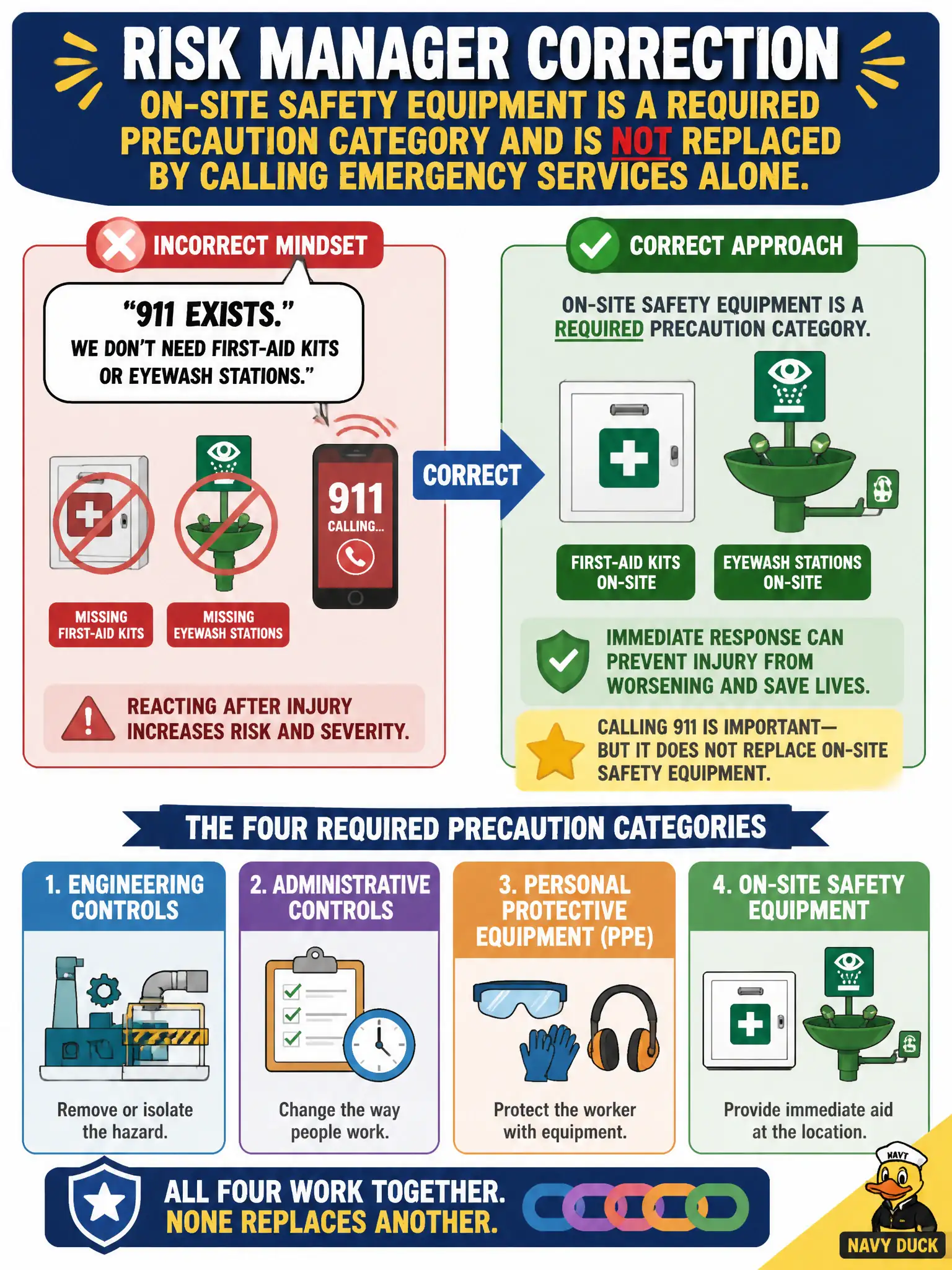
911 is the cavalry, not the first-aid kit. You still need eyewash and supplies on site so the first minutes are not spent empty-handed.
Full Explanation
On-site safety equipment such as first-aid kits and eyewash stations is a required precaution category and is not replaced by calling emergency services alone when a lab supervisor waves off missing kits because 911 exists. Emergency services are critical but arrive after delay; eyewash and first aid address immediate decontamination and care in the minutes that determine injury severity. Treating kits as optional if eyewash is present, or eyewash as optional if kits are present, invents a false either-or that ignores different functions. Requiring eyewash and kits only after a recordable injury has already occurred waits for harm to justify basic readiness. Labs with chemical splash potential need functioning, accessible, and inspected eyewash plus stocked first-aid capability as baseline precautions. Exam caveat: 911 complements on-site equipment; it does not substitute for it under corporate risk and occupational safety expectations. Operational check: install or restore inspected eyewash and stocked first-aid kits in the lab, train staff on locations and use, assign weekly visual checks, document impairments, and correct the supervisor’s guidance in writing so 911-only thinking is retired.