
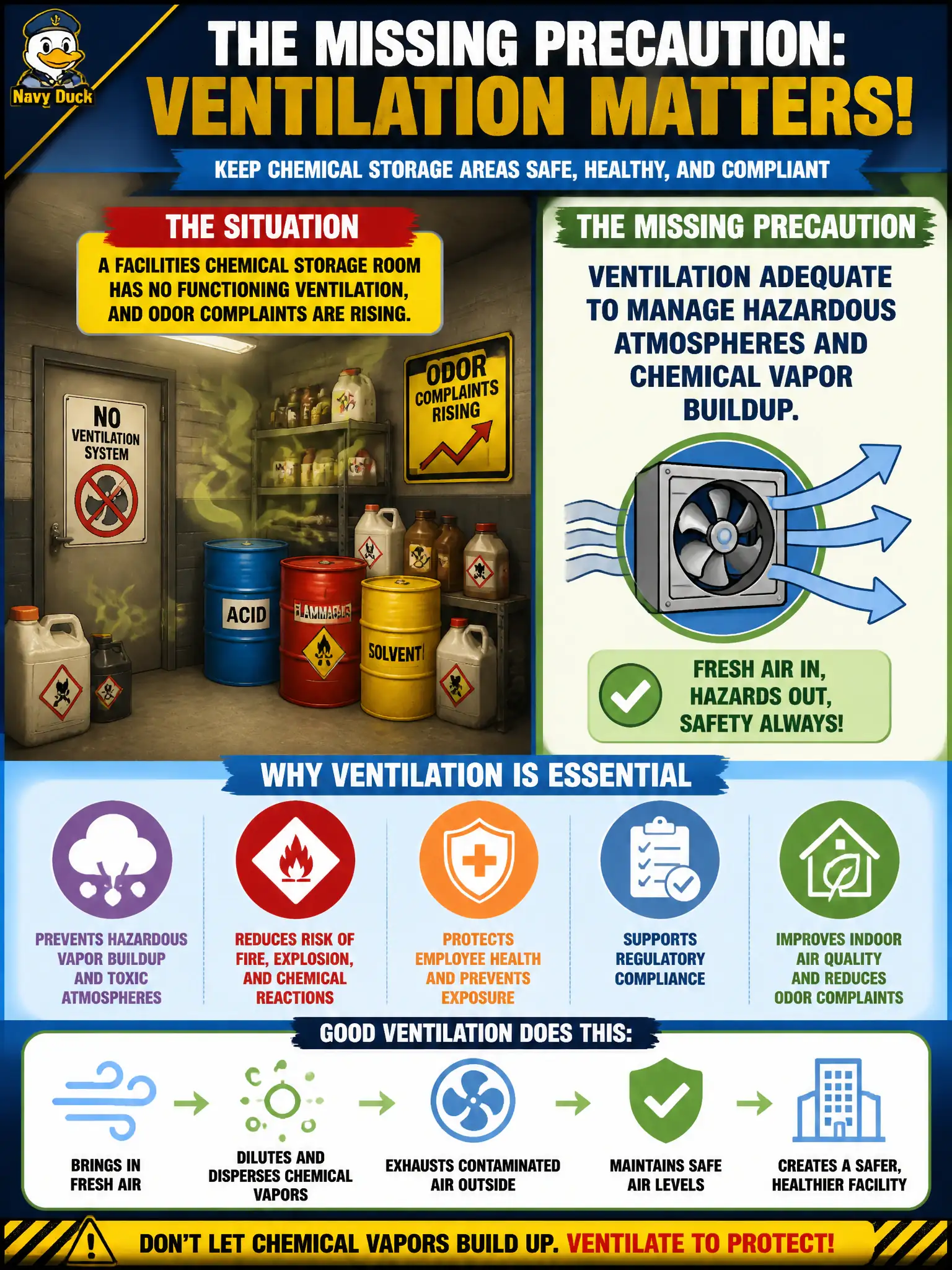
A facilities chemical storage room has no functioning ventilation, and odor complaints are rising. What essential environmental health precaution is missing?
Select an answer to reveal the explanation.
Short Explanation
Chemicals in a sealed box without airflow is a recipe for bad air. Working ventilation is the environmental health precaution that keeps vapors from camping out.
Full Explanation
Ventilation adequate to manage hazardous atmospheres and chemical vapor buildup is an essential environmental health precaution for a facilities chemical storage room where odor complaints are rising and ventilation is not functioning. Painting the room a brighter color to improve morale among stock clerks addresses aesthetics rather than airborne contaminant control and leaves exposure pathways intact. Removing all labels from containers so workers are not alarmed by chemical names destroys hazard communication, slows emergency response, and can violate labeling expectations. Storing oxidizers and flammables together to save floor space can create incompatible storage risks layered on top of the ventilation failure. Odors are often a leading indicator of inadequate air changes, leaks, or open containers that threaten acute and chronic exposures for staff and responders. Comfort complaints about smell can signal regulatory and health exposures that belong in the risk register, not only in routine facilities ticketing. Exam caveat: environmental health precautions include atmosphere control, not merely housekeeping appearance. Operational check: restore or install appropriate ventilation, confirm odors and airborne levels decline, verify compatible chemical segregation and intact labeling, restrict access as needed, update the environmental health risk entry with a named owner, and re-inspect after any chemical inventory change.