
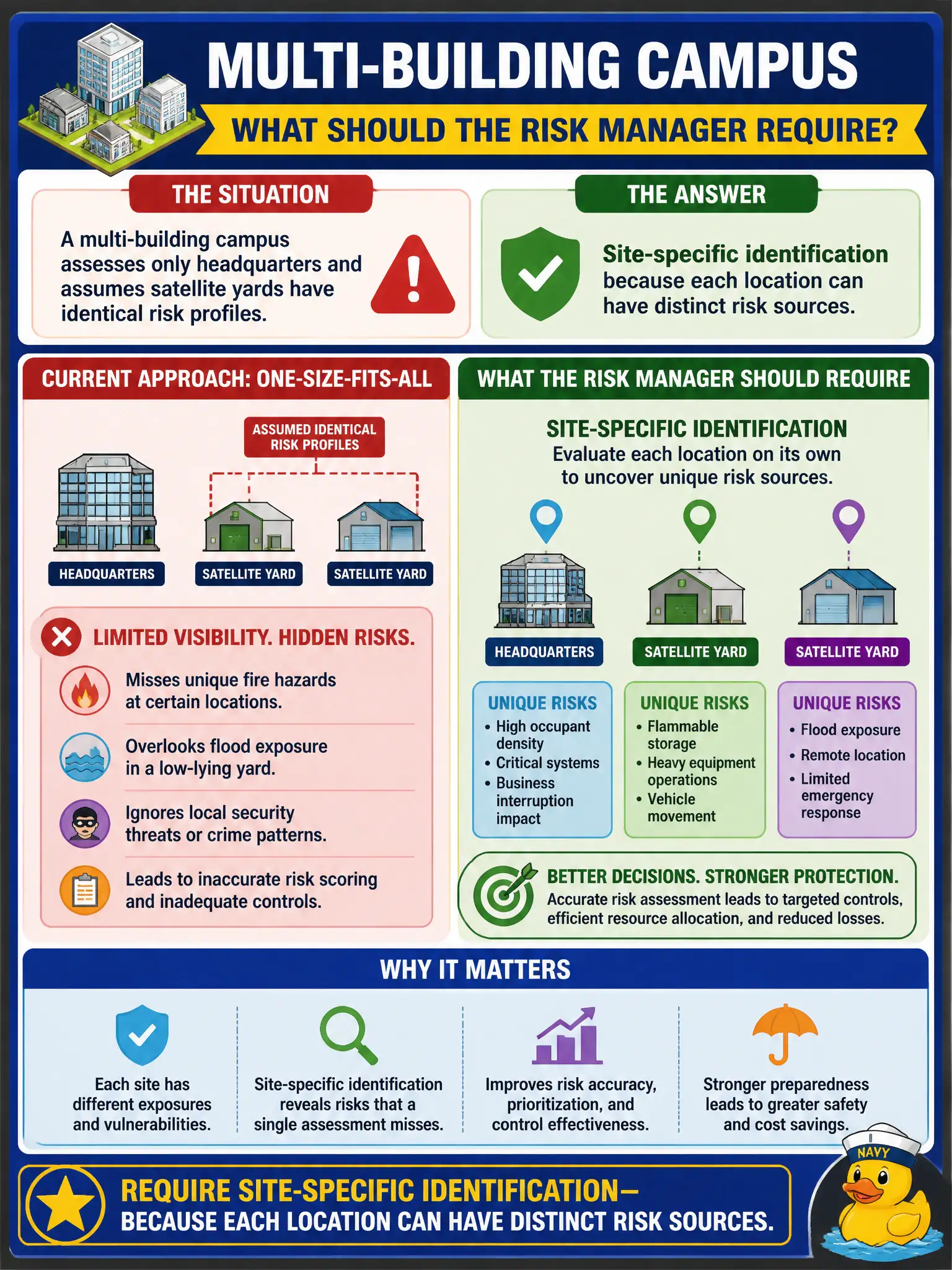
A multi-building campus assesses only headquarters and assumes satellite yards have identical risk profiles. What should the risk manager require?
Select an answer to reveal the explanation.
Short Explanation
Satellite yards are not HQ with different paint—they have their own traffic, weather, and gear. Assess each site. Copy-paste risk lists miss what is unique on the ground.
Full Explanation
A multi-building campus must perform site-specific identification because satellite yards can present distinct risk sources—fuel storage, vehicle movement, public interface, weather exposure, contractor density—unlike headquarters offices. Copying one headquarters checklist unchanged to every satellite without local review imports false uniformity and misses yard-specific hazards. Assessing only buildings that share the headquarters street address excludes real operating locations that still serve the organization. Skipping yards that lack executive offices because they supposedly cannot hold risk confuses prestige with exposure and orphans frontline operations. Organizational unity does not imply identical risk profiles across locations; enterprise views should roll up site-specific findings rather than replace them. Exam caveat: CRMC-style practice expects local identification even inside one legal entity or campus brand. Operational check: maintain a per-site register module, walk each yard with local supervisors, compare top risks across sites for shared themes and unique outliers, assign on-site owners who escalate material changes to the enterprise risk view, and verify that satellite incidents are not filtered out of leadership reporting.