
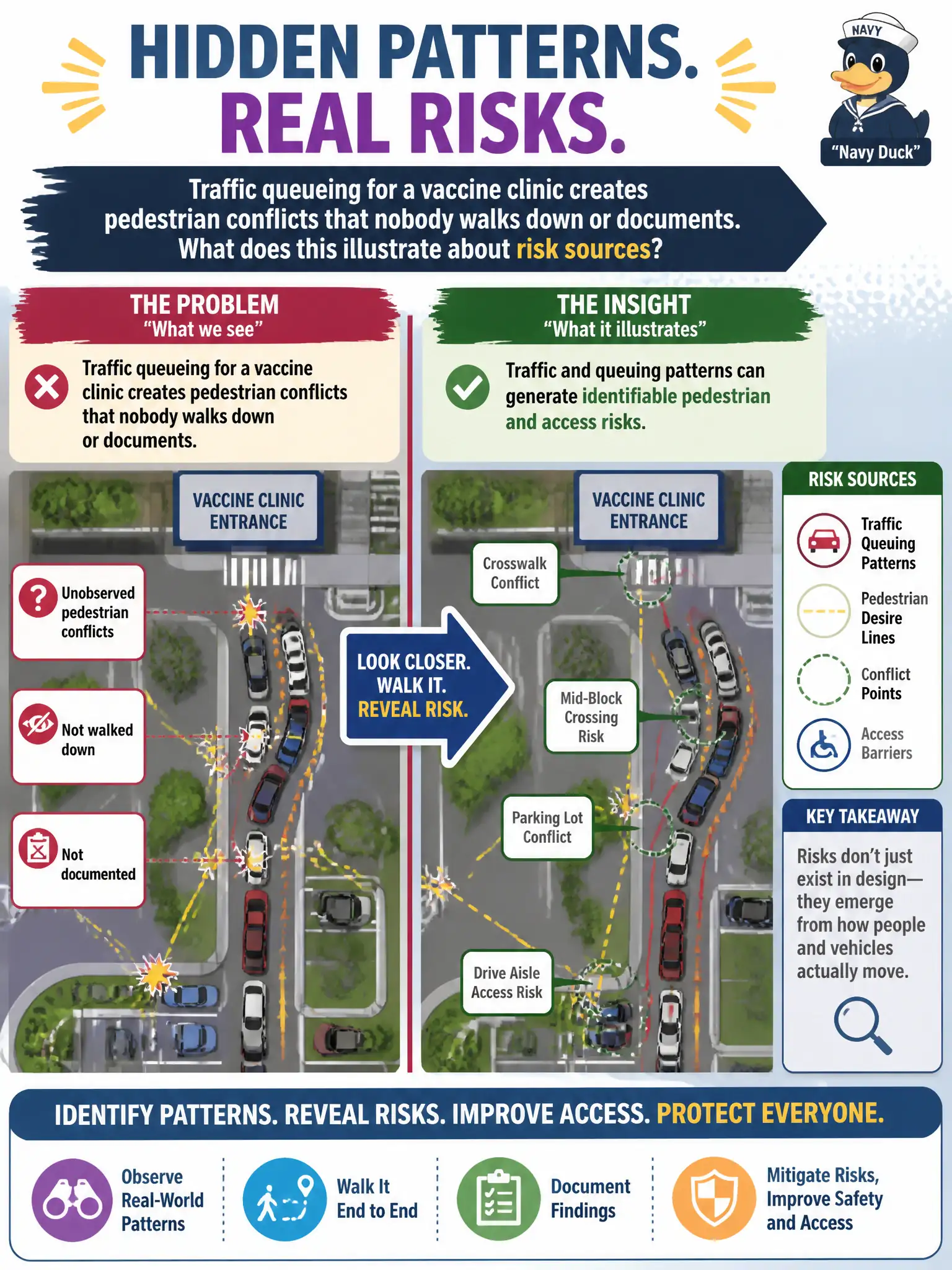
Traffic queueing for a vaccine clinic creates pedestrian conflicts that nobody walks down or documents. What does this illustrate about risk sources?
Select an answer to reveal the explanation.
Short Explanation
A long vaccine line can turn a quiet driveway into a crosswalk nobody planned. Traffic and queues create real pedestrian risks. Short duration does not erase the need to walk it and write it down.
Full Explanation
Traffic and queuing patterns at a vaccine clinic can generate identifiable pedestrian and access risks—crowd density, curb conflicts, blocked fire lanes, trip hazards, and weather exposure—that belong in source identification even when the clinic is temporary. Assuming queuing is always harmless skips observational review of how people and vehicles actually interact on site. Claiming traffic patterns belong only to state highway departments ignores the clinic operator’s site-level design, stewarding, and duty-of-care responsibilities. Skipping identification because an event lasts only a few hours underestimates how quickly harm can occur during short surges and special clinics. Temporary operations still require proportionate identification; short duration does not erase exposure or the need for controls. Exam caveat: CRMC-style identification scales effort to context but does not grant a free pass to pop-up civic services. Operational check: walk the queue path before opening, separate pedestrians from vehicles, keep emergency access clear, document findings in an event risk brief, adjust staffing and signage when volumes spike, and capture lessons into the next clinic checklist.